WhatsApp task scam India: liking videos for money, is it real?
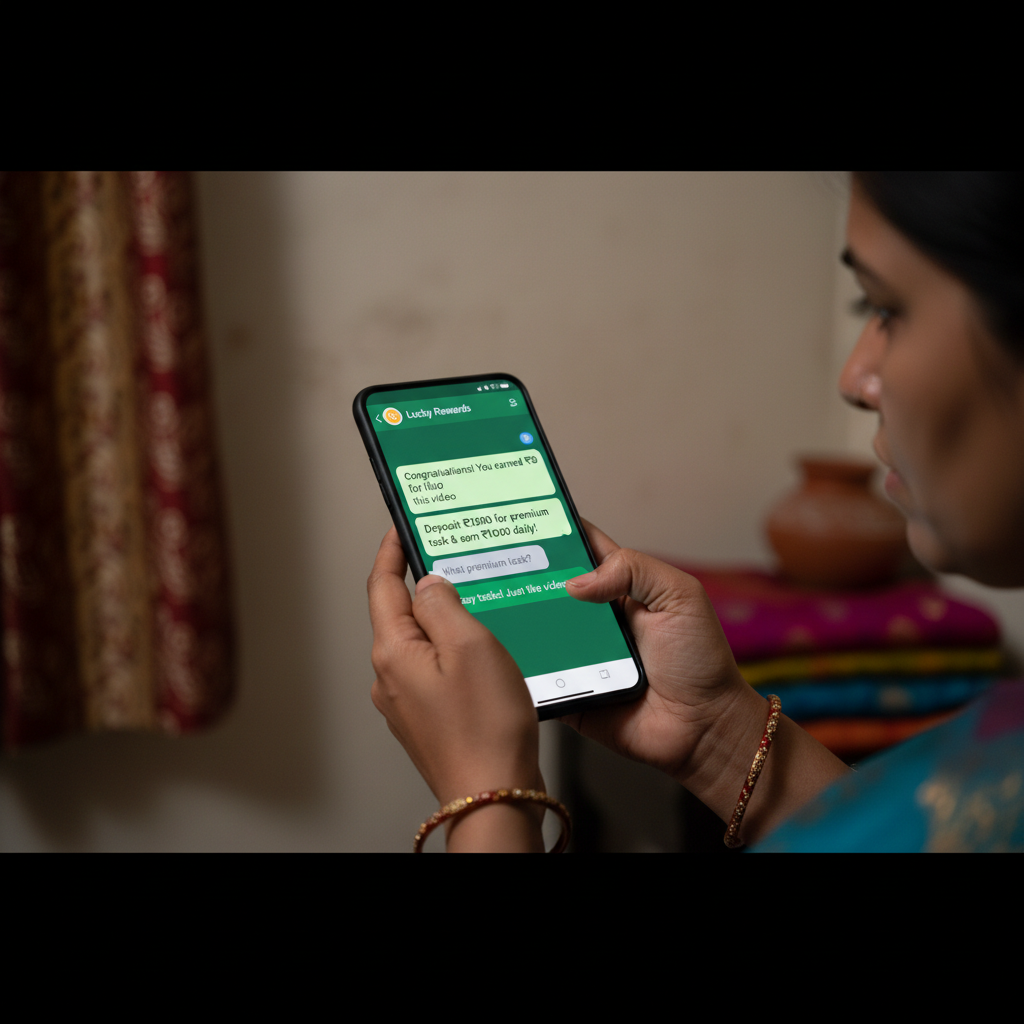
Beware of a growing "part-time task" scam circulating on WhatsApp and Telegram, where fraudsters promise easy money for simple tasks like liking videos or reviewing businesses. Victims are initially paid small amounts, building trust before being coerced into depositing significant funds for 'premium tasks,' ultimately leading to massive financial loss. This sophisticated fraud preys on the desire for quick income, leaving many in India defrauded of their savings.
How This Scam Works
The scam typically begins with an unsolicited message on WhatsApp or Telegram from an unknown number, often with an international-looking prefix, claiming to be from a reputable company or recruitment agency. They offer a flexible, part-time "work-from-home" opportunity, promising daily earnings for minimal effort. The initial tasks are usually trivial: liking YouTube videos, following social media accounts, writing fake reviews for hotels/products, or subscribing to channels. For each completed task, the victim is paid a small amount, perhaps ₹50-₹100, directly into their bank account or UPI ID. This initial payout is crucial; it builds trust and establishes the illusion of a legitimate income source. Once trust is established and the victim believes the "job" is real, the scammers escalate their demands. They introduce the concept of "premium tasks" or "investment tasks," claiming these offer significantly higher returns but require an upfront "security deposit" or "investment" into a cryptocurrency wallet (like USDT) or a specific bank account. They might create a fake online portal or app where the victim can supposedly track their earnings and "investment." The victim is pressured to deposit increasing amounts – ₹1,000, then ₹5,000, then ₹20,000, and so on – with promises of lucrative returns or to "unlock" more profitable tasks. To make the scheme more convincing, they might even show fake "profits" accumulating in the victim's online dashboard. When the victim attempts to withdraw their accumulated funds, they are hit with various excuses: a large "tax" needs to be paid, an "account activation fee," "KYC verification charges," or that their "withdrawal limit" has been exceeded and requires a larger deposit to clear. These demands continue until the victim runs out of money or realises they have been duped. By then, the scammers disappear, blocking all communication, and the victim is left with no way to recover the lakhs they have lost. The fraudsters often operate from overseas, making recovery and prosecution incredibly difficult.
Red Flags
- Unsolicited Messages with Job Offers:** Any message offering a "part-time job" with guaranteed high returns for minimal effort that you didn't apply for, especially from unknown international numbers, is a major red flag.
- Initial Small Payouts to Build Trust:** Scammers pay small amounts for initial tasks to make the scheme appear legitimate and gain your confidence before escalating their demands.
- Requests for Upfront Payments/Deposits:** No legitimate employer will ask you to deposit money (especially into crypto wallets) to get a job, access tasks, or withdraw your earnings.
- Guaranteed High Returns on "Investment":** Promises of unrealistic, risk-free high returns on "investment tasks" are classic signs of a Ponzi scheme or scam. Legitimate investments always carry risk.
- Pressure to Act Quickly or Secrecy:** Scammers often create a sense of urgency, pressuring you to make quick decisions or deposits, and might discourage you from discussing the "opportunity" with others.
- Vague Company Information & Lack of Formal Interview:** The "company" details are often generic or non-existent, and there's no formal application process, interview, or background check – just instant "hiring."
How to Stay Safe
- Be Skeptical of Unsolicited Offers:** Immediately delete and block any messages offering easy money for simple tasks, especially on WhatsApp or Telegram, from unknown sources. If it sounds too good to be true, it almost certainly is.
- Never Pay to Get a Job:** Legitimate employment opportunities never require you to pay money as a "deposit," "security fee," "training fee," or for "premium tasks." Your skills are your asset, not your upfront payment.
- Verify Company Details Thoroughly:** If an offer seems intriguing, independently research the company online. Check their official website, contact numbers, and reviews. Beware of companies with no online presence or generic/newly created websites.
- Guard Your Personal and Financial Information:** Never share your bank account details, UPI PIN, OTPs, Aadhaar number, or credit card information with anyone promising you a job or money online.
- Avoid Cryptocurrency Deposits for Work:** Legitimate employers do not pay salaries or receive deposits via cryptocurrency wallets for task-based work. This is a common method for scammers to make transactions untraceable.
- Educate Yourself and Your Loved Ones:** Share information about this scam with family and friends, especially vulnerable individuals like students, housewives, or senior citizens who might be targeted.
If You Are Targeted
- Stop All Communication Immediately:** As soon as you suspect a scam, cease all interaction with the fraudsters. Do not respond to their messages, calls, or attempts to lure you further.
- Do Not Deposit More Money:** Under no circumstances should you deposit any more money, regardless of the promises or threats. Each additional deposit is money lost.
- Gather All Evidence:** Take screenshots of all messages, transaction details (UPI IDs, bank accounts, crypto wallet addresses), payment receipts, and any fake profiles or websites used by the scammers. This evidence will be crucial for reporting.
- Report to the National Cybercrime Helpline:** Immediately call the National Cybercrime Helpline at **1930** or file a complaint online at **cybercrime.gov.in**. Provide them with all the evidence you've collected. The quicker you report, the higher the chance of potentially recovering funds.
- Inform Your Bank/Payment Service Provider:** If you made payments via UPI or bank transfer, contact your bank or the respective payment service provider (e.g., Google Pay, PhonePe) to report the fraudulent transaction. They might be able to freeze the recipient account if reported quickly.
- Warn Others and Block Numbers:** Report the scammer's number on WhatsApp/Telegram and block them. Spread awareness within your social circles to prevent others from falling victim.
ScamGuard24 Insight
This task-based scam is a prime example of social engineering combined with financial fraud, exploiting trust through initial small payouts. The use of cryptocurrency makes tracing funds extremely difficult for law enforcement, highlighting the need for immediate reporting and extreme caution with unsolicited online job offers.
Suspect a scam right now?
Open ScamGuard24 ScannerRecommended protection tools
AffiliateWe may earn a small commission if you sign up — it never changes our editorial picks.
India's most trusted antivirus. Blocks malicious APKs, UPI phishing and fake banking apps.
Get Quick HealAll-in-one mobile security + VPN. Stops phishing links shared on WhatsApp and SMS.
Try Norton 360Stop reusing passwords. Auto-fills only on the real bank site, never on phishing pages.
Get NordPassRelated alerts
 HIGH RISK
WhatsApp SEBI stock tips DMAT account scam – is it real?
 HIGH RISK
WhatsApp Election Booth Agent job real or fake — how to check?
 HIGH RISK
Comments
Be the first to comment.