
WhatsApp message part-time job like YouTube videos ₹3000/day, is it real?
Beware of unsolicited WhatsApp or Telegram messages promising easy part-time work, such as liking YouTube videos for incredibly high daily pay. These are meticulously crafted "task-based" investment scams designed to lure you in with small initial payments, only to defraud you of significant sums later. This widespread fraud preys on individuals seeking quick income and often escalates from simple tasks to complex 'recharge' or 'investment' schemes.
How This Scam Works
The "Fake Job Offer" scam centered around liking YouTube videos, especially prevalent on platforms like WhatsApp and Telegram, is a sophisticated form of social engineering. It begins innocently enough, often with an unsolicited message from an unknown number – sometimes even from numbers masquerading as legitimate recruitment agencies or HR representatives. The message will typically promise an enticingly high daily income, such as ₹2000-₹3000, for minimal effort, like simply liking a few YouTube videos or following social media accounts. Once you express interest, you'll be added to a Telegram group or a dedicated WhatsApp chat. Here, you'll be assigned initial "tasks" – usually 5-10 YouTube videos to like or social media pages to follow. To build trust, the scammers will actually pay you a small sum (e.g., ₹100-₹200) via UPI for these initial tasks. This small payment is a crucial psychological tactic, making the offer seem legitimate and lowering your guard. After completing a few rounds of these simple tasks and receiving your initial payouts, the scam escalates. You'll be informed about "premium tasks" or "VIP tasks" that promise significantly higher returns. To unlock these, you'll be asked to "recharge" an account or "invest" a certain amount of money into a platform controlled by the scammers. They might even show you a fabricated dashboard with impressive-looking returns on your "investment." The demands for money will increase gradually. You might be asked to deposit ₹1,000, then ₹5,000, then ₹10,000, promising exponential returns. They will create a sense of urgency, claiming limited-time offers or bonus schemes. If you try to withdraw your "earnings" or initial investment, you'll be met with various excuses: "technical issues," "tax payment required," "KYC verification pending," or "upgrade to a higher VIP level for withdrawal." They might even ask for "processing fees" to unlock your funds. Eventually, if you stop depositing money, or when they deem they have extracted enough, your account will be frozen, you'll be removed from the group, or the contact will simply block you, disappearing with all your deposited funds. These fake job offers often target individuals struggling financially, students, or homemakers looking for flexible income, making them particularly vulnerable to the allure of easy money. The scam capitalizes on basic human desires for financial stability and convenience.
Red Flags
- Unsolicited Messages with Extreme Offers:** Receiving a WhatsApp/Telegram message from an unknown number offering easy part-time work with extraordinarily high daily pay (e.g., ₹2000-₹3000 for liking videos). Legitimate job offers typically don't come out of the blue with such unrealistic promises.
- Initial Small Payouts to Build Trust:** Scammers pay you a small amount (like ₹100-₹200) initially for completing simple tasks. This is a classic tactic to gain your confidence before asking for larger sums.
- Demands for "Recharge" or "Investment":** The core of the scam involves asking you to deposit money (recharge) into a platform to unlock "premium tasks" or "higher earnings." Legitimate employers never ask employees to pay to get work or to earn a salary.
- Vague Job Descriptions and Company Details:** The "company" offering the job will have little to no online presence or a very poorly designed website. Details about the job itself will be unclear beyond "liking videos" or "task completion."
- Pressure to Quickly Deposit Funds:** Scammers will often create a sense of urgency, pressuring you to deposit funds quickly to unlock better returns or claim bonuses.
- Requests for Personal Financial Information Beyond UPI ID:** While they might initially ask for UPI ID for payout, be wary if they start asking for full bank account details, Aadhaar number, or OTPs, under the guise of "KYC" or "verification."
How to Stay Safe
- Be Skeptical of Unsolicited Offers:** If an offer sounds too good to be true, it almost certainly is. Legitimate companies recruit through official channels (job portals, company websites, professional networking sites), not random WhatsApp messages.
- Never Pay to Get a Job:** A fundamental rule: legitimate employers pay you, you don't pay them. Any request for "security deposits," "training fees," "recharge," or "investment" for a job is a scam.
- Verify the Sender and Company:** Always check the legitimacy of the sender. Research the company name provided online. Look for official websites, contact numbers, and reviews. Be suspicious if you find no credible information or only negative reports.
- Protect Your Personal Information:** Never share sensitive personal or financial information like your bank account number, UPI PIN, OTPs, or Aadhaar details with unknown individuals or on unverified platforms.
- Do Not Click Suspicious Links:** Avoid clicking on any links sent in unsolicited messages, as they could lead to phishing sites or download malware onto your device.
- Report and Block:** If you receive such messages, block the sender immediately and report the conversation on WhatsApp/Telegram. This helps the platforms identify and remove scam accounts.
If You Are Targeted
- Stop All Communication Immediately:** As soon as you suspect it's a scam, cease all interaction with the scammers. Do not respond to further messages or calls.
- Do Not Deposit Any More Money:** If you have already made initial deposits, do not deposit any more funds, regardless of the promises or threats. Each additional payment will only deepen your loss.
- Gather Evidence:** Take screenshots of all messages, transaction details, and any "job offer" documents. This evidence will be crucial if you decide to report the scam.
- Report to Cybercrime.gov.in:** File a detailed complaint on the Indian Cyber Crime Reporting Portal (cybercrime.gov.in) or call their helpline at 1930. Provide all the evidence you've collected.
- Inform Your Bank/Payment App:** If you have made any payments, especially through UPI, contact your bank or the respective payment app (e.g., Google Pay, PhonePe, Paytm) immediately to report the fraudulent transaction. They might be able to help reverse some transactions, though success is not guaranteed.
ScamGuard24 Insight
This scam effectively blends instant gratification with the gradual escalation of demands, mirroring the tactics of high-yield investment frauds. The initial small payouts are a masterstroke in psychological manipulation, establishing false legitimacy and setting victims up for larger losses.
Suspect a scam right now?
Open ScamGuard24 ScannerRecommended protection tools
AffiliateWe may earn a small commission if you sign up — it never changes our editorial picks.
India's most trusted antivirus. Blocks malicious APKs, UPI phishing and fake banking apps.
Get Quick HealAll-in-one mobile security + VPN. Stops phishing links shared on WhatsApp and SMS.
Try Norton 360Stop reusing passwords. Auto-fills only on the real bank site, never on phishing pages.
Get NordPass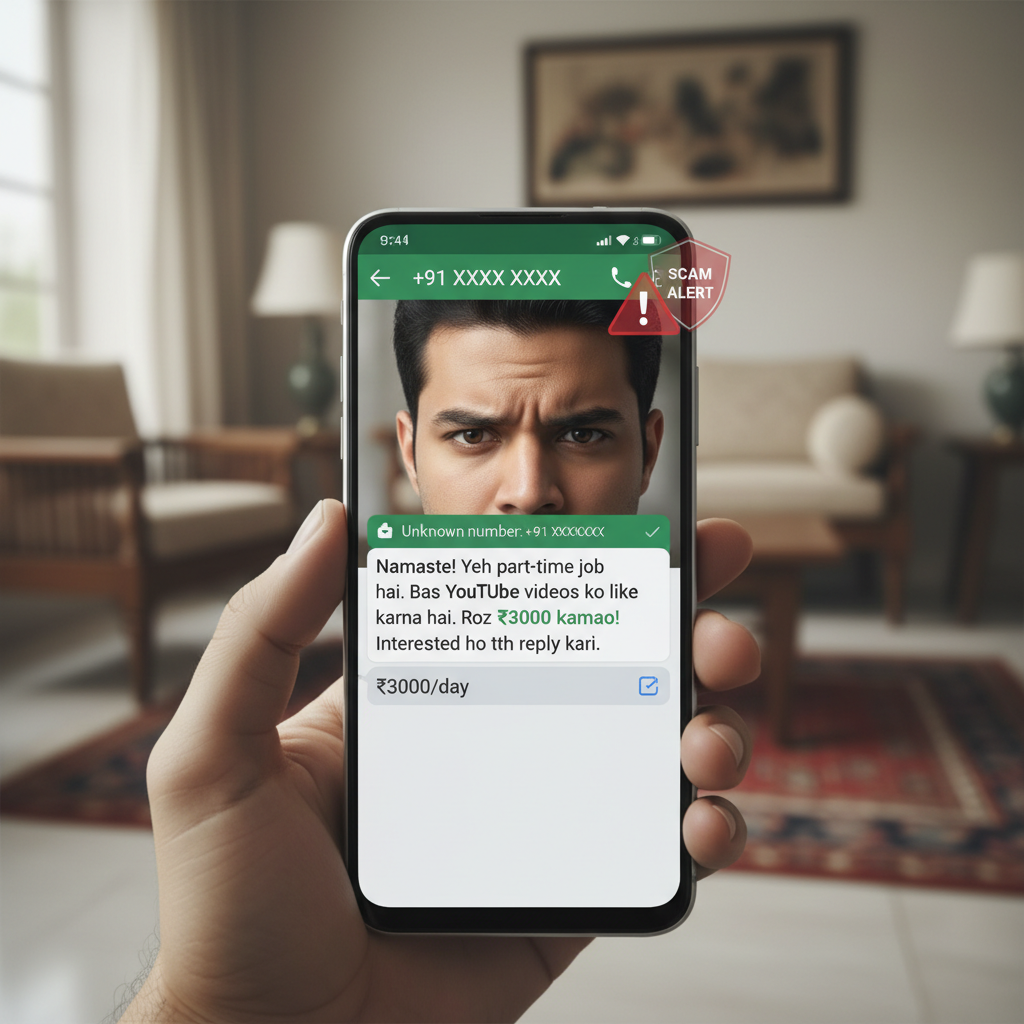


Comments
Be the first to comment.