WhatsApp forward Iran-Israel war charity plea Indian UPI — is it real?
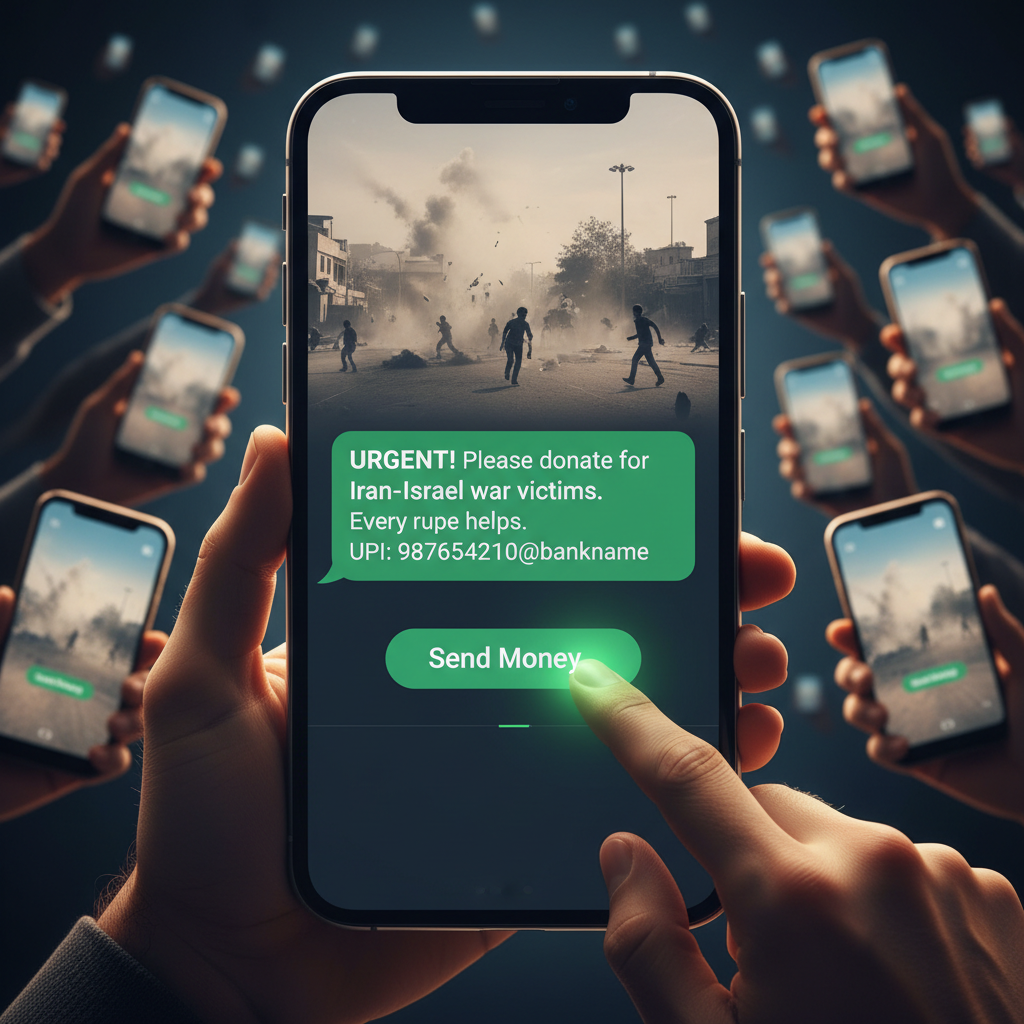
Fraudsters are exploiting the ongoing conflict by soliciting donations for "displaced families and children" through WhatsApp and Instagram. They use emotionally charged images and videos to trick kind-hearted Indians into sending money via personal UPI IDs, falsely claiming it's for humanitarian aid. Don't fall for these deceptive appeals; your money will not reach those in need.
How This Scam Works
The Iran-Israel conflict, like any major geopolitical event, creates a fertile ground for scammers to exploit public empathy and a desire to help. This particular scam preys on the tragic human cost of war, specifically targeting individuals in India who are moved by images of suffering. The scam typically begins with a compelling message circulated on platforms like WhatsApp or Instagram. This message is often accompanied by graphic or emotionally impactful photos and videos – sometimes genuine footage taken out of context, sometimes created through AI or cleverly edited. The text will passionately appeal for help, describing the plight of "displaced families," "orphaned children," or "innocent civilians" caught in the crossfire. The call to action is usually a request for financial donations, often in Indian Rupees. What sets this scam apart, and makes it particularly insidious, is the method of payment: a personal UPI ID. Legitimate charities, especially those operating internationally, rarely, if ever, use personal UPI IDs for large-scale fundraising. They would have official bank accounts, registered charitable trusts, or established payment gateways. Once a victim, moved by the plight depicted, sends money to the provided personal UPI ID, the funds are immediately siphoned off by the scammer. There is no legitimate charity, no humanitarian aid reaching those affected by the conflict. The scammer might even respond with a thank you message to maintain the illusion, but the money is gone. They often use multiple personal UPI IDs, sometimes registered under fake names or through mules, to evade immediate detection. They bank on the virality of emotional content on social media and the difficulty of tracing small, individual UPI transactions to catch their targets.
Red Flags
- Personal UPI ID for Donations:** Absolutely no legitimate charity, especially for international aid, will ask you to send money to a personal UPI ID (e.g., `name@upi`, `phone@paytm`). They use registered accounts of their organisation.
- Emotional Blackmail & Urgency:** The messages are often designed to evoke strong emotions and create a sense of urgency, pressuring you to donate immediately without verification.
- Lack of Official Details:** There's no mention of a registered charity name, its registration number, website, or contact details beyond a WhatsApp number.
- Unsolicited Messages:** You receive the appeal from an unknown number or a connection who may have unknowingly forwarded a scam message without verifying its authenticity.
- Generic Language:** The messages often use broad, generic terms like "war victims" or "affected families" without specific details of who is being helped.
- Promise of Tax Exemptions:** Some scams might even falsely promise 80G tax exemptions, which are only applicable for donations to registered Indian charitable trusts.
How to Stay Safe
- Verify, Verify, Verify:** Before donating to any cause, especially internationally, always verify the organisation's legitimacy. Look for their official website, contact details, and their registration with relevant government bodies (e.g., NITI Aayog's Darpan portal for NGOs in India).
- Donate to Reputable Organisations:** If you wish to contribute to humanitarian efforts, donate only through well-known, established international aid organisations (like UNICEF, Red Cross, Doctors Without Borders, or reputable UN agencies) or large Indian charities with a proven track record.
- Check Payment Methods:** Legitimate charities will have official bank accounts, secure payment gateways on their websites, or partnerships with established donation platforms. Avoid any request for funds via personal UPI IDs, crypto, or gift cards.
- Be Skeptical of Social Media Appeals:** Treat all donation requests on WhatsApp, Instagram, or other social media platforms with extreme caution, even if shared by friends. They might have been duped themselves.
- Cross-Reference Information:** If you see compelling photos or videos, try doing a reverse image search or checking reputable news sources to see if the content is authentic and accurately attributed.
- Inform Your Contacts:** If you receive such a scam message, alert the sender that it might be a scam and advise them not to forward it further.
If You Are Targeted
- Do Not Send Money:** The most crucial step is to absolutely not send any money or share any personal information.
- Block and Report:** Immediately block the number or profile from which you received the scam message on WhatsApp or Instagram. Report the profile or message within the app.
- Report to Cybercrime:** Lodge a complaint on the National Cybercrime Reporting Portal (cybercrime.gov.in) or call the helpline number 1930. Provide all details of the scam message, including screenshots and the UPI ID.
- Inform Your Bank:** If you have already made a transaction, inform your bank immediately. While recovery is difficult, reporting it can help in flagging the fraudulent account.
- Educate Others:** Spread awareness among your friends and family about this scam to prevent them from falling victim.
ScamGuard24 Insight
This scam leverages powerful psychological triggers – empathy for suffering and a desire to help – weaponizing real-world tragedies for financial gain. The use of personal UPI IDs is a critical red flag distinguishing it from legitimate appeals, making it imperative for individuals to exercise extreme caution and verify before donating.
Suspect a scam right now?
Open ScamGuard24 ScannerRecommended protection tools
AffiliateWe may earn a small commission if you sign up — it never changes our editorial picks.
India's most trusted antivirus. Blocks malicious APKs, UPI phishing and fake banking apps.
Get Quick HealAll-in-one mobile security + VPN. Stops phishing links shared on WhatsApp and SMS.
Try Norton 360Stop reusing passwords. Auto-fills only on the real bank site, never on phishing pages.
Get NordPassRelated alerts
WhatsApp Iran War Charity UPI Scam — is it real, what to do about strange requests?
 HIGH RISK
WhatsApp ‘Iran War Help’ UPI Donation Messages – Is It Real or Scam? What to Do.
 HIGH RISK
Comments
Be the first to comment.