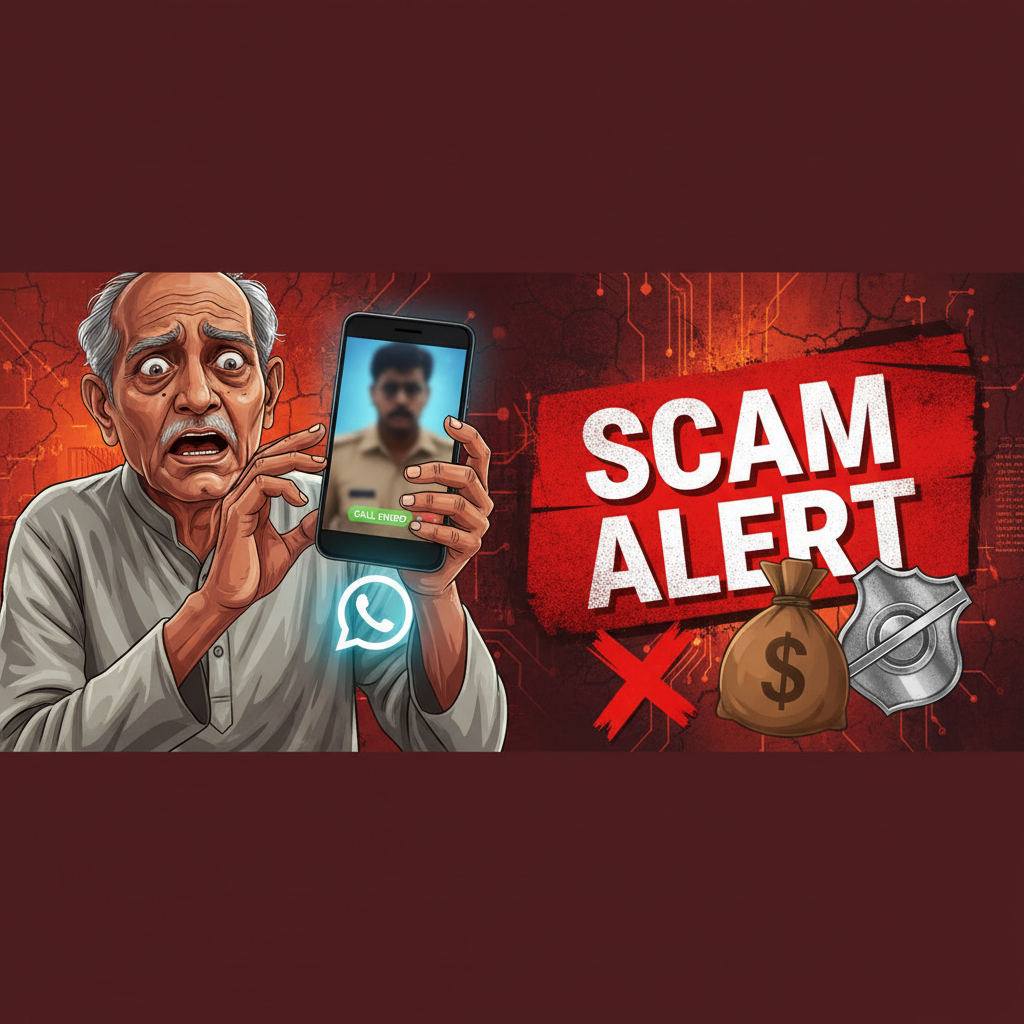
WhatsApp call from Cyber Crime saying account involved in money laundering, what to do?
This high-risk scam, often called the "Digital Arrest" or "Fund Verification" scam, targets individuals, particularly seniors, by impersonating law enforcement or government officials. Scammers use fear tactics, claiming involvement in serious crimes like money laundering, to coerce victims into transferring large sums for "verification."
How This Scam Works
The digital arrest or fund verification scam preys on fear and a lack of awareness regarding legal procedures. It typically begins with an unexpected call, often a WhatsApp video call, from someone impersonating a police officer, CBI, ED, or even Reserve Bank of India (RBI) official. The caller might display a fake ID or even use a doctored photograph as their profile picture to lend credibility. The initial contact usually involves a shocking accusation – your bank account has been used for money laundering, drug trafficking, or some other serious illegal activity. They might even cite specific details, such as an Aadhaar card number or bank account number, which they often obtain from previous data breaches or by simply guessing common patterns. Following this initial shock, the scammer claims that to "clear your name" or "verify your funds," you must transfer a significant amount of money to a designated "suspense account" or "government account." They will assure you this is a temporary measure, and the funds will be returned once the "verification" is complete. They might even threaten you with immediate arrest, freezing of all your assets, or severe legal consequences if you don't comply. In the case of our 76-year-old retired banker, the use of a WhatsApp video call added a layer of perceived authenticity. Seeing a person, even if they are impersonating someone, can be more convincing than just a voice. The scammers then doubled down, with additional fraudsters posing as ED/CBI officials, creating a sophisticated web of deception. They leveraged the victim's trust in official institutions and his likely unfamiliarity with digital arrest procedures, which, in India, *do not involve monetary transfers for verification*. The victim was then coerced into transferring a staggering ₹22 lakh, believing he was cooperating with law enforcement to resolve a grave issue. The fraudsters maintain constant pressure, often isolating the victim by telling them not to discuss the matter with family or bank officials, claiming it's part of a top-secret investigation.
Red Flags
- Unsolicited Calls from "Officials":** Genuine law enforcement or government agencies will virtually never contact you out of the blue, especially via WhatsApp, to inform you of serious legal allegations. They follow formal procedures, which typically involve written notices or in-person visits.
- Threats of Immediate Arrest or Account Freezing:** Scammers use fear to bypass rational thought. Real officials follow due process; they don't threaten immediate arrest over a phone call if you don't transfer money.
- Demands for Money for "Verification" or "Clearance":** Government agencies, police, CBI, or ED will *never* ask you to transfer money to "verify" your funds, "clear your name," or for any other reason related to an investigation. This is a tell-tale sign of a scam.
- Requests for Personal Banking Information or OTPs:** Never share your UPI PIN, ATM PIN, CVV, expiry date, or any OTP with anyone over the phone, regardless of who they claim to be. No legitimate official will ever ask for these details.
- Insistence on Secrecy:** Scammers often tell victims not to discuss the matter with anyone, including family or bank officials, claiming it's a "confidential investigation." This isolates the victim and prevents them from getting advice.
- Pressure to Act Immediately:** They will create a sense of urgency, saying that if you don't act now, you will face dire consequences. This is designed to prevent you from thinking clearly or verifying their claims.
- Official-Sounding but Generic Language:** While they might use official-sounding terms, their communication often lacks precise details that a real official would possess, or their explanations might feel convoluted.
How to Stay Safe
- Verify Identity Independently:** If you receive such a call, politely tell the caller you will verify their identity and call them back. *Never* use the number they provide. Instead, look up the official contact details for the purported agency (e.g., local police station, CBI office, ED office) online or from reliable sources and call them independently.
- Understand Official Procedures:** Educate yourself and your family (especially seniors) that legitimate law enforcement or government agencies in India do not conduct "digital arrests" or demand money transfers for investigation or fund verification.
- Never Transfer Money on Demand:** Under no circumstances should you transfer money to accounts designated by callers claiming to be from official agencies for "verification," "clearance," or any other suspicious reason.
- Protect Your Personal Information:** Be extremely cautious about sharing any personal details, including Aadhaar number, PAN, bank account details, or OTPs, over the phone or text, especially if the request is unsolicited.
- Inform Family and Friends:** Discuss common scam tactics with your elderly family members. Encourage them to always consult a trusted family member before acting on any urgent or unusual financial request.
- Block and Report:** If you suspect a call is a scam, block the number immediately. You can report such calls to your telecom provider and the cybercrime helpline.
- Use Official Apps/Channels:** For any government-related inquiry, always use official government websites or verified applications.
If You Are Targeted
- Do Not Panic:** The scammers thrive on creating fear and panic. Take a deep breath and remind yourself that legitimate procedures don't involve threats over the phone or money transfers for verification.
- Do Not Transfer Any Money:** This is paramount. Once the money is transferred, especially to unknown accounts, it is extremely difficult to recover.
- Disconnect the Call:** End the call immediately. Do not engage further with the scammer.
- Report to Cybercrime.gov.in:** File a detailed complaint on the National Cybercrime Reporting Portal (www.cybercrime.gov.in) or call the helpline number 1930. Provide all details, including the phone numbers used by the scammers, screenshots if it was a WhatsApp call, and any bank account details they provided.
- Inform Your Bank:** If you have inadvertently shared any bank details, immediately inform your bank to monitor your account for suspicious activity or to block your cards if necessary.
- Inform Family/Trusted Contacts:** Share your experience with a trusted family member or friend. They can offer support and help you navigate the reporting process.
ScamGuard24 Insight
This scam is particularly dangerous due to its sophisticated psychological manipulation, blending fear with the authoritative guise of government officials. It highlights the critical need for constant public awareness campaigns, especially targeting vulnerable populations like seniors, to demystify official procedures and reinforce that legitimate authorities *never* demand money for investigations.
Suspect a scam right now?
Open ScamGuard24 ScannerRecommended protection tools
AffiliateWe may earn a small commission if you sign up — it never changes our editorial picks.
India's most trusted antivirus. Blocks malicious APKs, UPI phishing and fake banking apps.
Get Quick HealAll-in-one mobile security + VPN. Stops phishing links shared on WhatsApp and SMS.
Try Norton 360Stop reusing passwords. Auto-fills only on the real bank site, never on phishing pages.
Get NordPassRelated alerts
 HIGH RISK
SMS/WhatsApp 'bank account blocked update KYC' link – what to do India 2024?
 HIGH RISK
WhatsApp Election 'rejection' link fake EC msg – what to do?
 HIGH RISK
Comments
Be the first to comment.