
Shaadi.com Match Asking for Emergency Money - Is it a Scam, What to Do?
Matrimonial fraud is a heartbreaking and financially devastating scam where fraudsters build trust on dating platforms and then request money for fabricated emergencies. This alert focuses on recent incidents on Shaadi.com where matches, after weeks of communication, suddenly ask for financial assistance, often preying on emotions and the desire for a life partner.
How This Scam Works
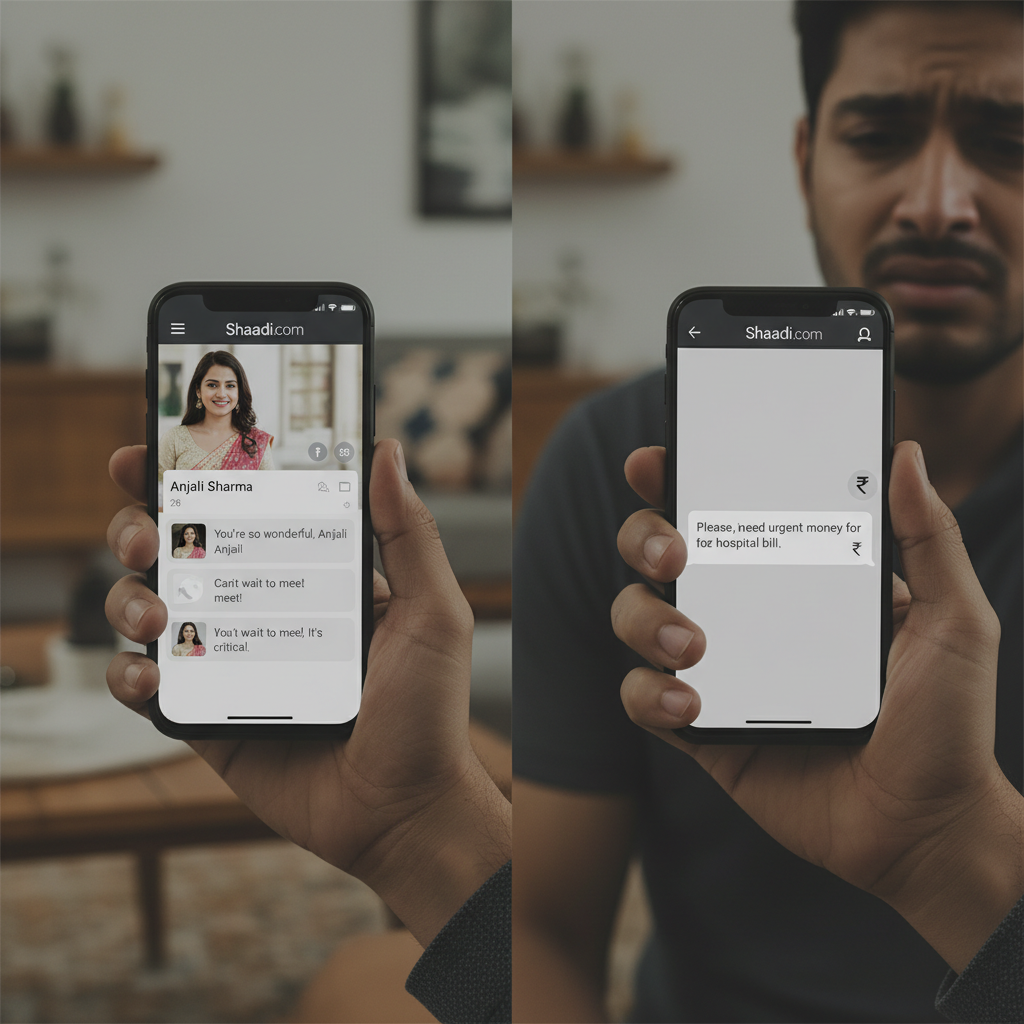
The scammer typically initiates contact on a matrimonial site like Shaadi.com, creating a detailed and often appealing profile. They invest significant time in building a rapport with their target, engaging in long conversations, sharing personal anecdotes (often fabricated), and making promises of a shared future. They might claim to be an NRI (Non-Resident Indian), have a high-flying job, or a successful business, contributing to a sense of security and aspiration. After several weeks of consistent communication – through the matrimonial platform, WhatsApp, or even phone calls – where they’ve established an emotional connection and gained the target's trust, the "emergency" strikes. This emergency is deliberately designed to evoke sympathy and a sense of urgency. Common scenarios include: * **Medical Emergency:** A sudden, severe illness of a close family member (parent, sibling, child from a previous relationship), requiring immediate, expensive treatment, often in a foreign country or a reputable Indian hospital. They might even send fake hospital bills or doctor's notes. * **Business Trouble:** An urgent financial need for their business to avoid a major loss, secure a crucial deal, or clear customs for goods, claiming a temporary cash flow problem. * **Travel Complications:** Being stranded in a foreign country, needing money for a flight ticket, visa issues, or hotel expenses, often stating their bank accounts are temporarily frozen or inaccessible. * **Legal Difficulties:** Facing an unexpected legal issue, like a sudden fine, arrest, or property dispute, requiring immediate funds for lawyers or bail. The request for money is always framed as temporary, with a promise of quick repayment once their "situation" is resolved. They might ask for modest sums initially to test the waters, such as ₹10,000-₹20,000, gradually increasing the demands to lakhs. They often insist on immediate payment via UPI, bank transfer, or even demand gifts in the form of high-value vouchers or gold, bypassing official channels to avoid scrutiny. They become persistent, emotionally manipulative, and may even resort to guilt-tripping if the target hesitates. Once the money is transferred, the scammer either disappears completely, blocks all communication, or invents new emergencies to extract more funds.
Red Flags
- Rapid Development of Feelings:** The scammer expresses intense emotions and talks about marriage very early in the interaction, without sufficient time to build a genuine relationship.
- Constant Life Crises:** They frequently experience major personal or financial emergencies that require immediate monetary assistance from you.
- Avoidance of Video Calls/In-Person Meetings:** They consistently find excuses to avoid video calls, phone calls during specific hours, or meeting in person, especially if they claim to be in India.
- Vague Details or Inconsistencies:** Their stories may have loopholes, inconsistent details, or they might become defensive when asked specific questions about their personal life, job, or the emergency.
- Pressure for Quick Decisions:** They create a sense of urgency and pressure you to send money immediately, using emotional blackmail or threats of dire consequences.
- Requests for Money (Any Amount):** This is the biggest red flag. Any request for financial assistance, gifts, or loans from someone you've only known online is a strong indicator of a scam.
- Unusual Payment Methods:** They insist on specific payment methods like UPI to personal accounts, gift cards, or cryptocurrency, rather than official, traceable channels.
- Claims of NRI Status with Indian Problems:** They might claim to live abroad but suddenly face an issue in India that only you, in India, can resolve financially.
How to Stay Safe
- Never Send Money:** Under no circumstances should you ever send money, gift cards, or make any financial transfers to someone you've only met online, regardless of their story or the emotional connection you feel.
- Verify Identity Thoroughly:** Before deepening any relationship, try to verify their identity. Do reverse image searches of their photos. Ask for social media profiles (and cross-check their friends/posts). Insist on video calls. If they refuse, be extremely wary.
- Guard Your Personal Information:** Be extremely cautious about sharing sensitive personal information like your Aadhaar number, PAN details, bank account numbers, or OTPs, especially if they claim it's for "verification" or "processing a gift."
- Trust Your Gut Instincts:** If something feels too good to be true, or if you feel pressured or uncomfortable, it probably is a scam. Listen to your intuition.
- Discuss with Trusted Friends/Family:** Talk about your connections with trusted friends or family members. An objective outsider can often spot red flags that you might miss due to emotional involvement.
- Report Suspicious Profiles:** If you encounter a suspicious profile or receive a request for money, immediately report the user to the matrimonial platform (e.g., Shaadi.com support) and cease all communication.
- Educate Yourself:** Stay informed about common matrimonial scams and their tactics. Awareness is your best defense.
If You Are Targeted
- Stop All Communication Immediately:** As soon as you suspect a scam, block the scammer on all platforms (matrimonial site, WhatsApp, calls, etc.).
- Do Not Send More Money:** If you have already sent money, do NOT send any more funds, no matter how convincing their next emergency sounds.
- Gather Evidence:** Collect all chat logs, screenshots of profiles, transaction details (UPI IDs, bank transfer receipts), and any other communication you have had with the scammer. This evidence will be crucial.
- Report to Platform:** File a detailed complaint with the matrimonial site (e.g., Shaadi.com) with all the evidence so they can take action against the fraudster's profile.
- File a Police Complaint (Cybercrime):** Immediately file a complaint with the cybercrime unit of the Indian Police. You can do this online at www.cybercrime.gov.in or visit your local police station. Provide all gathered evidence.
- Inform Your Bank:** If you transferred money, contact your bank immediately and explain that it was a fraudulent transaction. While recovery is often difficult, early reporting increases the chances of tracing the funds.
ScamGuard24 Insight
Matrimonial fraud thrives on emotional manipulation and the desire for companionship. Scammers often leverage the societal pressure to marry and the trust associated with platforms like Shaadi.com, making these attacks particularly insidious. Remember, genuine relationships are built on mutual respect and transparency, not on financial dependency or urgent pleas for funds.
Suspect a scam right now?
Open ScamGuard24 ScannerRecommended protection tools
AffiliateWe may earn a small commission if you sign up — it never changes our editorial picks.
India's most trusted antivirus. Blocks malicious APKs, UPI phishing and fake banking apps.
Get Quick HealAll-in-one mobile security + VPN. Stops phishing links shared on WhatsApp and SMS.
Try Norton 360Stop reusing passwords. Auto-fills only on the real bank site, never on phishing pages.
Get NordPassRelated alerts
 MEDIUM
Shaadi.com match asking for emergency money after a few weeks — what to do?
 MEDIUM
Shaadi.com match asking for emergency money - is it a scam? How to check in India.
 MEDIUM
Comments
Be the first to comment.