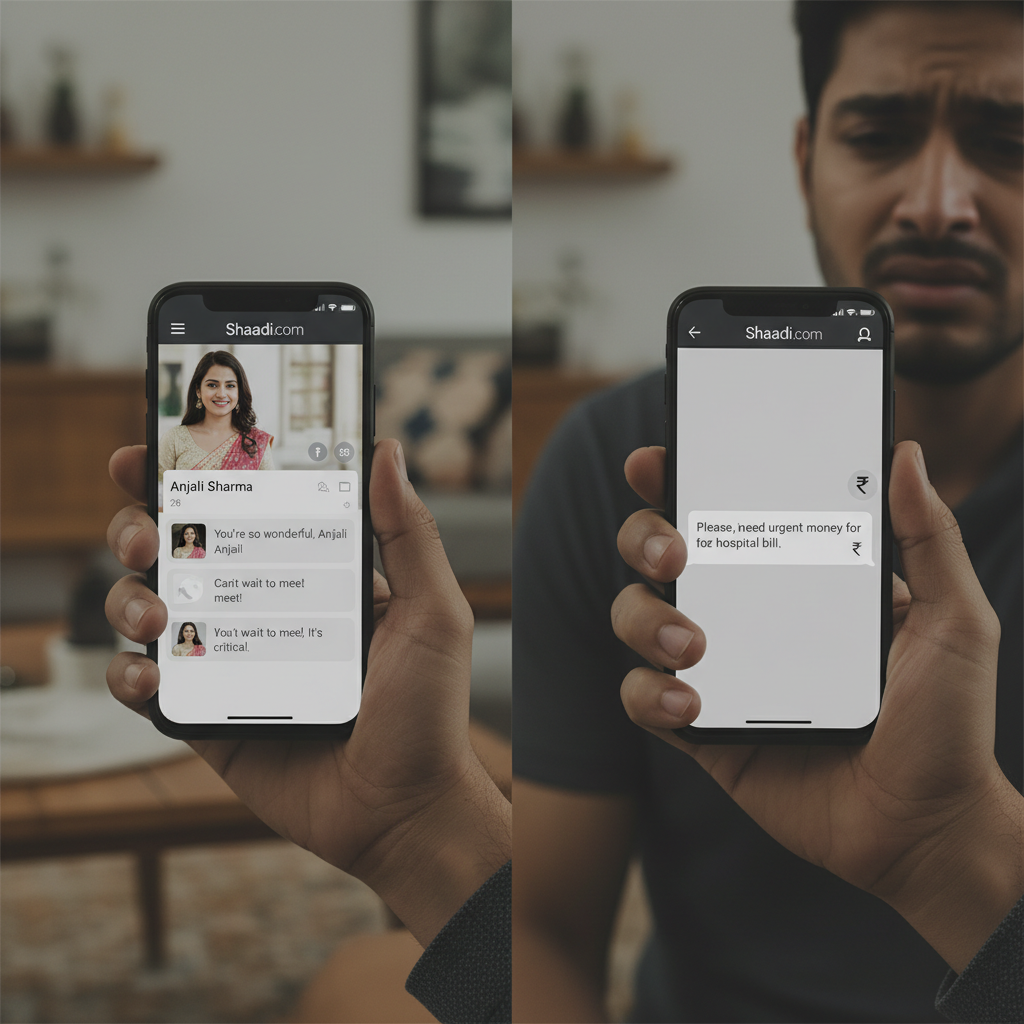
Shaadi.com match asking for emergency money - is it a scam? How to check in India.
Matrimonial fraud is a heartbreaking scam where fraudsters build emotional connections on dating or matrimonial platforms, only to exploit their victims financially. This alert focuses on a common tactic: a seemingly genuine match on Shaadi.com requests urgent financial assistance after a short period of communication, often citing medical emergencies or unavoidable crises.
How This Scam Works
The scammer, often using a fabricated profile with attractive photos and a seemingly credible background (e.g., working abroad, a good family, stable job), initiates contact on platforms like Shaadi.com. They are excellent at mirroring your interests and values, quickly building a deep emotional rapport. They might spend weeks chatting, exchanging messages, and even making calls, creating a sense of intimacy and trust. They'll often talk about future plans, marriage, and a life together to solidify their position. Once they feel they've established a strong emotional connection, the scammer introduces a sudden, urgent crisis. This is usually something designed to elicit immediate sympathy and financial help, such as: * **Medical Emergency:** A sudden illness requiring expensive treatment for a parent, sibling, or even themselves, with an urgent need for funds that their "bank account is temporarily blocked" or "overseas funds are delayed." * **Business Opportunity Gone Wrong:** An unexpected investment loss, a customs issue with a shipment, or a legal problem that requires immediate payment to avoid significant losses. * **Travel Issues:** They might claim to be stuck in another country due to a visa problem, lost passport, or flight cancellation, needing money for tickets or official fees. * **Family Crisis:** A death in the family requiring travel to another city or country, or a sudden debt needing to be cleared to save a family home. They will pressure you with emotional appeals, emphasizing their helplessness and your role as their "future partner" or "only hope." They might send fake documents, hospital bills, or legal papers to lend credibility. They'll ask for varying amounts, often starting small to test the waters and then escalating their demands. Payments are usually requested via methods that are hard to trace in India, like UPI transfers to individual accounts, gift cards, or even direct bank transfers to accounts they claim belong to a "friend" or "relative." They will always have an excuse for why they can't meet in person or why their own funds are inaccessible. Once the money is sent, they may continue to demand more, or suddenly disappear, blocking all communication.
Red Flags
- Rapid Emotional Connection:** The scammer declares strong feelings (love, commitment) very quickly, often within a few days or weeks of initial contact, and talks about marriage unusually early.
- Never Available for Video Calls/In-Person Meetings:** They consistently have excuses for not meeting face-to-face or engaging in video calls, often citing internet issues, being in a remote location, or a "shy nature."
- Requests for Money, Even Small Amounts:** Any request for financial help, no matter how small, especially within a few weeks of knowing them, is a massive red flag. This includes requests for "travel money," "visa fees," "medical bills," or "business investments."
- Constant Emergencies:** Their life seems to be a continuous series of urgent, expensive crises that only your financial help can resolve.
- Inconsistent Stories/Reluctance to Share Details:** Their stories might change slightly over time, or they might become defensive when you ask specific questions about their background, family, or employment.
- Pressure and Secrecy:** They pressure you to act quickly, create a sense of urgency, and often ask you not to tell anyone else about the financial request, citing privacy or embarrassment.
- Foreign or Remote Location:** They often claim to be working or living abroad, which makes verifying their identity and meeting in person difficult.
- Poor Language/Grammar:** Despite claiming to be educated, their written communication might have inconsistencies or grammatical errors, especially if they are pretending to be from a Western country.
How to Stay Safe
- Never Send Money:** The golden rule: NEVER send money to someone you haven't met in person, regardless of how convincing or desperate their story sounds. This includes UPI, bank transfers, gift cards, or any other form of payment.
- Verify Identity Independently:** Ask for their professional social media profiles (LinkedIn), and try to verify details independently. A legitimate person would not hesitate to share this information. Be wary if their profiles seem sparse or recently created.
- Video Call Early and Often:** Insist on video calls to see if the person matches their photos. If they refuse, make excuses, or the calls are always blurry/choppy due to "bad signal," be extremely suspicious.
- Trust Your Gut:** If something feels off, it probably is. Scammers are master manipulators. If their story is too good to be true, or too tragic to be real, it likely isn't.
- Talk to a Trusted Friend or Family Member:** Share the details of your online relationship with someone you trust. An objective third party can often spot red flags you might miss due to emotional involvement.
- Reverse Image Search:** Use tools like Google Images reverse search to check if their profile pictures are stolen from other people or stock photos.
- Report Suspicious Profiles:** If you suspect a profile is a scammer, report them immediately to Shaadi.com. This helps protect others.
- Be Patient:** Don't rush into deep emotional commitments or financial decisions. A genuine relationship develops over time.
If You Are Targeted
- Stop All Contact Immediately:** Block the scammer on all platforms (Shaadi.com, WhatsApp, phone, etc.). Do not engage in further conversation or arguments.
- Do Not Send Any More Money:** Even if you've sent money before, do not send another penny. This will only encourage them to ask for more.
- Collect Evidence:** Take screenshots of your conversations, their profile, payment requests, and any transaction details. This evidence will be crucial if you decide to report the scam.
- Report to Shaadi.com:** Inform the matrimonial site about the fraudulent profile. They can investigate and take down the account.
- File a Police Complaint (Cybercrime India):** Visit the National Cybercrime Reporting Portal (cybercrime.gov.in) or call the helpline 1930 to file a complaint. Provide all collected evidence. Even if the money is non-recoverable, reporting helps authorities track scammers. If you transferred via UPI or bank, inform your bank immediately.
- Inform Your Bank:** If you transferred money via your bank account or UPI, contact your bank or UPI service provider immediately to report the fraudulent transaction. They may be able to freeze the funds if the transfer is very recent, though recovery is often difficult.
- Seek Emotional Support:** Being a victim of matrimonial fraud can be deeply upsetting. Talk to friends, family, or a counselor to process the emotional impact.
ScamGuard24 Insight
Matrimonial fraud thrives on emotional vulnerability and the desire for companionship. Scammers invest significant time in building trust before making their move, making these scams particularly devastating. Always prioritize financial safety over emotional attachment in early online interactions.
Suspect a scam right now?
Open ScamGuard24 ScannerRecommended protection tools
AffiliateWe may earn a small commission if you sign up — it never changes our editorial picks.
India's most trusted antivirus. Blocks malicious APKs, UPI phishing and fake banking apps.
Get Quick HealAll-in-one mobile security + VPN. Stops phishing links shared on WhatsApp and SMS.
Try Norton 360Stop reusing passwords. Auto-fills only on the real bank site, never on phishing pages.
Get NordPassRelated alerts
 MEDIUM
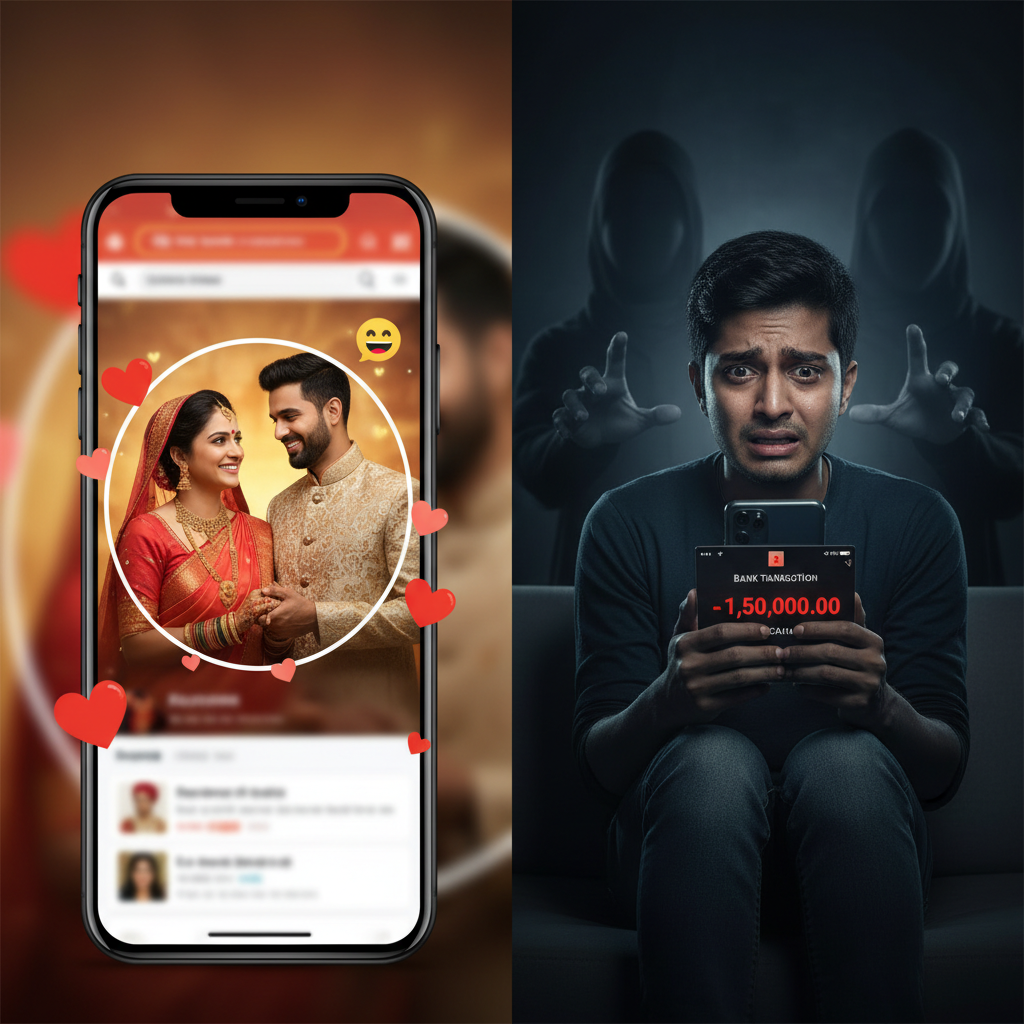
Shaadi.com Match Asking for Emergency Money - Is it a Scam, What to Do?
 MEDIUM
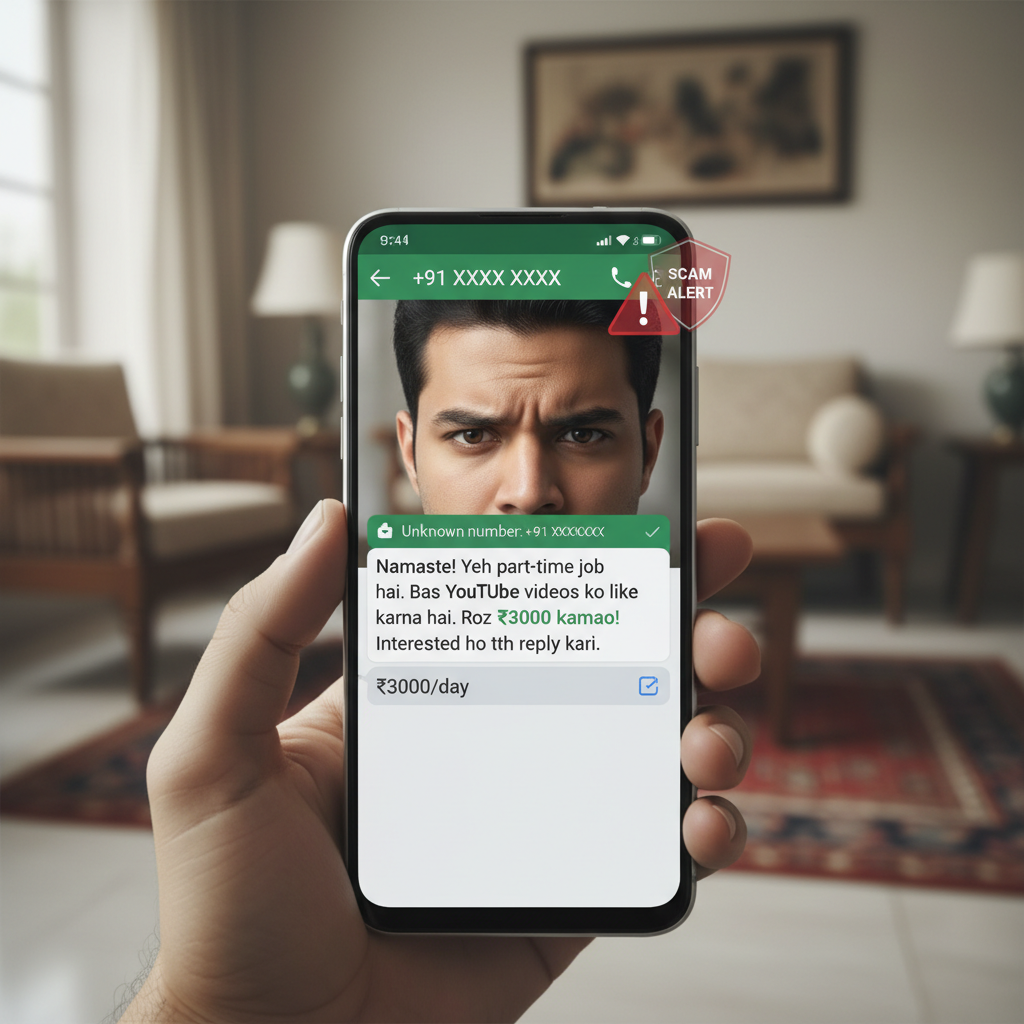
Shaadi.com match asking for emergency money after a few weeks — what to do?
 MEDIUM
Comments
Be the first to comment.