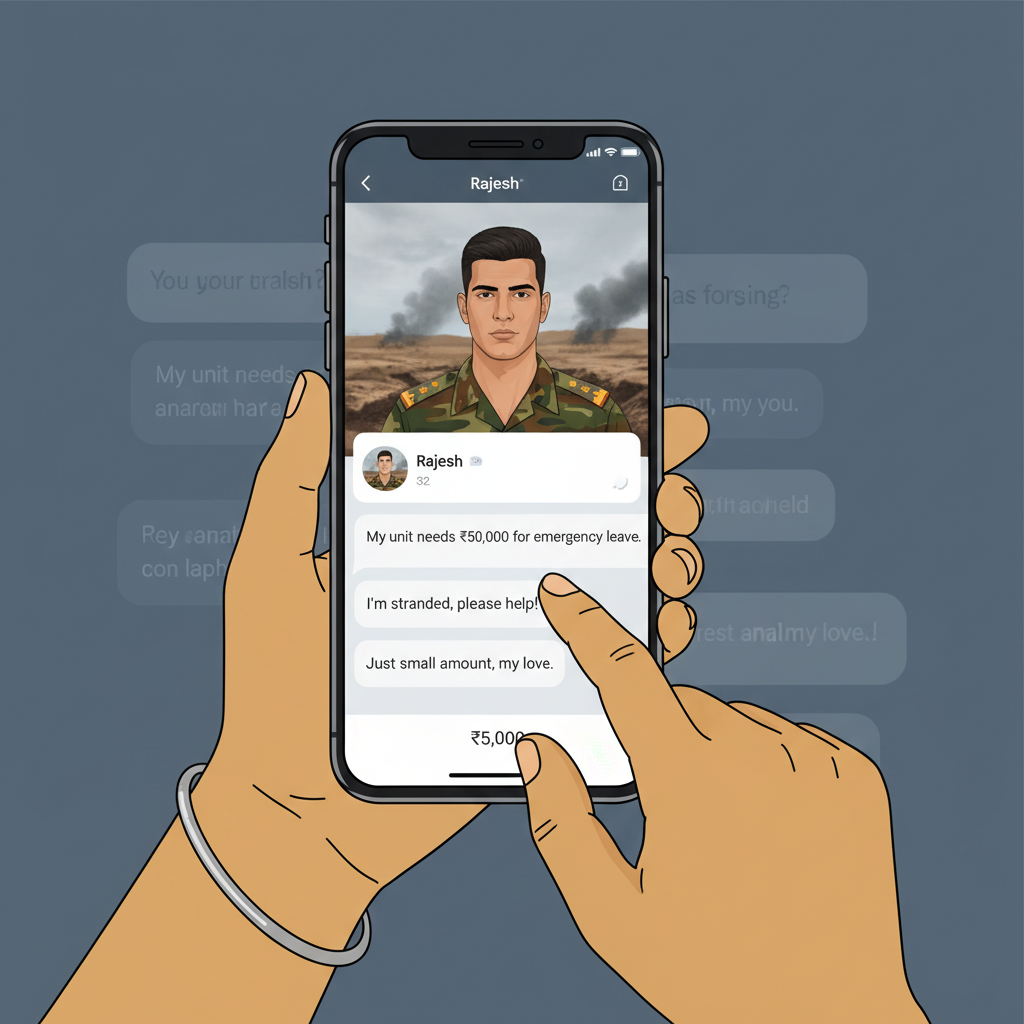
Dating App Soldier asking for ₹50,000 for leave papers – is it a scam? How to check.
A dangerous romance scam preys on emotions, with fraudsters posing as Indian or US soldiers deployed in conflict zones. They quickly build trust, then urgently request money, often for fabricated "emergency leave papers," leaving victims financially and emotionally devastated. This particular variant uses dating and matrimonial platforms to find new targets.
How This Scam Works
This insidious scam begins on dating or matrimonial apps, where fraudsters create elaborate fake profiles. They often pose as attractive, seemingly successful, and dedicated soldiers, sometimes claiming to be Indian Army personnel or even US military members "deployed near the Iran border" (a common fabrication to explain limited communication and justify asking for non-local currency help). They exhibit patience in building a strong emotional connection, using heartfelt messages, flattering words, and shared "dreams" to establish trust and intimacy. The scammers are expert manipulators, often sharing fabricated stories of loneliness, difficult deployments, and a desire for a stable future back home in India. They might send stolen photos of real soldiers or create convincing backstories. Once they feel they've hooked their target, they introduce an "urgent crisis." This is where the ₹50,000 request for "emergency leave papers" comes in. They might claim a family emergency, a critical illness, or a need to return home to meet their beloved, but they *always* require funds that they cannot access themselves due to their "deployment status." They will insist that the money is temporary, will be repaid upon their return, or is for an official process that only the civilian "loved one" can facilitate. They will pressure the victim with emotional pleas, guilt trips, and false promises of a future together. They might even provide fake "official" looking documents or contact details for "senior officers" or "diplomatic liaisons" to add credibility. These contacts are, of course, part of the scam. The payment methods requested are almost always untraceable, such as gift cards, cryptocurrency, or direct bank transfers to mule accounts. Once the money is sent, the "soldier" often disappears, or invents new emergencies requiring more funds, until the victim either runs out of money or finally realizes they've been scammed.
Red Flags
- Rapid Development of Intense Feelings:** The scammer expresses strong emotions and declarations of love very quickly, often within days or weeks of initial contact, describing the relationship as "destiny" or "soulmates."
- Claiming to be a Soldier in a Remote Area:** They often state they are Indian or US military personnel deployed to a conflict zone (e.g., "near the Iran border," Afghanistan, Syria, etc.) which conveniently explains why they cannot meet in person, use their own money, or have limited communication.
- Requesting Money for "Emergency Leave Papers" or Other Official-Sounding Fees:** This is a classic tactic. Real military personnel do not need to pay for leave papers out of pocket, nor do they rely on civilians to facilitate their administrative processes or travel.
- Avoidance of Video Calls/In-Person Meetings:** They will always have an excuse for why they can't do a video call or meet in person, citing "military restrictions," "poor internet," or "covert operations."
- Poor Grammar/Spelling Inconsistent with Claimed Background:** Despite claiming to be educated, their writing might contain errors or phrasing that suggests a non-native English speaker, even if they claim to be Indian or American.
- Pressure and Urgency:** They create a sense of extreme urgency around the financial request, making the victim feel guilty or responsible if they don't comply immediately.
- Requesting Unusual Payment Methods:** They will typically ask for money via untraceable methods like UPI to various individual accounts, gift cards, cryptocurrency, or wire transfers, rather than official channels.
- Exaggerated Stories and Hardship:** Their life story will often be filled with dramatic hardships, tragedies, and a desire for a peaceful, loving future (with you).
How to Stay Safe
- Be Skeptical of Strangers on Dating Apps:** Trust your instincts. If a new connection seems too good to be true, they probably are. Don't let emotions override your critical judgment.
- Verify Identities (Carefully):** While difficult with sophisticated scammers, try to reverse image search their profile pictures. Often, these photos are stolen from real military personnel's public profiles. Be wary if the same photo appears under different names or contexts.
- Never Send Money to Someone You Haven't Met In Person:** This is the golden rule. Any request for money, especially from someone you've only communicated with online, is a massive red flag. Real military personnel have official channels for financial support.
- Understand Military Procedures:** Educate yourself. Military personnel do not pay for leave, travel, or communication services out of their own pocket, nor do they require civilian assistance for these matters.
- Guard Your Personal Information:** Do not share sensitive personal financial details, Aadhaar number, UPI PIN, or bank account information with anyone you meet online.
- Talk to a Trusted Friend or Family Member:** Share details of the relationship with someone objective. An outsider's perspective can often spot red flags you might overlook when emotionally involved.
- Report Suspicious Profiles:** If you encounter a profile exhibiting these red flags, report it immediately to the dating or matrimonial app administrators to protect others.
If You Are Targeted
- Stop All Communication Immediately:** As soon as you suspect a scam, block the scammer on all platforms and cease all contact. Do not try to reason with them or explain your suspicions.
- Do Not Send Any Money:** Under no circumstances should you transfer any funds, regardless of the emotional manipulation or threats. Your money will be lost forever.
- Document Everything:** Take screenshots of profiles, conversations, transaction details (if you accidentally sent money), and any other evidence. This will be crucial for reporting.
- Report to Cybercrime (India):** File a complaint immediately on the National Cybercrime Reporting Portal (cybercrime.gov.in) or call their helpline at 1930. Provide all documented evidence.
- Inform Your Bank/Financial Institution:** If you sent money, contact your bank/UPI provider immediately. They may be able to freeze the transaction, though success is not guaranteed, especially with immediate transfers.
- Report to the Dating/Matrimonial App:** Inform the platform where you met the scammer. This helps them remove the fraudulent profile and prevent future victims.
- Seek Emotional Support:** Being a victim of a romance scam can be emotionally devastating. Talk to friends, family, or a counselor to process the experience.
ScamGuard24 Insight
This scam thrives on emotional manipulation and a false sense of urgency. The "soldier near the Iran border" provides a compelling, yet unverifiable, narrative to isolate the victim and justify the need for immediate, external financial assistance. Always remember that military personnel, whether Indian or foreign, have established protocols and support systems that do not involve soliciting funds from the public for their official duties or personal emergencies.
Suspect a scam right now?
Open ScamGuard24 ScannerRecommended protection tools
AffiliateWe may earn a small commission if you sign up — it never changes our editorial picks.
India's most trusted antivirus. Blocks malicious APKs, UPI phishing and fake banking apps.
Get Quick HealAll-in-one mobile security + VPN. Stops phishing links shared on WhatsApp and SMS.
Try Norton 360Stop reusing passwords. Auto-fills only on the real bank site, never on phishing pages.
Get NordPassRelated alerts
 HIGH RISK
Dating App Soldier asking for ₹50,000 for leave papers – is it a scam?
 HIGH RISK
Dating App Soldier asking ₹50,000 for emergency India leave, is it real?
 HIGH RISK
Comments
Be the first to comment.