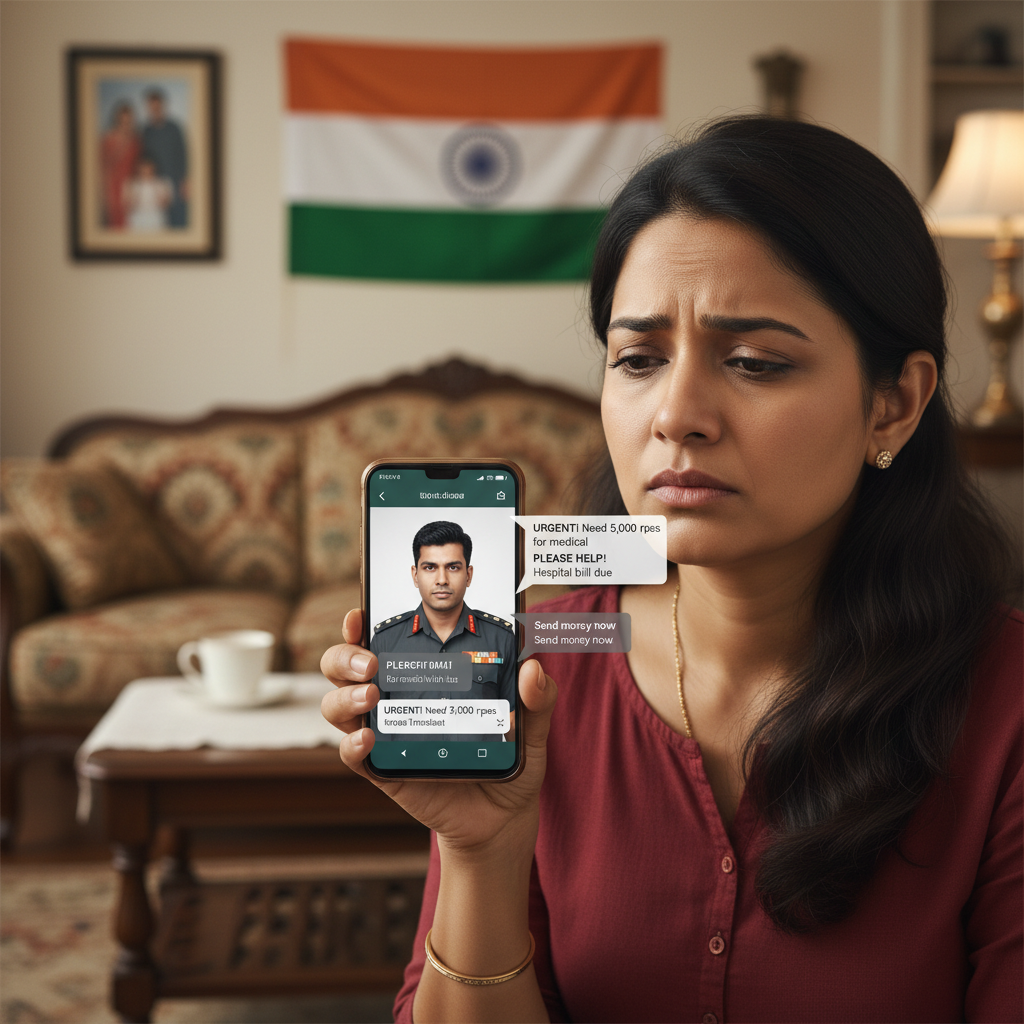
Dating App Soldier asking ₹50,000 for emergency India leave, is it real?
This alert warns about a dangerous "Stranded Soldier Romance Scam" prevalent on dating and matrimonial apps. Scammers pose as Indian or US military personnel deployed in critical areas, building emotional trust before fabricating an urgent financial need. Their goal is to extort money, often for 'emergency leave' or 'medical expenses,' leaving victims heartbroken and financially drained.
How This Scam Works
The Stranded Soldier Romance Scam is a particularly cruel form of financial fraud that preys on empathy and the desire for connection. It begins with the scammer initiating contact on popular Indian dating apps (like BharatMatrimony, Jeevansathi, Shaadi.com, Bumble, Tinder) or even Western apps used by Indians. They often create elaborate, convincing profiles, frequently using stolen photos of attractive individuals in military uniforms. The scammer quickly develops an intense online relationship, often professing strong feelings and promising a future together. They will devote significant time to building rapport, becoming a constant presence in the victim's life through texts, calls, and sometimes even video calls (though these are often brief or pre-recorded to avoid revealing their true identity). They will share "personal" details, making the victim feel special and deeply connected. Their supposed military deployment, often near sensitive borders like Iran or other conflict zones, serves multiple purposes: it explains their inability to meet in person, justifies irregular communication, and adds an element of danger and heroism to their persona. Once the emotional bond is established, the narrative shifts. The scammer suddenly faces an 'urgent crisis' – typically, it's a fabricated need for money to secure emergency leave to visit the victim in India, pay for a sudden medical procedure, cover unexpected military permits, or even return home due to a family emergency. They will stress the urgency and uniqueness of their situation, making the victim feel like they are the only person who can help. The specific request in our example - ₹50,000 for 'emergency leave papers' or 'military clearance' – is a common tactic. They will explain that their funds are 'frozen' due to their deployment, or that military regulations prevent them from accessing money directly. They will then instruct the victim to send money via UPI, bank transfer, or sometimes even gift cards, assuring them that it's just a temporary loan they will repay upon their return and that their "government" will reimburse the victim later. They may even provide 'official-looking' but fake documents (e.g., forged leave applications, military permits) to substantiate their story. The scam doesn't stop at one payment. If the victim sends money, the scammer will invent new crises, each requiring more funds. This could be 'airport security fees,' 'customs charges' for a package they're supposedly sending, or 'unexpected travel complications.' The victim, already emotionally invested and having spent money, often feels compelled to keep sending more, hoping to finally bring their 'love' home. This cycle continues until the victim either runs out of money, becomes suspicious, or is completely drained, at which point the scammer vanishes.
Red Flags
- Rapid Development of Intense Romantic Feelings:** The scammer declares strong feelings very early in the online relationship, often before meeting in person or having extensive conversations.
- Claiming to be in the Military/Deployed Abroad:** They often state they are serving in the military (Indian Army, US Army, UN Peacekeeping) and are deployed to a distant or dangerous location, which explains why they cannot meet in person.
- Immediate Financial Requests, Especially for 'Emergency Leave' or 'Travel':** After building trust, they suddenly have an urgent financial crisis – needing money for emergency leave, flight tickets, 'military permits,' medical expenses, or customs fees.
- Inability to Meet in Person or Video Call Consistently:** They will always have an excuse for not being able to meet or conduct consistent, clear video calls (e.g., "poor signal," "security protocols," "busy schedule").
- Asking for Money via Untraceable Methods:** They will typically ask for money through methods like UPI, bank transfers to individual accounts, gift cards, or cryptocurrency, instead of official channels.
- Pressure and Secrecy:** They pressure you to send money quickly and often ask you to keep the request secret, saying it's "classified" or that others "wouldn't understand."
- Poor Grammar/Spelling & Inconsistent Stories:** Despite claiming to be educated, their communication often contains grammatical errors or their stories have inconsistencies upon closer scrutiny.
How to Stay Safe
- Maintain Healthy Skepticism:** Be wary of anyone you meet online who quickly develops intense feelings for you, especially if they claim to be in the military and deployed abroad.
- Verify Identity (Cautiously):** Ask for verifiable details. While they may send fake documents, genuine military personnel have official email addresses. However, avoid sending your personal details to 'verify' them.
- Never Send Money to Strangers, Especially Online Romances:** Under no circumstances should you send money, gift cards, or provide bank details/UPI PINs to someone you've only met online, regardless of their story. Military personnel have mechanisms for financial support.
- Meet in Person (Safely) or Video Call Extensively:** If a relationship is genuine, they should be willing and able to meet in person or conduct frequent video calls. If they constantly make excuses, it's a major red flag.
- Search and Reverse Image Search:** Use a reverse image search (e.g., Google Images) on their profile picture. Many scammers use stolen photos of real military personnel. Search their name online with terms like "scam" or "fraud."
- Confide in Trusted Friends or Family:** Talk to someone you trust about your new online relationship. An objective viewpoint can often spot red flags that you might miss due to emotional involvement.
- Understand Military Protocols:** Real military personnel, especially those on deployment, have strict protocols regarding finances and communication. It's highly unlikely they would need a civilian to pay for their leave papers or travel.
If You Are Targeted
- Stop All Communication Immediately:** Cut off all contact with the scammer. Block their numbers, social media profiles, and email addresses.
- Do NOT Send Any More Money:** Even if you feel obligated or have already sent some, do not send another rupee. The scammer will continue to ask as long as you comply.
- Report the Profile/Account:** Report the scammer's profile to the dating/matrimonial app platform. Provide all relevant details and screenshots.
- Gather All Evidence:** Collect screenshots of conversations, transaction details, and any fake documents they might have sent.
- File a Cybercrime Complaint:** Immediately report the incident to the Indian Cyber Crime Helpline (1930) and file a complaint on the National Cybercrime Reporting Portal (cybercrime.gov.in). Provide all evidence.
- Inform Your Bank:** If you transferred money via UPI or bank transfer, inform your bank immediately. They might be able to help freeze the transaction if reported quickly enough.
ScamGuard24 Insight
This scam leverages deep emotional manipulation, making it incredibly difficult for victims to disengage. The narrative of a 'stranded soldier' plays on innate human empathy and patriotic sentiments, making the request for 'official' funds seem plausible. Always remember, legitimate military personnel have robust support systems and do not solicit funds from online acquaintances for operational or personal travel expenses.
Suspect a scam right now?
Open ScamGuard24 ScannerRecommended protection tools
AffiliateWe may earn a small commission if you sign up — it never changes our editorial picks.
India's most trusted antivirus. Blocks malicious APKs, UPI phishing and fake banking apps.
Get Quick HealAll-in-one mobile security + VPN. Stops phishing links shared on WhatsApp and SMS.
Try Norton 360Stop reusing passwords. Auto-fills only on the real bank site, never on phishing pages.
Get NordPassRelated alerts
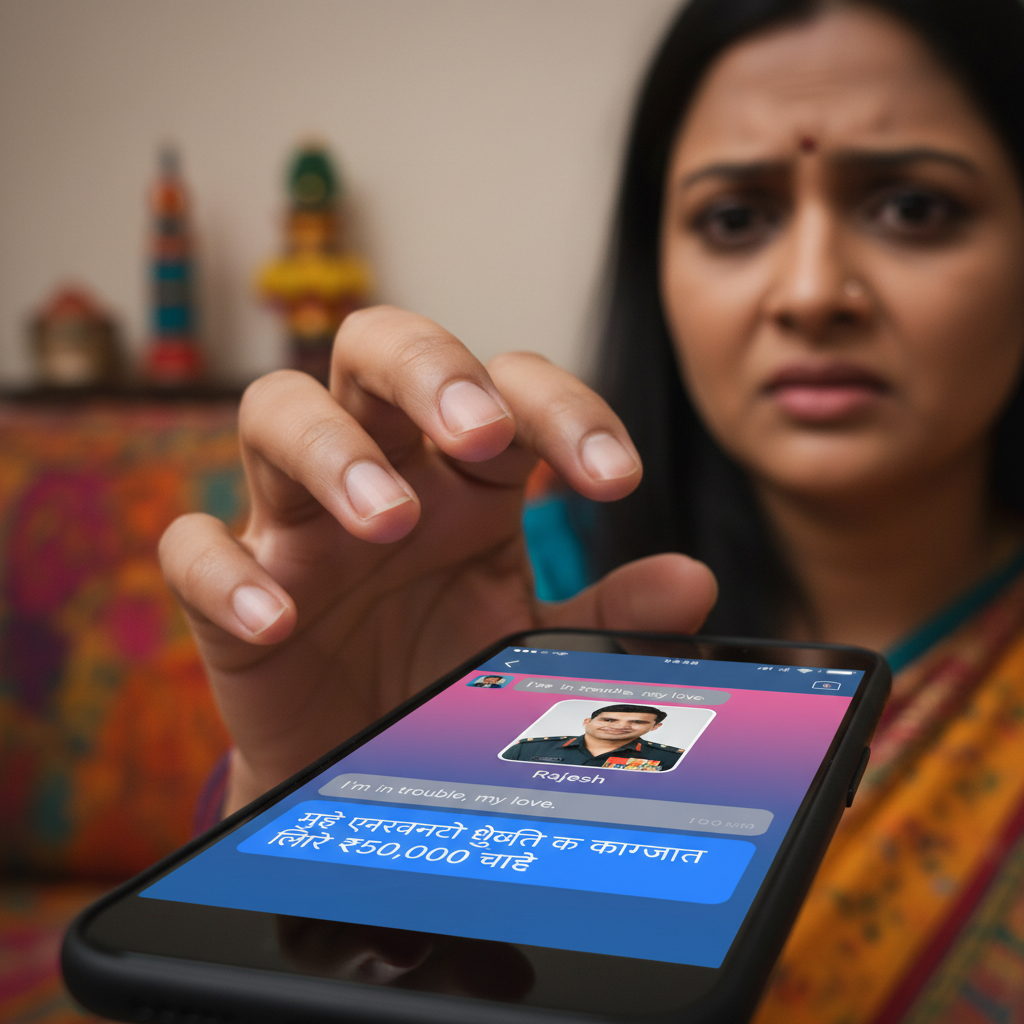 HIGH RISK
Dating App Soldier asking for ₹50,000 for leave papers – is it a scam?
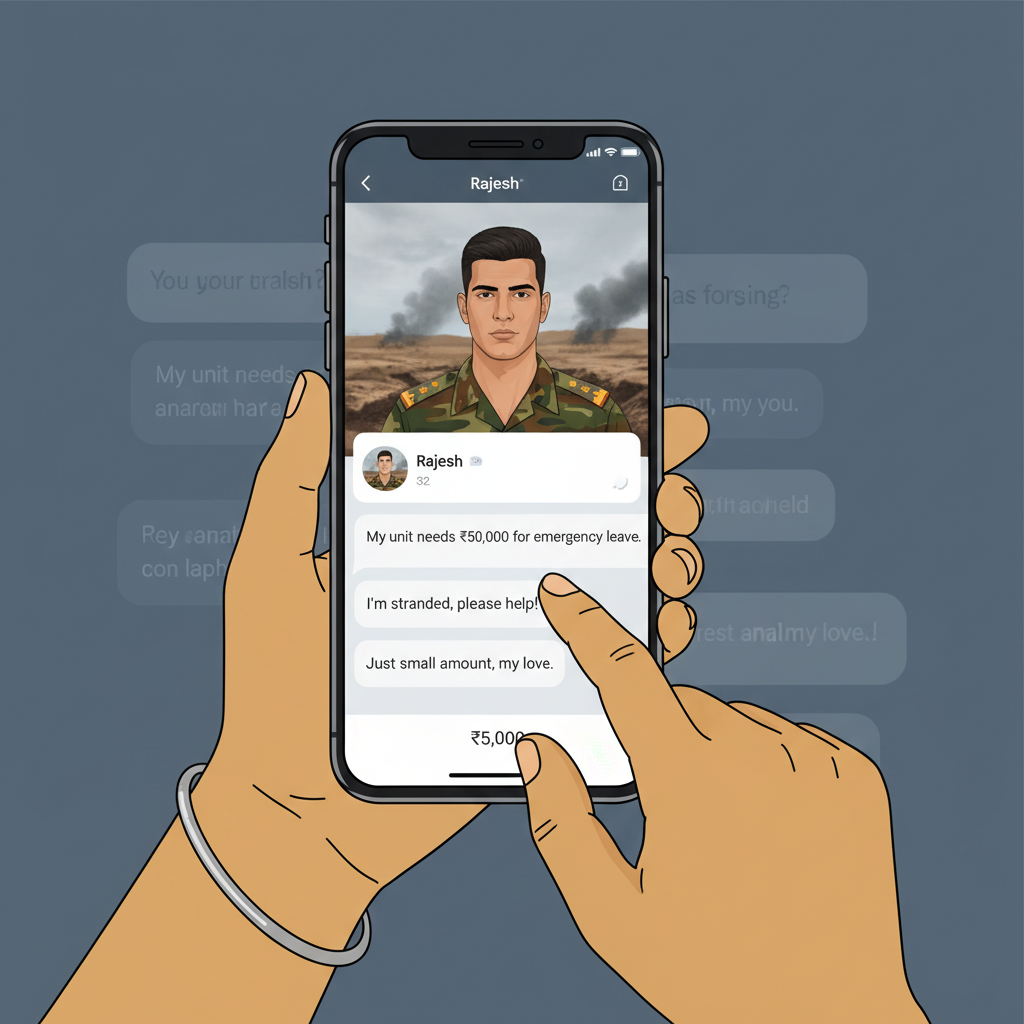 HIGH RISK
Dating App Soldier asking for ₹50,000 for leave papers – is it a scam? How to check.
 HIGH RISK
Comments
Be the first to comment.