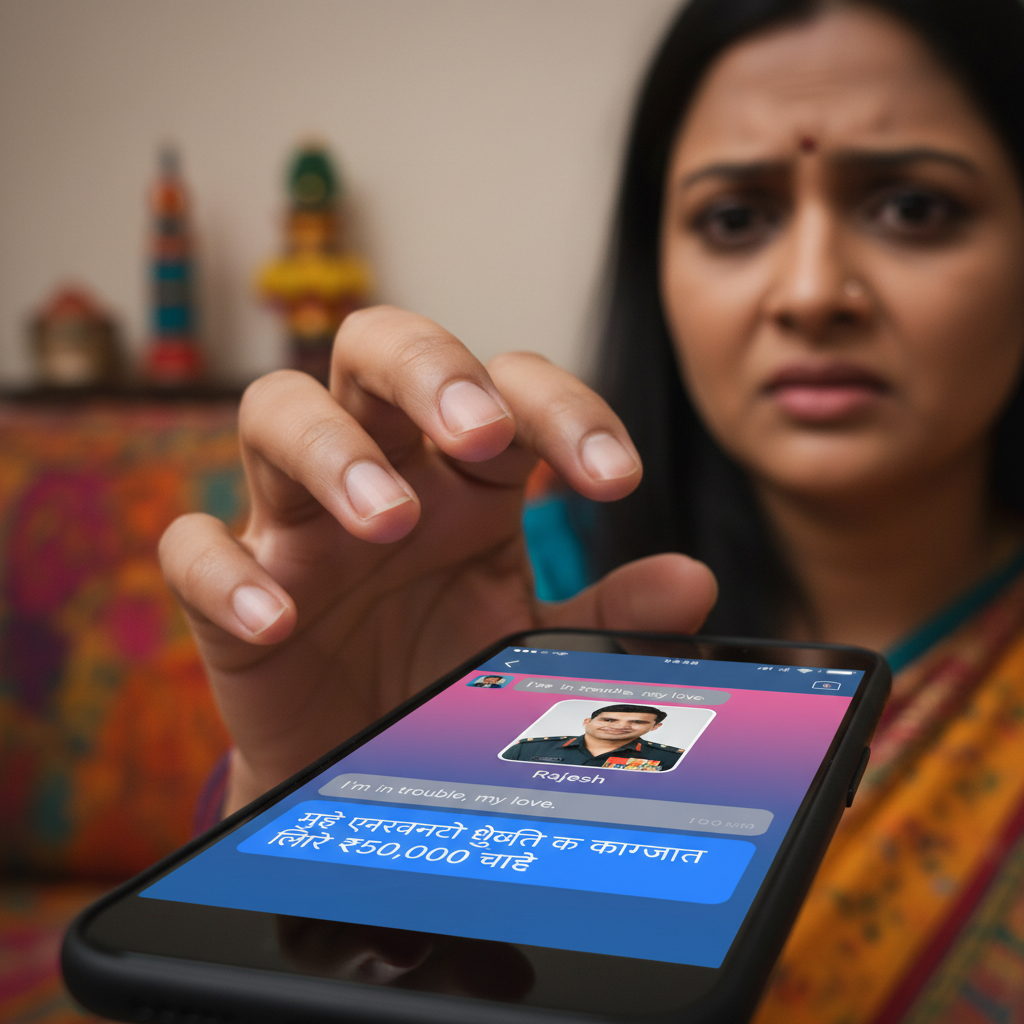
Dating App Soldier asking for ₹50,000 for leave papers – is it a scam?
Romance scams are evolving, and a deeply deceptive variation involves fraudsters posing as Indian or US soldiers deployed in dangerous regions, often near the Iran border. They will build emotional connections on dating apps and then fabricate urgent financial needs, like emergency leave papers, to extract money from their victims, typically ₹50,000 or more. This alert details how to identify and protect yourself from this emotionally manipulative and financially devastating fraud.
How This Scam Works
The "Stranded Soldier Romance Scam" is a sophisticated form of catfishing combined with emotional manipulation, preying on empathy and loneliness. It begins on popular dating or matrimonial apps where the scammer creates a highly appealing, often professional-looking profile, frequently using stolen photos of actual military personnel. They specifically target individuals who might be looking for a serious relationship or companionship. Once a connection is made, the scammer initiates intense and rapid communication, often showering the victim with affection, compliments, and heartfelt promises of a future together. They will claim to be an Indian or US soldier, providing elaborate details about their deployment, often citing a sensitive or dangerous location like near the Iran border. This location detail serves multiple purposes: it justifies their inability to meet in person, explains poor communication signals, and evokes a sense of sympathy and patriotism. Over weeks or even months, they build a deep emotional bond, sharing personal "stories" and vulnerabilities. They will learn about the victim's life, using this information to tailor their narrative and make the connection feel even more authentic. They often express longing for a normal life and a family, painting a picture of an idyllic future with the victim. The turning point comes when the scammer introduces a fabricated emergency. In this specific example, the "soldier" claims an urgent family matter (perhaps a sick relative, a sudden tragedy) requires them to take emergency leave. However, they lament that bureaucratic hurdles, military regulations, or a lack of funds prevent them from processing the necessary "leave papers" or "travel permits." They will explain that they cannot access their own funds due to being in a war zone or frozen military accounts, or that their commanding officers require a direct payment for processing these critical documents. The amount requested is often significant but seemingly manageable, such as ₹50,000. They might subtly guilt-trip the victim, emphasizing the urgency and the potential devastating consequences if the money isn't sent immediately. They will insist on specific payment methods which are difficult to trace, such as UPI payments to individuals, gift cards, or direct bank transfers to third-party accounts (often claiming it's their "friend" or "commander's assistant"). They might even promise to repay the money with interest once they are safely back home. Once the money is sent, the scammer typically disappears, blocks the victim, or invents new, increasingly elaborate emergencies to extract more funds.
Red Flags
- Rapid and Intense Emotional Connection:** The "soldier" declares strong feelings, love, and discusses marriage or a future together very quickly, often within days or a few weeks of connecting online.
- "Highly Classified" or Remote Deployment:** They claim to be serving in a sensitive military zone (e.g., near the Iran border, classified mission) which prevents them from video calls, meeting in person, or having reliable communication.
- Inability to Meet and Reluctance for Video Calls:** They will always have excuses for why they cannot meet in person or even engage in video calls, often citing their "top secret mission" or "poor connection."
- Poor Grammar/Spelling Despite Claimed Background:** Despite claiming to be a highly educated or professional soldier, their written communication often contains noticeable grammatical errors or peculiar phrasing that doesn't match their alleged background.
- Urgent Request for Funds for Bureaucratic/Emergency Leave:** They suddenly need money for "emergency leave papers," "travel expenses," "communication fees," "customs duty for a package," or a "medical emergency" for themselves or a fictional family member, claiming they cannot access their own funds.
- Specific Payment Methods:** They insist on payments via untraceable methods like gift cards, UPI to individual accounts, mobile wallet transfers, or wire transfers to third-party accounts, rather than official channels.
- Inconsistent Stories or Details:** Over time, their stories might have small inconsistencies or details that don't quite add up. If you save their messages, you might notice anomalies.
- Profile Picture Discrepancies:** A reverse image search of their profile picture often reveals it's a stolen image of an actual service member or a model.
How to Stay Safe
- Be Skeptical of "Too Good to Be True" Scenarios:** If someone seems perfect and falls for you rapidly without ever meeting, it's a major red flag. Romance takes time to develop.
- Never Send Money to Someone You Haven't Met In Person:** This is the golden rule. No legitimate military personnel will ask a civilian they met online for money for official needs, especially not for leave papers.
- Verify Identity (Cautiously):** Ask for a video call. If they refuse or constantly provide excuses, it's a strong indicator of a scam. Be aware that deepfake technology is evolving, so even a brief video might not be 100% foolproof, but it's a good first step.
- Perform a Reverse Image Search:** Use tools like Google Images or TinEye to check their profile picture. Scammers often use stolen photos of attractive individuals.
- Research Military Protocols:** Understand that genuine military personnel have established procedures for leave, communication, and financial support that do not involve asking strangers for money.
- Guard Your Personal Information:** Do not share sensitive details like your bank account information, Aadhaar number, or other personal identifiers.
- Discuss with a Trusted Friend or Family Member:** A fresh perspective can often spot red flags that you, being emotionally involved, might miss.
- Be Wary of Guilt Trips and Pressure Tactics:** Scammers often try to rush you into making a decision by creating a sense of urgency and playing on your emotions.
If You Are Targeted
- Stop All Contact Immediately:** Block the scammer on the dating app, phone, and any other communication channels. Do not respond to their messages, no matter how desperate or threatening they become.
- Do Not Send Any Money:** If you haven't sent money, consider yourself lucky and do not initiate any payments.
- Report the Profile:** Report the fraudulent profile to the dating or matrimonial app administrators. Provide as much detail as possible.
- Collect Evidence (If Money Was Sent):** If you have already sent money, gather all available evidence: chat logs, transaction details (UPI IDs, bank transfer receipts), phone numbers, and profile screenshots.
- File a Police Complaint:** Immediately report the incident to your local police cybercrime cell. In India, you can also register a complaint on the National Cybercrime Reporting Portal (cybercrime.gov.in). Provide all collected evidence.
- Inform Your Bank/Payment Service Provider:** If you sent money via UPI or bank transfer, contact your bank or the payment service provider immediately. They might be able to intercept the transaction, though success is not guaranteed, especially with immediate transfers.
- Beware of "Recovery Scams":** Be extremely cautious of individuals who contact you offering to help recover your lost money for a fee. These are often secondary scams targeting prior victims.
ScamGuard24 Insight
This scam thrives on emotional vulnerability and exploits the inherent trust many Indians place in military personnel. The detail about India/US soldier deployed near the Iran border adds a layer of international crisis and exotic danger, making the story more compelling and the urgency more believable. Always prioritize your financial security and emotional well-being over a virtual relationship that immediately demands money.
Suspect a scam right now?
Open ScamGuard24 ScannerRecommended protection tools
AffiliateWe may earn a small commission if you sign up — it never changes our editorial picks.
India's most trusted antivirus. Blocks malicious APKs, UPI phishing and fake banking apps.
Get Quick HealAll-in-one mobile security + VPN. Stops phishing links shared on WhatsApp and SMS.
Try Norton 360Stop reusing passwords. Auto-fills only on the real bank site, never on phishing pages.
Get NordPassRelated alerts
 HIGH RISK
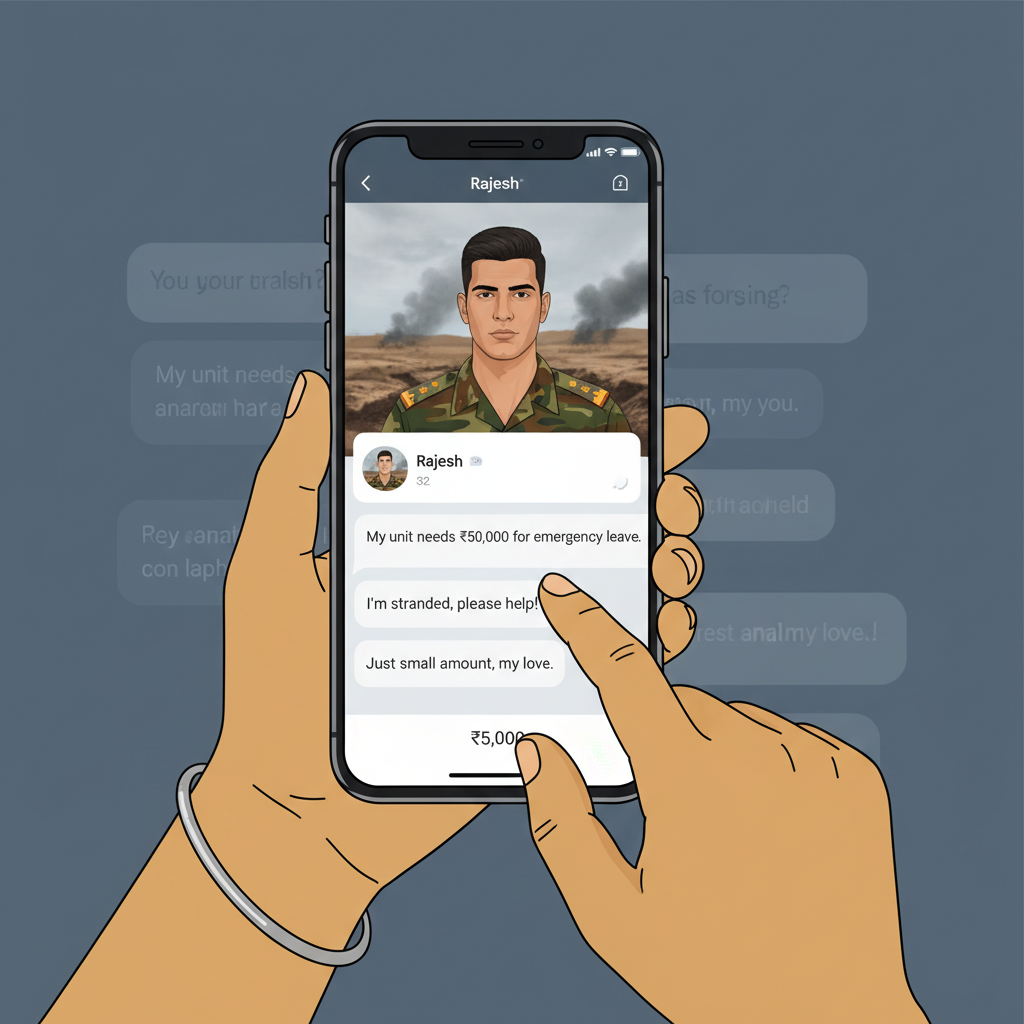
Dating App Soldier asking for ₹50,000 for leave papers – is it a scam? How to check.
 HIGH RISK
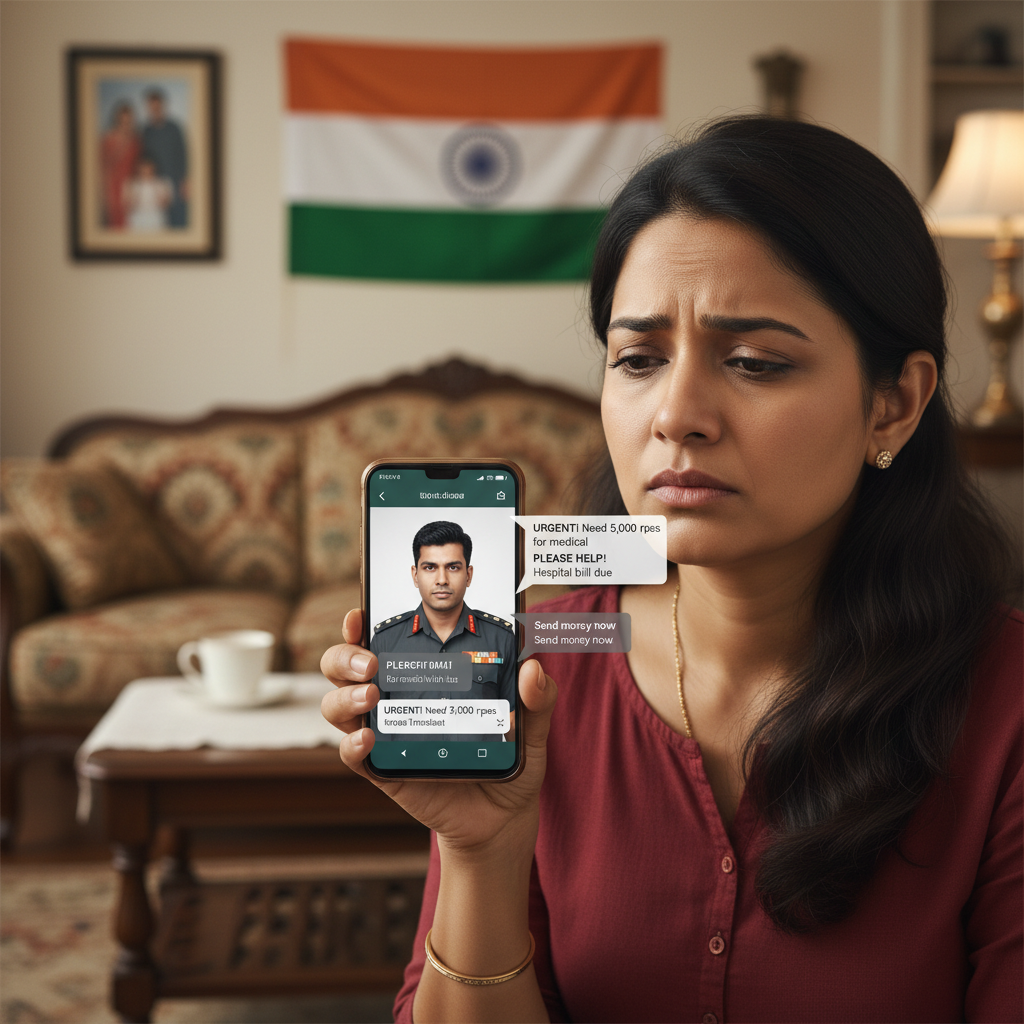
Dating App Soldier asking ₹50,000 for emergency India leave, is it real?
 HIGH RISK
Comments
Be the first to comment.