
WARNING! Instant Loan App Harassment: Your Contacts Are Next!
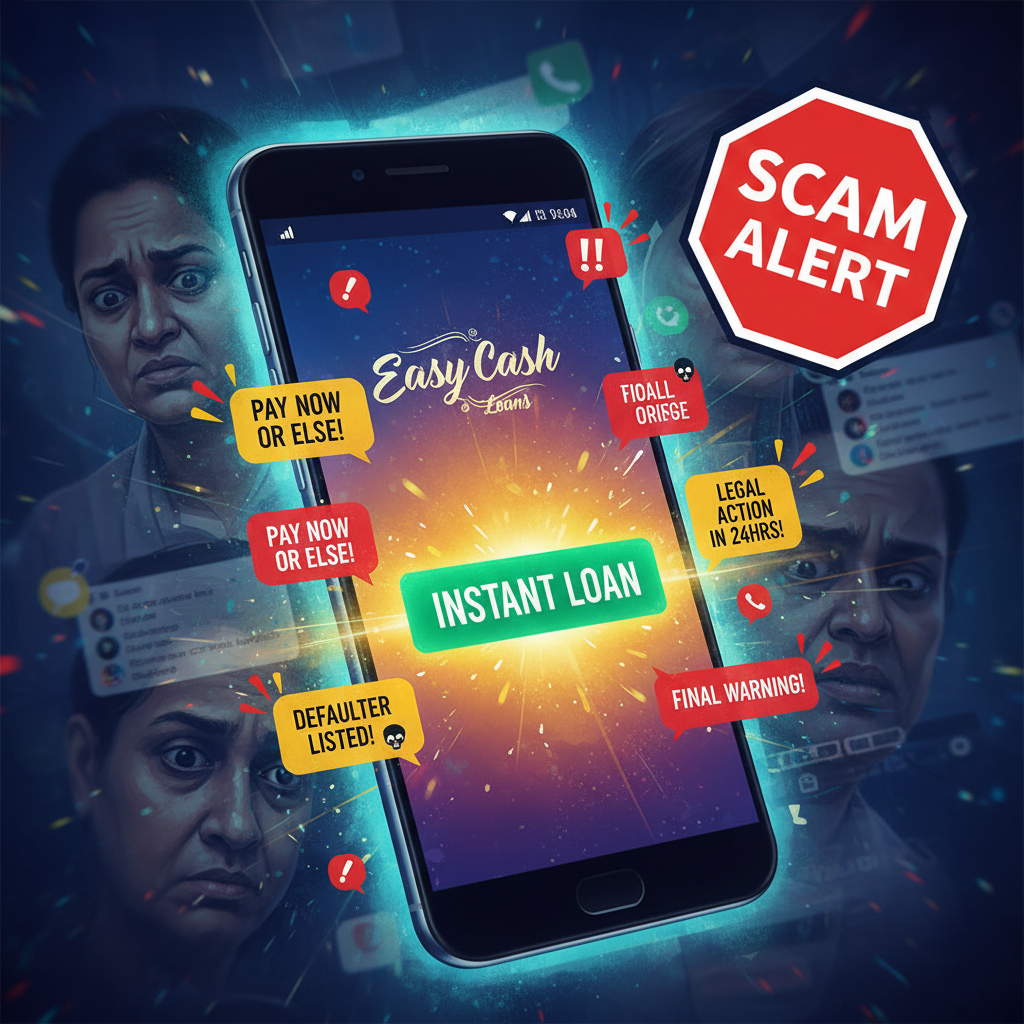
Beware of predatory instant loan apps on Android that lure you with quick cash but then weaponize your personal data. These apps often morph into aggressive debt collection rackets, resorting to blackmailing your contacts and family if you miss even a single EMI payment.
How This Scam Works
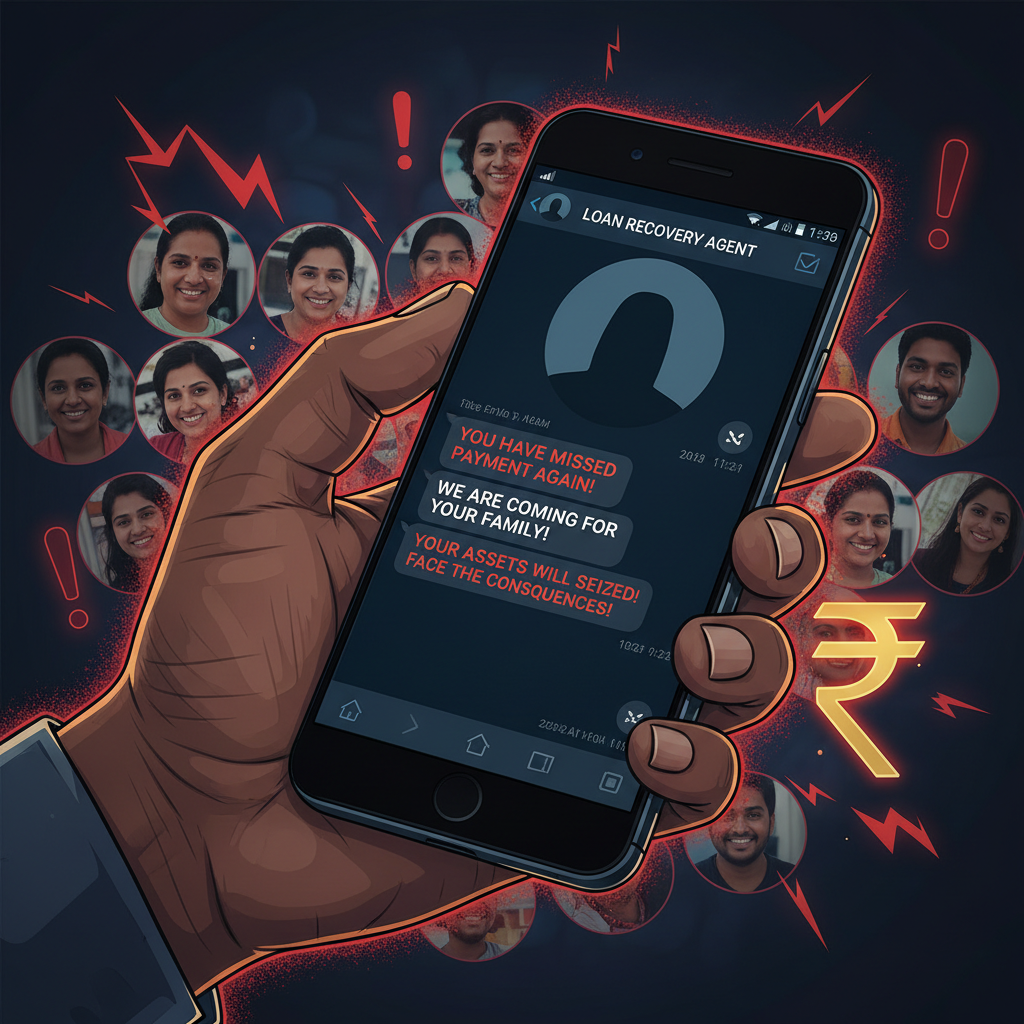
The promise of quick, hassle-free cash for urgent needs is a potent lure, especially in India with its vast unbanked or underbanked population. Scammers exploit this by publishing seemingly legitimate "instant loan" applications on the Google Play Store (and sometimes even outside of it, via APK downloads). Here's the step-by-step breakdown of how this insidious scam typically unfolds: 1. **The Lure:** The apps advertise minimal documentation (often just Aadhaar and PAN cards), instant approvals, and direct bank transfers, making them seem incredibly convenient for those in immediate need of funds. They often use clever marketing tactics, including social media ads or even SMS spam, to reach potential victims. 2. **Excessive Permissions:** During installation, these apps demand an alarming array of permissions. Crucially, they insist on access to your phone's *contact list*, *call logs*, *SMS messages*, *gallery*, and even *microphone and camera*. Many users, eager for the loan, quickly grant these permissions without fully understanding the implications. They often hide this request within a long terms and conditions document that few ever read. 3. **The Loan Disbursal:** Once permissions are granted, an unsecured loan, typically a small amount (e.g., ₹500 to ₹5,000), is quickly disbursed to your UPI ID or bank account. However, what most users don't realize is that the "processing fees" and "interest rates" are astronomically high, sometimes disguised within the disbursed amount itself or as upfront deductions. The repayment period is also often deceptively short – sometimes as little as 7 days, making it incredibly difficult to repay on time. 4. **The Trapdoor - Data Exfiltration:** The moment you grant those permissions, your entire contact list and other sensitive data are uploaded to the scammer's servers. This is the core of their harassment strategy. 5. **Aggressive Debt Collection and Harassment:** If you delay or miss even a single EMI payment, or if you attempt to repay but the app developers claim they haven't received it, the harassment begins. This is where the true terror starts. * **Public Shaming:** The scammers begin sending threatening messages and manipulated images (sometimes falsely claiming you're a defaulter or even a criminal) to your family members, friends, and colleagues whose numbers they extracted from your phone. * **Blackmail and Extortion:** They threaten to expose your personal details, spread rumors, and damage your reputation if you don't pay. They might even create fake police cases or legal threats. * **Cyberbullying:** The attacks can be relentless, with calls and messages coming at all hours, from different numbers. They might even abuse and swear at your contacts. * **Recursive Loans:** In some cases, to "help" you repay an existing loan, they might pressure you into taking another loan from a different linked scam app, trapping you in a never-ending cycle of debt. 6. **No Recourse:** When victims try to complain to the app developers, they often find no legitimate customer service. The apps frequently disappear from the Play Store, only to re-emerge under new names.
Red Flags
- Excessive Permissions:** An instant loan app demanding access to your *full contact list*, *call history*, *SMS messages*, *photos*, or *microphone* is a gigantic red flag. A legitimate lending institution would never need such pervasive access.
- No Physical Address/KYC:** The app provides little to no information about its parent company, physical address, or legitimate contact details. It skips proper KYC (Know Your Customer) procedures, often relying solely on Aadhaar/PAN upload without video verification or physical checks.
- Unsolicited Loan Offers/Aggressive Marketing:** You receive SMS messages or WhatsApp forwards advertising quick loans from unknown sources.
- High Interest Rates & Hidden Fees:** The advertised interest rates seem too good to be true, but upon closer inspection, they are either extremely high, or there are numerous hidden "processing fees," "platform fees," or "convenience charges."
- Very Short Repayment Cycles:** Loans offered with repayment periods of 7, 10, or 15 days are a major warning sign. Legitimate loans typically have longer repayment cycles (months to years).
- Poor App Reviews (Often Buried):** While they might artificially inflate positive reviews, look for consistent complaints about harassment, hidden charges, or data privacy issues in the lower-rated reviews.
- Requests for UPI PIN or Bank Passwords:** No legitimate lender will ever ask for your UPI PIN, bank account password, or OTP (One-Time Password) for disbursal. They only need your account number and IFSC code.
- Urgency & Pressure Tactics:** The app or its representatives pressure you to apply immediately, claiming limited-time offers or instant approval without thorough checks.
How to Stay Safe
- Be Skeptical of "Instant Cash":** If a loan seems too easy or too quick with minimal paperwork and no stringent checks, it's likely a scam. Legitimate financial institutions have robust approval processes.
- Verify the Lender:** Before downloading any loan app, always check if the lender is registered with the Reserve Bank of India (RBI). You can find lists of legitimate Non-Banking Financial Companies (NBFCs) on the RBI website.
- Read Permissions Carefully:** *Crucially*, always review the permissions an app requests *before* installing it. If a loan app asks for access to your contacts, call logs, SMS, or gallery, DO NOT install it.
- Check App Reviews and Developer Information:** Scrutinize reviews, especially the negative ones. Look for the developer's complete address and contact information on the Play Store page. Generic developer names or no contact details are red flags.
- Guard Your Personal Data:** Never share your UPI PIN, bank password, or OTP with anyone. No legitimate entity will ever ask for these.
- Use Official Sources:** Only download apps from the official Google Play Store. Avoid downloading APKs from untrusted websites or through suspicious links.
If You Are Targeted
- Do Not Engage, Do Not Pay Further:** Do not negotiate with the harassers or pay them any more money. Paying them often encourages more harassment, as they know you are willing to comply.
- Screenshot Everything & Collect Evidence:** Take screenshots of all threatening messages, call logs, and any payments made. This evidence is crucial for reporting the crime.
- Report to Cybercrime:** Immediately file a complaint with the National Cybercrime Reporting Portal at www.cybercrime.gov.in. Provide all evidence you have gathered.
- Inform Your Bank:** Inform your bank about the fraudulent transactions or harassment, especially if they are trying to debit your account.
- Block and Report Numbers:** Block the numbers from which you are receiving threatening calls and messages. Report them as spam.
- Inform Your Contacts (Cautiously):** You may consider informing close family and friends *briefly and generally* about the harassment to prepare them, without providing too many specific details that could lead to more panic. Emphasize that it's a scam and to ignore any messages they receive.
- Uninstall the App & Review Permissions:** Uninstall the malicious app immediately. Regularly review and revoke permissions for all apps on your Android phone (Settings > Apps > Select App > Permissions).
- Consider Data Backup & Factory Reset (Extreme Cases):** If the harassment is severe or you suspect deep device compromise, a factory reset after backing up important data might be an option, but this is an extreme step.
ScamGuard24 Insight
This scam leverages psychological manipulation and fear, exploiting the immediate financial needs of individuals. The weaponization of personal data, specifically contact lists, makes this particularly devastating for victims, as it extends beyond financial loss to significant reputational and social damage.
Suspect a scam right now?
Open ScamGuard24 ScannerRecommended protection tools
AffiliateWe may earn a small commission if you sign up — it never changes our editorial picks.
India's most trusted antivirus. Blocks malicious APKs, UPI phishing and fake banking apps.
Get Quick HealAll-in-one mobile security + VPN. Stops phishing links shared on WhatsApp and SMS.
Try Norton 360Stop reusing passwords. Auto-fills only on the real bank site, never on phishing pages.
Get NordPassRelated alerts
 HIGH RISK
Android Instant Loan App Harassment India: Contacts Threatened, What To Do?
 HIGH RISK
Android Loan App harassing friends and family for EMI delay — what to do in India?
 HIGH RISK
Comments
Be the first to comment.