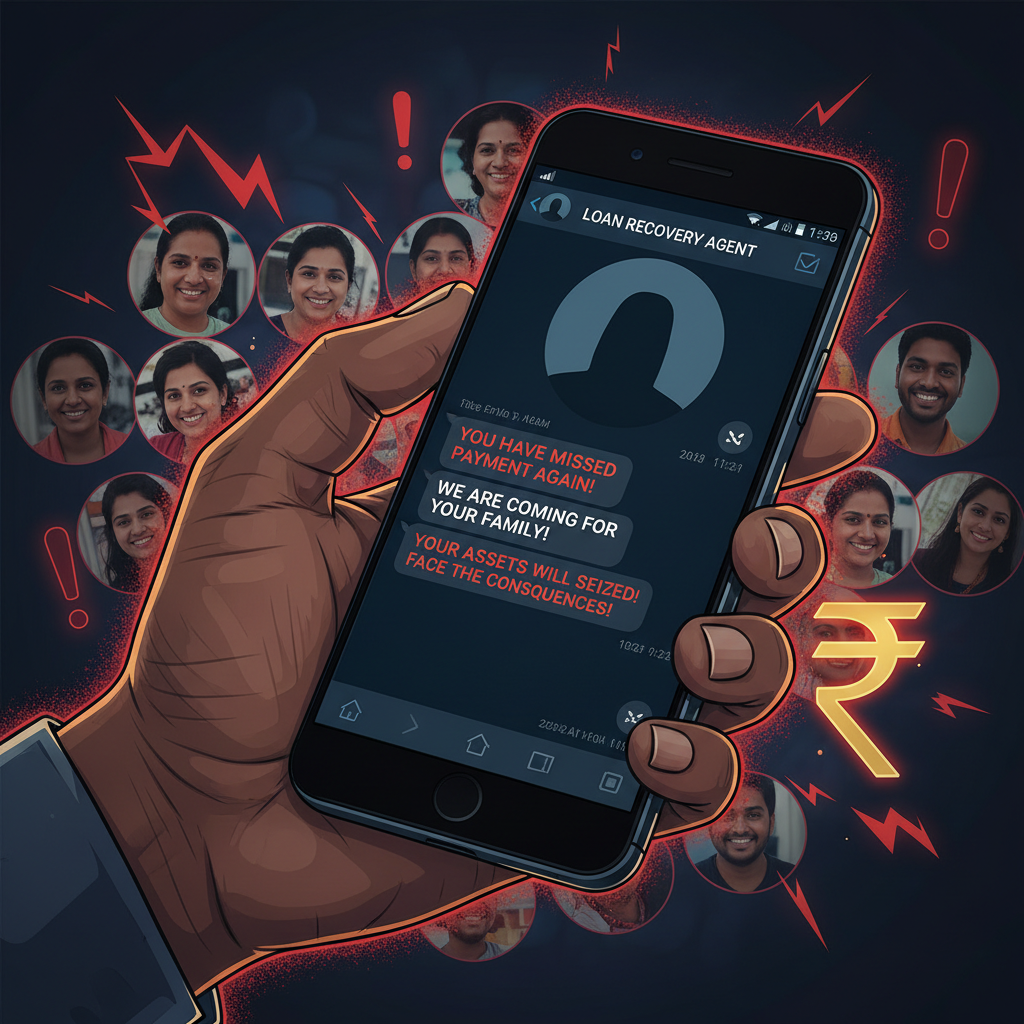
Android Loan App Harassment: Contacts Threatened for EMI - What To Do?
This high-risk scam involves rogue instant loan applications on Android that grant quick loans with minimal checks. When repayments are delayed, these apps weaponize access to your phone's contacts, threatening personal harassment of relatives and friends to coerce immediate payment. Victims often find themselves trapped in a cycle of fear and abuse.
How This Scam Works
The allure of quick cash without extensive paperwork is a powerful draw, especially in times of urgent need. This is precisely what predatory Android loan apps exploit. These apps, often found on unofficial app stores or through misleading advertisements on social media, promise instant loans with seemingly attractive terms. However, the true cost is hidden in their invasive permissions and unethical recovery practices. Here's a step-by-step breakdown of how this vicious cycle unfolds: 1. **Deceptive Marketing and Easy Access:** The scam typically begins with an online advertisement promising "instant cash," "zero collateral loans," or "loans in 5 minutes" without CIBIL score checks. These ads are often circulated on platforms like Facebook, Instagram, or through SMS links. Clicking these links directs users to download an APK file or to an unofficial app store page, rather than the Google Play Store, or, in some cases, a legitimate-looking but malicious app sneakily hosted on the Play Store itself. 2. **Invasive Permissions Requested:** Upon installation, the app requests an alarming array of permissions. This is the critical juncture where the scam sets its trap. Victims, eager for the loan, often grant access without thoroughly reviewing. These permissions typically include: * **Read Contacts:** To access your entire phonebook. * **Read SMS:** To monitor your financial transactions and potentially other OTPs. * **Read Call Logs:** To know who you communicate with. * **Access Camera/Microphone:** For potential video calls or recordings. * **Location Access:** To track your movements. * **Storage Access:** To browse your photos and documents. 3. **Minimal KYC, Instant Disbursal:** The application process is deliberately simplified. You might be asked for your Aadhaar card and PAN card details for KYC, which the scammers use to appear legitimate. Within minutes, a small loan (often much less than initially applied for, but with exorbitant processing fees) is disbursed to your UPI ID or bank account. 4. **Exorbitant Interest and Short Repayment Cycles:** The loan terms are deliberately obscured or presented in fine print that's difficult to understand. The interest rates are astronomical, often exceeding 300-500% annually, and the repayment periods are incredibly short – typically 7 to 15 days, sometimes even less. The processing fees and other hidden charges are deducted upfront, meaning you receive even less than the approved amount. 5. **Aggressive and Abusive Recovery Tactics:** This is where the harassment begins. Even a slight delay in EMI payment, or sometimes even before the due date, triggers a barrage of abusive messages and calls. The "recovery agents," who are often untrained and unethical individuals, start by calling the borrower. If payment isn't immediate, they escalate. 6. **Contact Harassment and Defamation:** Utilising the contacts data they secretly exfiltrated, these scammers begin contacting your family, friends, colleagues, and even distant acquaintances. They send defamatory messages, falsely claiming you are a defaulter, a fraudster, or have taken loans in their name. They share your photos (from your phone's gallery) with derogatory captions. This causes immense social embarrassment, mental trauma, and family distress, forcing victims to pay, often by borrowing more from other such apps, spiralling into a debt trap. 7. **Threats and Psychological Warfare:** The threats extend beyond social defamation. They might threaten legal action (which is baseless as their operations are illegal), physical harm, or even lodge false police complaints. The goal is to instill fear and panic, breaking the victim's resolve until they succumb to the pressure.
Red Flags
- Requests for extensive, unnecessary permissions:** Any loan app asking for access to your contacts, call logs, photos, or SMS messages is a major red flag. Legitimate financial institutions do not require such broad access.
- Loans with no CIBIL check or minimal KYC:** While attractive, this is a hallmark of predatory lending. Reputable institutions always conduct thorough credit assessments.
- Exorbitantly high interest rates or hidden charges:** Lack of transparency about interest, processing fees deducted upfront, or ridiculously short repayment periods (e.g., 7-day loans).
- Aggressive marketing tactics and pressure to install quickly:** Ads that promise instant funds without any scrutiny, often found outside official app stores.
- App not found on Google Play Store or low ratings/suspicious reviews:** Legitimate apps are usually available on the official store with verifiable reviews. Even on Play Store, look for apps with very few downloads but many 5-star reviews, or recent 1-star reviews detailing harassment.
- Unsolicited messages or calls offering instant loans:** If you haven't applied for a loan, be wary of such offers.
- Recovery agents using abusive language and threats:** Legitimate recovery processes follow legal guidelines set by the RBI; they do not involve public shaming or threats.
How to Stay Safe
- Only download apps from official sources:** Always download financial apps directly from the Google Play Store or Apple App Store. Verify the developer and read genuine reviews.
- Carefully review app permissions:** Before installing, scrutinise the permissions an app requests. If an instant loan app asks for access to your contacts, photos, or SMS, *DO NOT INSTALL IT*.
- Read the terms and conditions thoroughly:** Understand the interest rates, processing fees, and repayment schedule before accepting any loan offer. If anything seems unclear or too good to be true, it likely is.
- Check the app's legitimacy:** Look for official website, customer support, and RBI registration details (for Indian NBFCs). Cross-reference with RBI's registered NBFC list.
- Maintain strong privacy settings:** Regularly check your phone's privacy settings and limit app access to sensitive data.
- Be wary of unsolicited offers:** Do not click on suspicious links received via SMS, WhatsApp, or social media promising instant loans.
- Educate your family and friends:** Make them aware of these scam tactics so they don't fall victim or get harassed if you are targeted.
- Monitor your bank statements:** Regularly check for any suspicious transactions.
If You Are Targeted
- Monitor your bank statements:** Regularly check for any suspicious transactions.
ScamGuard24 Insight
These predatory loan apps exploit a desperate need for quick financing while leveraging India's digital payment infrastructure and smartphone penetration. Their success lies in social engineering, using fear and public shaming as their primary recovery weapon, which is a clear violation of privacy and ethical lending practices.
Suspect a scam right now?
Open ScamGuard24 ScannerRecommended protection tools
AffiliateWe may earn a small commission if you sign up — it never changes our editorial picks.
India's most trusted antivirus. Blocks malicious APKs, UPI phishing and fake banking apps.
Get Quick HealAll-in-one mobile security + VPN. Stops phishing links shared on WhatsApp and SMS.
Try Norton 360Stop reusing passwords. Auto-fills only on the real bank site, never on phishing pages.
Get NordPassRelated alerts
 HIGH RISK
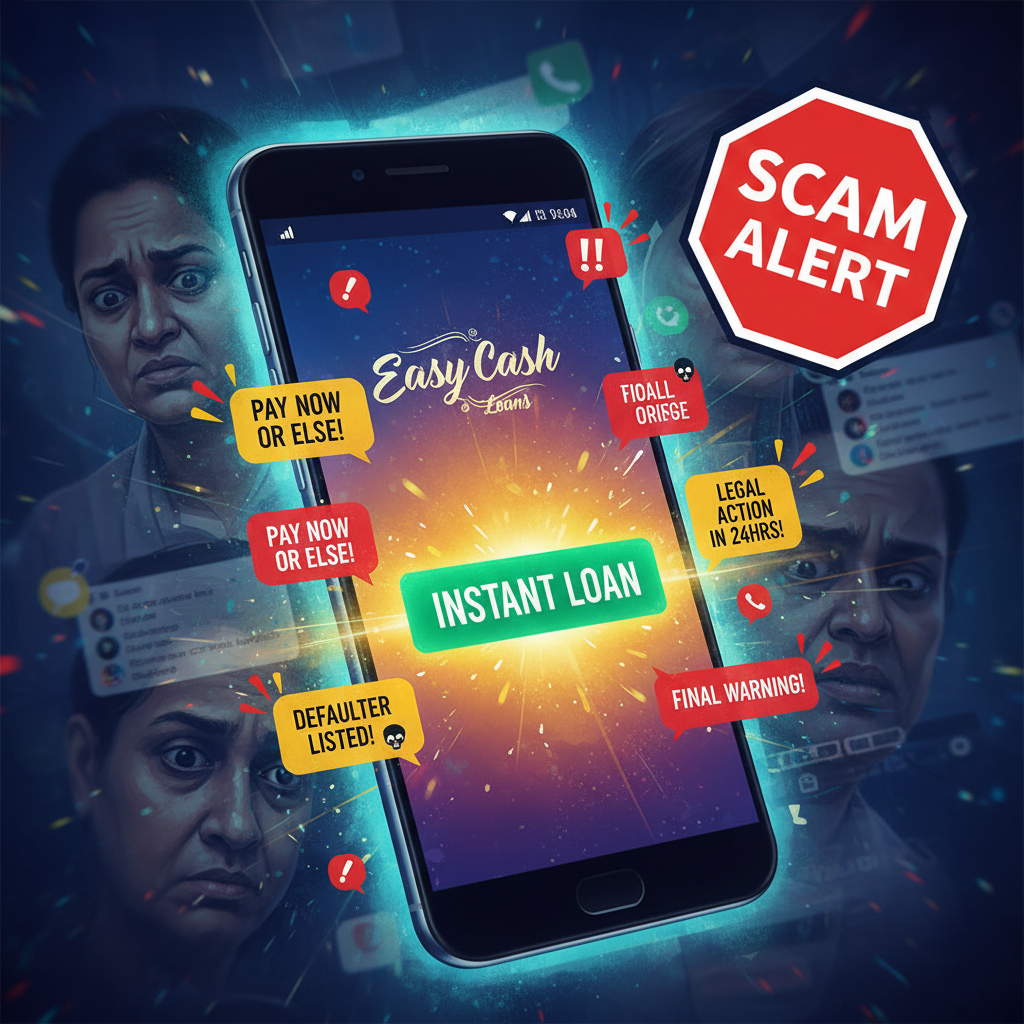
Android Instant Loan App Harassment India: Contacts Threatened, What To Do?
 HIGH RISK
Android Loan App harassing friends and family for EMI delay — what to do in India?
 HIGH RISK
Comments
Be the first to comment.