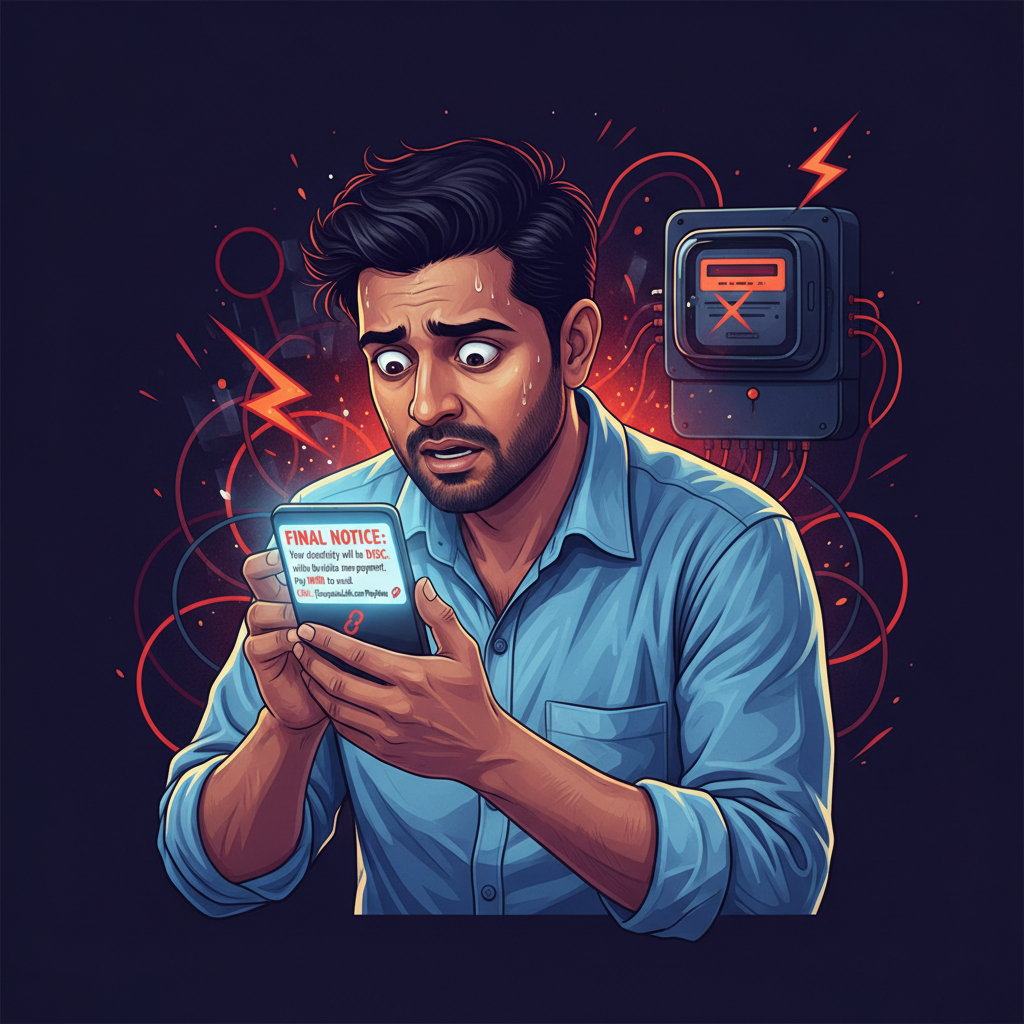
Electricity bill SMS says disconnect tonight – is it a scam India?
Beware of urgent SMS messages threatening immediate electricity disconnection if a payment link isn't clicked. This high-risk scam aims to trick you into revealing personal financial information or making fraudulent payments under pressure, often leading to significant monetary loss. Scammers leverage fear and urgency to bypass your critical thinking.
How This Scam Works
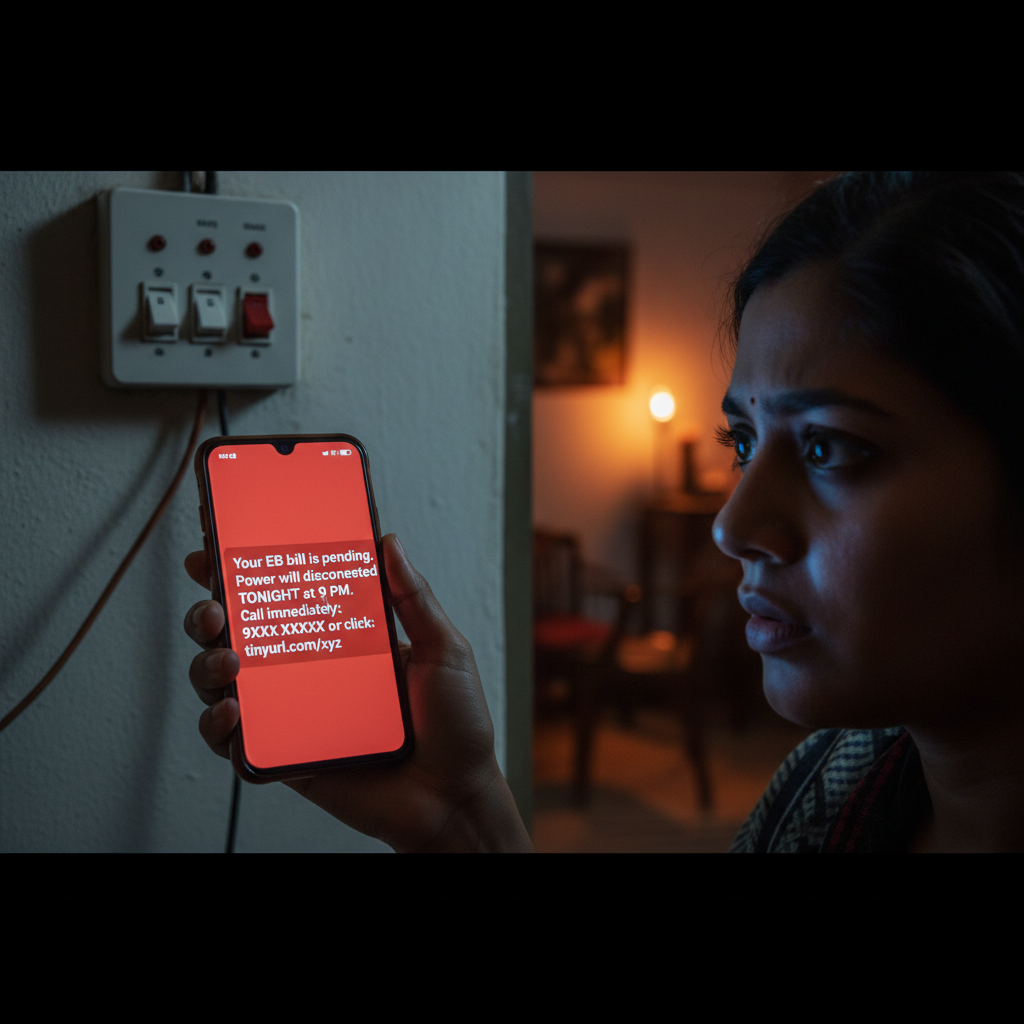
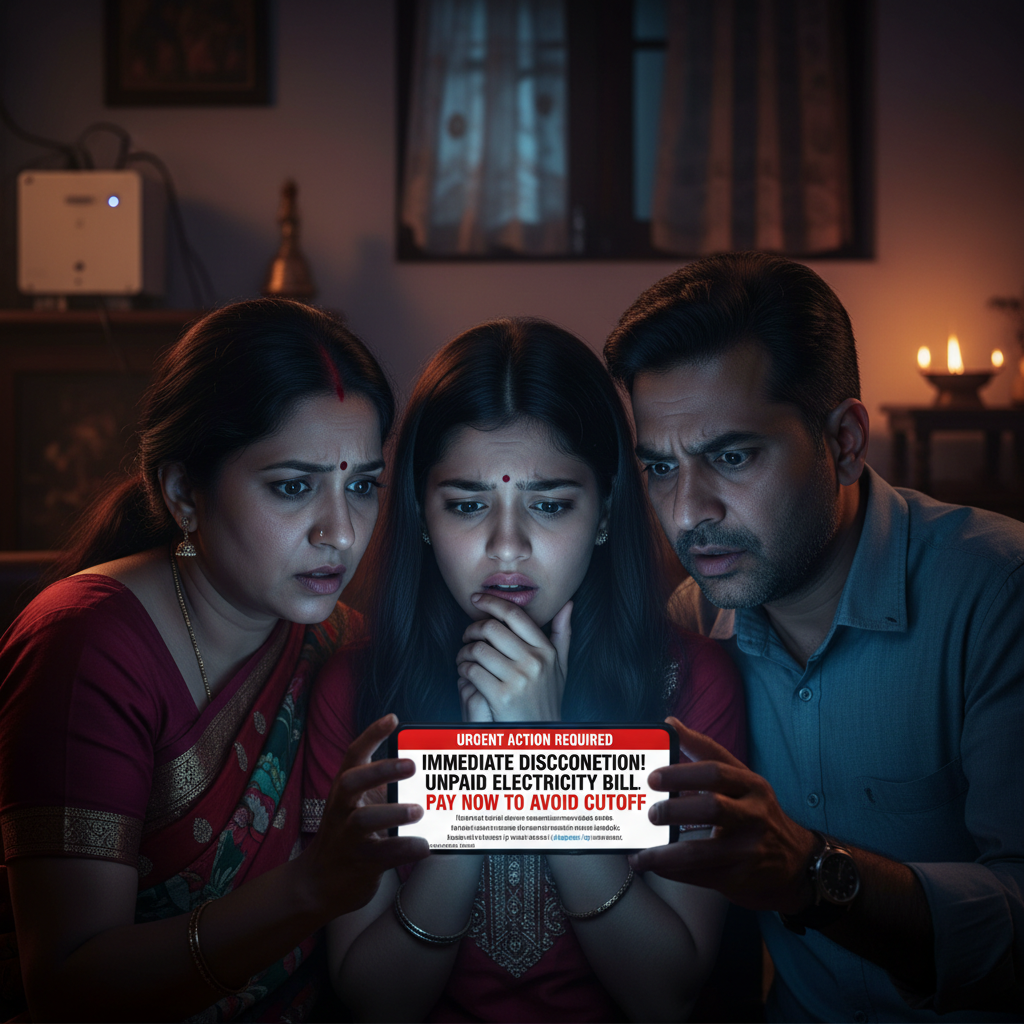
This pervasive scam preys on the fear of losing essential services. You receive an SMS, often designed to look like it's from your local electricity provider (e.g., "MahaVitaran," "BSES," "TANGEDCO"). The message typically states that your electricity bill is overdue, your power supply will be disconnected *tonight* or *within hours*, and provides a suspicious link (URL) or a contact number to "resolve" the issue immediately. If you click the link, it might lead to a fake payment portal that looks remarkably similar to your actual electricity board's website. Here, you'll be prompted to enter your consumer number, bank details, UPI PIN, or even OTPs. Sometimes, the link instals malware on your phone, allowing scammers to access your device. If you call the number provided, a "customer service representative" (the scammer) will answer. They will feign concern, confirm your "overdue" status, and pressure you to make a small "reconnection fee" payment. They might even guide you through installing a remote access app (like AnyDesk or TeamViewer) which gives them full control over your device, allowing them to initiate large transfers from your bank account or digital wallets. They might also ask for your UPI ID and then send a "collect request" which, if approved, debits money from your account instead of crediting it. Some advanced versions might even ask for your Aadhaar or KYC details, pretending to update your account, but instead, they'll use this information for identity theft. The key is the immense pressure and the threat of immediate disconnection, which often causes people to act without verifying.
Red Flags
- Urgent and Threatening Language:** Messages stating "disconnect tonight," "power cut in 2 hours," or similar extreme urgency are almost always a scam. Genuine electricity providers give ample notice for disconnections.
- Suspicious Links (URLs):** The link in the SMS will likely have a different domain name than your official electricity board's website (e.g., `ebbill.xyz` instead of `mahadiscom.in`). Even subtle misspellings are a huge red flag.
- Generic Greetings:** Scammers rarely know your name. Messages like "Dear Customer," or
- "Your electricity bill..." without your specific consumer number are suspect.
- Request for Personal Info/OTP on Call:** A genuine electricity provider will NEVER ask for your bank PIN, full credit card number (including CVV), or OTP over the phone to process a payment. If they ask you to perform transactions via third-party apps or "scan a QR code for payment," it's a scam.
- Small, Odd Payment Amounts:** Scammers sometimes ask for a very small, specific amount (e.g., ₹10 or ₹99) to "reactivate" your service. This is a tactic to get you to start the payment process and then potentially extract more or gain control.
- Poor Grammar and Spelling:** While not always present, grammatical errors or awkward phrasing in the SMS can be a sign of a scam.
How to Stay Safe
- Verify Directly with the Provider:** If you receive such an SMS, DO NOT click any links or call the number provided. Instead, directly contact your electricity board using the *official* customer care number or website found on your physical bill or their verified social media pages.
- Check Your Bill Status Independently:** You can always check your actual bill status and payment history through your electricity board's official app or website, or by visiting a local payment centre.
- Never Share OTPs or PINs:** Your One-Time Password (OTP) is the key to your bank account and digital wallets. Absolutely never share it with anyone, even if they claim to be from your bank or electricity board.
- Use Official Payment Channels:** Always pay your electricity bill through your provider's official website, app, or trusted payment platforms like UPI apps (Google Pay, PhonePe, Paytm) where you initiate the payment yourself.
- Be Wary of Remote Access Apps:** Never install remote desktop software (like AnyDesk, TeamViewer, QuickSupport) on your phone at someone else's instruction, especially if it's related to a payment or service issue.
If You Are Targeted
- Do NOT Engage:** Delete the SMS immediately. If you've received a call, disconnect it. Do not attempt to "play along" or give them false information, as this can still expose you to risks.
- Block the Number:** Add the scammer's number to your phone's block list to prevent future contact.
- Report to Cybercrime.gov.in:** If you have lost money or shared sensitive information, immediately report the incident on the National Cybercrime Reporting Portal (cybercrime.gov.in) or call their helpline at 1930. Provide all details, including screenshots of SMS and transaction details.
- Contact Your Bank:** If you made a fraudulent payment or shared banking details, immediately contact your bank's fraud department. Report the unauthorised transaction and block your cards/accounts as necessary.
- Change Passwords:** If you suspect any account has been compromised, change associated passwords immediately.
- Inform Your Electricity Board:** While they can't reverse a scam, informing your actual electricity provider helps them track common scamming patterns affecting their customers.
ScamGuard24 Insight
This scam's effectiveness lies in its strong emotional trigger – the fear of losing an essential service – combined with the perceived authority of the sender. Scammers exploit the pressure cooker situation to bypass rational thought, making it crucial for individuals to develop a habit of independent verification rather than immediate reaction.
Suspect a scam right now?
Open ScamGuard24 ScannerRecommended protection tools
AffiliateWe may earn a small commission if you sign up — it never changes our editorial picks.
India's most trusted antivirus. Blocks malicious APKs, UPI phishing and fake banking apps.
Get Quick HealAll-in-one mobile security + VPN. Stops phishing links shared on WhatsApp and SMS.
Try Norton 360Stop reusing passwords. Auto-fills only on the real bank site, never on phishing pages.
Get NordPass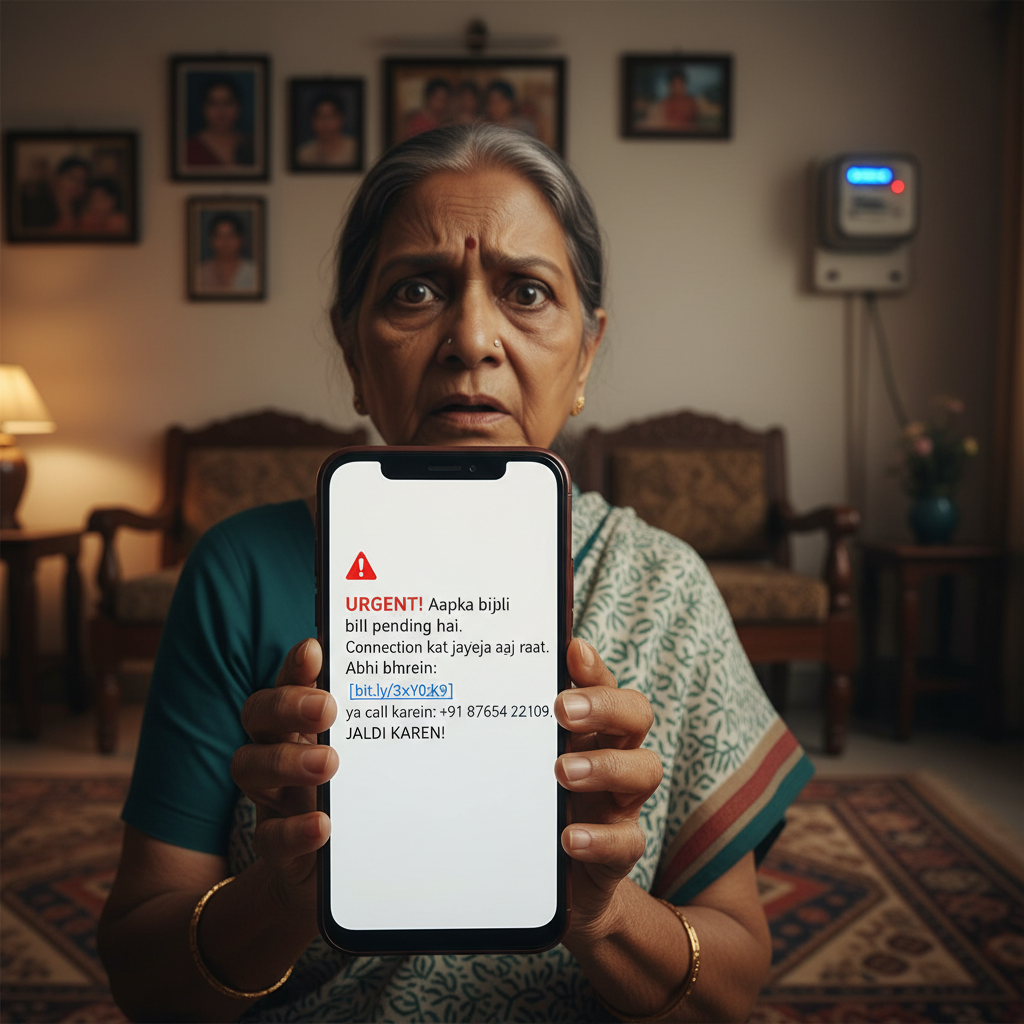
Comments
Be the first to comment.