
Telegram Crude Oil War Investment Scam 40% Returns — How to Check If Real?
Fraudsters are luring Indians into fake investment schemes on Telegram and WhatsApp, promising exorbitant returns of up to 40% by supposedly trading crude oil, especially leveraging geopolitical tensions like the Iran war and Strait of Hormuz. These sophisticated scams often manipulate victims with fabricated trading charts and impressive 'daily profits' to steal their hard-earned money.
How This Scam Works
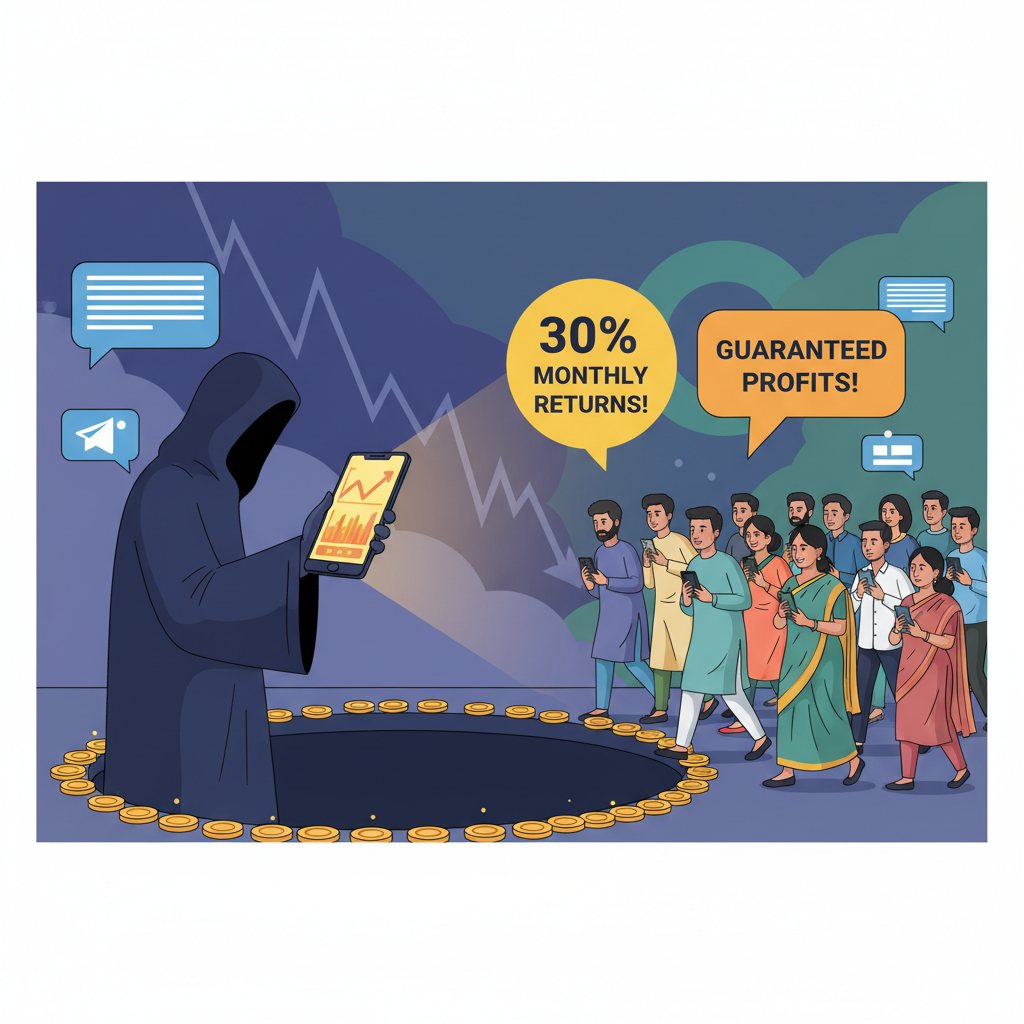
This scam preys on the desire for quick wealth and exploits current events to lend a false sense of legitimacy. Here's a breakdown of how it typically unfolds: 1. **Initial Contact & Lure:** The scam often begins with an unsolicited message on Telegram or WhatsApp. You might be added to a group or receive a direct message from someone claiming to be an "investment advisor" or "financial guru." They'll talk about incredible opportunities in the crude oil market, often citing current geopolitical events such as the "Iran war" or "Strait of Hormuz tensions" to explain why oil prices are set to skyrocket. They promise unrealistic returns, often mentioning figures like "40% monthly" or even "daily profits." 2. **Building Trust & 'Exclusive' Groups:** Once you express interest, you'll be encouraged to join a larger Telegram or WhatsApp group. These groups are meticulously designed to appear legitimate. They feature many "members" (often bots or other scammers) who post fake testimonials, impressive (but fabricated) profit screenshots, and seemingly sophisticated market analyses. There might even be 'administrators' who appear to be experts, constantly updating on "market movements" and "trading signals." 3. **The 'Investment Platform' & Initial Small Gains:** You'll be directed to a professional-looking website or a mobile application that purports to be an "oil trading platform." After depositing a small initial amount (say, ₹5,000-₹10,000), you might even see some 'profits' reflected in your account. The scammers might allow you to withdraw a small amount at this stage, building your confidence and trust. This is a classic tactic known as "sowing the belief." 4. **Pressure to Invest More & Fabricated Returns:** Once you're hooked, the pressure mounts. Scammers will push you to invest larger sums, claiming "bigger investments yield bigger and faster returns." They'll show you fabricated trading charts and dashboards on their fake platform, depicting soaring profits. You'll be convinced that your money is growing exponentially. 5. **Withdrawal Problems & Hidden Fees:** When you try to withdraw your significant 'earnings,' the problems begin. You'll suddenly be hit with a barrage of excuses. This could include "tax obligations," "platform fees," "regulatory charges," "KYC verification fees," or even "exchange rate discrepancies." They'll demand more money to "unlock" your funds, always citing urgent reasons. They might even ask for your Aadhaar details or other personal information under the guise of an "RBI compliance check." 6. **The Vanishing Act:** After you've paid these "fees" or once the scammers believe they've extracted the maximum possible from you, they will disappear. The Telegram/WhatsApp group will be deleted, the website will become inaccessible, and all contact will cease. Your invested money and any additional funds paid as "fees" will be gone forever.
Red Flags
- Unrealistic Returns:** Any investment promising guaranteed, high returns (e.g., 40% monthly) with little to no risk is a major red flag. Legitimate investments always carry risk, and high returns generally come with high risk.
- Unsolicited Contact:** Being added to investment groups or receiving direct messages from unknown individuals about "investment opportunities" is a common scam tactic.
- Pressure to Act Quickly:** Scammers frequently create a sense of urgency, pressuring you to invest immediately to "not miss out" on a "limited-time opportunity."
- Focus on Geopolitical Events:** While current events can influence markets, scammers exploit them to create a compelling, but false, narrative for their fake investment.
- Requests for UPI/Bank Transfers to Personal Accounts:** You should never be asked to transfer money directly to an individual's personal bank account or through UPI for an "investment." Legitimate firms use corporate accounts.
- Poor Grammar/Spelling:** Many international scams originating from non-English speaking regions might have noticeable grammatical errors or unusual phrasing in their communications.
- Vague Regulatory Information:** Legitimate investment platforms clearly display their regulatory licenses (e.g., SEBI registration in India). Scammers either won't have any or will display fake ones.
- Complex or Unverifiable Trading Strategies:** They'll talk about complex "algorithms" or "expert trading signals" without providing any verifiable evidence or transparency.
How to Stay Safe
- Verify Before You Invest:** Always conduct thorough due diligence. Check if the investment platform is registered with SEBI (Securities and Exchange Board of India). A quick search on the SEBI website can reveal if they are legitimate.
- Be Skeptical of Unrealistic Promises:** If an investment sounds too good to be true, it almost certainly is. There are no shortcuts to wealth, especially not with guaranteed sky-high returns.
- Never Share OTPs or Personal Details:** Do not share your One-Time Passwords (OTPs), bank account details, UPI PINs, Aadhaar number, or any other personally identifiable information with unknown individuals or suspicious platforms.
- Avoid Unsolicited Investment Groups:** Do not join unknown investment groups on Telegram or WhatsApp. If you are added, leave immediately.
- Research the Platform and People:** Search for reviews, warnings, or news about the investment platform and the individuals promoting it. Often, others have already reported similar scams.
- Understand the Risks:** Educate yourself about legitimate investment avenues and their associated risks. Invest only in assets you understand.
- Use Official Channels:** If you are interested in investing, always use regulated financial institutions and their official apps/websites.
- Be Wary of Free Gifts/Bonuses:** Scammers often offer free trades or bonus amounts to lure initial investments.
If You Are Targeted
- Stop All Communication Immediately:** Block the scammer's number on WhatsApp/Telegram and exit any groups they've added you to. Do not engage further.
- Do Not Pay Any Fees:** Under no circumstances should you pay any "withdrawal fees," "taxes," or "commissions." These are simply further attempts to extract more money from you.
- Gather Evidence:** Take screenshots of all conversations, messages, transaction details, website URLs, and any contact information provided by the scammer. This evidence will be crucial for reporting the crime.
- Report to Cybercrime.gov.in:** Immediately file a complaint on the Indian Cybercrime Portal (www.cybercrime.gov.in) or call the national helpline number 1930. Provide all the evidence you have collected.
- Inform Your Bank:** Contact your bank or UPI service provider (e.g., Google Pay, PhonePe, Paytm) immediately to report the fraudulent transactions. They might be able to help freeze or reverse some payments if reported quickly enough.
- Warn Others:** Inform your friends and family about the scam, especially if the scammer contacted you through a reference.
- Change Passwords:** If you suspect you entered any personal details or passwords on a fake website, change those passwords immediately on legitimate sites.
ScamGuard24 Insight
This "Crude Oil War Investment Scam" is a sophisticated blend of social engineering and cryptocurrency investment fraud, expertly leveraging current events to create a false sense of legitimacy. The use of popular messaging apps like Telegram and WhatsApp allows for rapid scaling and a sense of 'community,' making it particularly dangerous for unsuspecting investors seeking quick financial gains in volatile markets.
Suspect a scam right now?
Open ScamGuard24 ScannerRecommended protection tools
AffiliateWe may earn a small commission if you sign up — it never changes our editorial picks.
India's most trusted antivirus. Blocks malicious APKs, UPI phishing and fake banking apps.
Get Quick HealAll-in-one mobile security + VPN. Stops phishing links shared on WhatsApp and SMS.
Try Norton 360Stop reusing passwords. Auto-fills only on the real bank site, never on phishing pages.
Get NordPassRelated alerts
 HIGH RISK
Telegram Crude Oil War Investment Scam India - 40% returns, is it genuine? What to do
 HIGH RISK
Telegram crypto investment 30% monthly returns India scam – is it real?
 HIGH RISK
Comments
Be the first to comment.