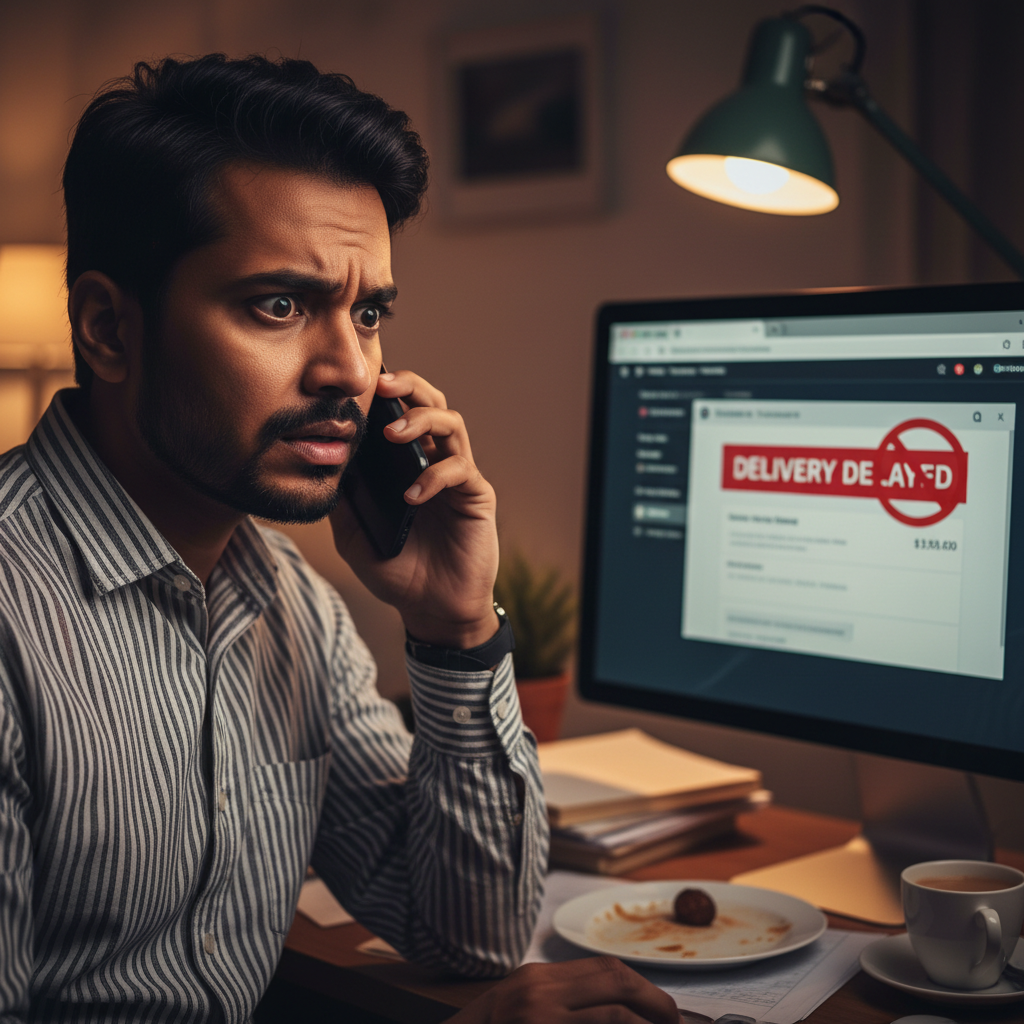
FedEx courier scam call India – parcel has drugs, what to do?
Fraudsters are impersonating courier companies like FedEx, claiming a parcel in your name contains illegal substances. They threaten legal action and demand immediate money transfers to "clear your name," leading to significant financial loss and emotional distress. This high-risk scam often exploits fear and urgency to manipulate victims.
How This Scam Works
Imagine your phone rings. The caller identifies themselves as a representative from FedEx, or another well-known courier service. They sound professional, sometimes even providing a supposed tracking number or your partial address. Then, the bombshell: "Madam/Sir, we have intercepted a parcel under your name/Aadhaar number that contains illegal drugs, passports, or other illicit items." Panic sets in. You insist you haven't sent or received any such parcel. The scammer then escalates the situation. They might transfer you to another "official" – perhaps a "police officer" or "customs official" – who reinforces the severity of the situation. This "official" will speak with authority, often using legal jargon and threatening immediate arrest, fines, or serious legal repercussions if you don't cooperate. They might even claim your Aadhaar or bank account has been misused and is under investigation for money laundering or drug trafficking. Their solution? You must immediately transfer a large sum of money – sometimes tens of thousands, or even lakhs of rupees – to a specific bank account or via UPI, supposedly to "pay a fine," "clear customs, "prove your innocence," or "secure your bank account from being frozen." They will pressure you to act quickly, often telling you not to disconnect the call or talk to anyone else. They might even ask you to download a remote access app, claiming it's for "verification" or "secure transfer," thereby gaining control of your device and potentially your banking apps. The entire act is designed to create extreme fear and urgency, preventing you from thinking clearly or verifying their claims. They rely on your fear of legal trouble and your trust in established brands to extract money. Once the money is transferred, the callers vanish, leaving you with empty pockets and emotional trauma.
Red Flags
- Unsolicited Calls About Illegal Activities:** Any call from an unknown number claiming your package contains drugs or illegal items, especially if you haven't recently sent or received anything, is a massive red flag.
- Threats of Immediate Arrest or Legal Action:** Legitimate law enforcement or courier companies will not demand instantaneous money transfers over the phone to prevent an arrest. Official communication for such serious matters happens through formal channels, not urgent phone calls.
- Demands for Immediate Money Transfer:** Any request to transfer money via UPI, bank transfer, or gift cards to "clear your name," "pay a fine," or "secure your account" is a scam.
- Insistence on Not Disconnecting the Call:** Scammers want to isolate you and prevent you from consulting others or verifying information. They will pressure you to stay on the line until the transaction is complete.
- Requests for Personal Banking Details or OTPs:** Never share your bank account number, debit/credit card details, CVV, PIN, or OTP with anyone over the phone, regardless of who they claim to be.
- Generic or Suspicious Caller ID:** While some scammers spoof legitimate numbers, many use numbers that look unusual or unknown. Be wary of calls from numbers you don't recognise.
- Being Asked to Download Remote Access Apps:** If they ask you to download apps like AnyDesk, TeamViewer, or similar software, it's a trap to gain unauthorised access to your phone or computer.
How to Stay Safe
- Verify, Don't Trust:** If you receive such a call, politely state that you will verify the information directly. **Do NOT use any numbers provided by the caller.** Instead, find the official customer service number for FedEx (or the claimed courier company) from their official website (e.g., fedex.com/in) or a reliable source, then call them to inquire.
- Never Transfer Money Under Pressure:** No legitimate authority or courier service will demand immediate money transfers over the phone to resolve a legal issue or release a package.
- Protect Your Personal Information:** Absolutely never share your Aadhaar number, PAN details, bank account information, OTPs, or any other sensitive personal or financial data with unsolicited callers.
- Hang Up Immediately:** If the call raises any suspicion, or if you feel pressured or threatened, hang up the phone. Don't engage in an argument or try to convince them you're innocent.
- Report Suspicious Calls:** Even if you aren't scammed, report the attempt to the National Cybercrime Reporting Portal (cybercrime.gov.in) and block the number.
If You Are Targeted
- Do Not Panic:** The scammers thrive on your fear. Take a deep breath and collect your thoughts. Recognize that this is a common scam tactic.
- Do Not Transfer Money:** If you haven't transferred any money, congratulations! You've avoided the trap. Just block the number and report it.
- If You Have Transferred Money (Act FAST):**
- Contact Your Bank Immediately:** Call your bank's helpline or visit your nearest branch. Explain the situation and request them to block the transaction or freeze the recipient's account. Time is critical here.
- File a Cybercrime Complaint:** Immediately report the incident on the National Cybercrime Reporting Portal (cybercrime.gov.in) or call Helpline 1930. Provide all details, including the scammer's phone number, bank account details (if any), and transaction IDs.
- Keep Records:** Preserve all call recordings (if any), messages, transaction details, and bank statements as evidence for your complaint.
- Inform Family/Friends:** Let your close ones know about the scam so they are aware and can offer support.
ScamGuard24 Insight
This scam capitalizes on a victim's inherent fear of legal trouble and the respect for official institutions. The immediate threat of arrest combined with the impersonation of trusted brands like FedEx creates a powerful psychological trap, making it incredibly difficult for individuals to think rationally under pressure.
Suspect a scam right now?
Open ScamGuard24 ScannerRecommended protection tools
AffiliateWe may earn a small commission if you sign up — it never changes our editorial picks.
India's most trusted antivirus. Blocks malicious APKs, UPI phishing and fake banking apps.
Get Quick HealAll-in-one mobile security + VPN. Stops phishing links shared on WhatsApp and SMS.
Try Norton 360Stop reusing passwords. Auto-fills only on the real bank site, never on phishing pages.
Get NordPass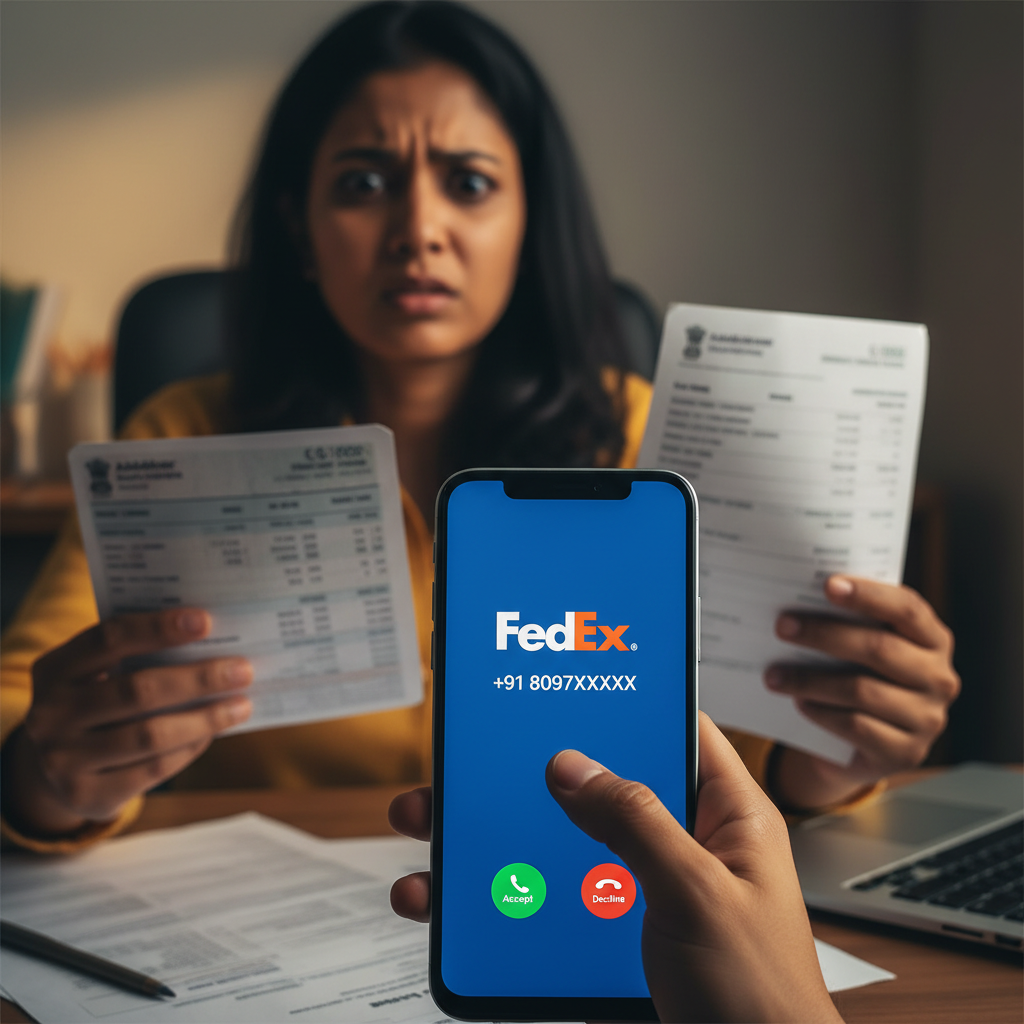

Comments
Be the first to comment.