
FedEx courier scam call India – is it real & what to do?
Fraudsters are impersonating courier companies like FedEx, claiming a parcel in your name contains illegal items. They intimidate victims into transferring money to clear their name, often threatening legal action. This is a high-risk scam designed to panic you into quick financial decisions.
How This Scam Works
Imagine your phone rings. The caller ID might look legitimate, or it could be an unknown number. They identify themselves as calling from a well-known courier service, for example, FedEx or Blue Dart. With a voice that sounds official, they inform you that a parcel registered under your name and Aadhaar details has been intercepted, often at customs or an airport. The shocking revelation? This parcel supposedly contains illegal substances – drugs, counterfeit currency, or prohibited goods. The scammer quickly shifts gears. They explain that because the parcel is in your name, you are now implicated in a serious crime. They will often mention law enforcement agencies like the Narcotics Control Bureau (NCB) or even the police. The atmosphere becomes tense and alarming. To heighten your panic, they might even connect you to another person who claims to be a police officer or a CBI agent (Central Bureau of Investigation). This "officer" will then elaborate on the severe penalties you face, including arrest, imprisonment, and hefty fines. At this point, you're likely terrified and desperate to prove your innocence. The scammer, or the supposed "officer," will then present a "solution." They'll claim that to "clear your name," "prove your innocence," or "close the case," you need to transfer a significant sum of money. This money is often framed as a "security deposit," "processing fee," or a "fine" that needs to be paid immediately to prevent further legal action. They might instruct you to transfer the money via UPI, net banking, or even ask you to withdraw cash and deposit it into a specific account. They will create immense pressure, often stating that time is running out and failure to transfer the funds will result in immediate arrest. They may even demand access to your bank accounts under the guise of "verification" or "KYC compliance," which could lead to them siphoning off all your funds. They might ask for your OTPs, claiming it's for an official verification process. The key tactics here are intimidation, urgency, and impersonation of authority figures. They bank on your fear of legal trouble and your desire to protect your reputation. Once the money is transferred, the fraudsters disappear, leaving you with a drained bank account and immense stress.
Red Flags
- Unsolicited Calls with Alarming Claims:** You receive an unexpected call, especially from an unknown number, stating a serious problem with a parcel you never sent or are expecting. Courier companies do not call regarding illegal contents.
- Demands for Immediate Payment/Transfer:** Any request to transfer money via UPI, net banking, or other methods to "resolve" a legal issue or "clear your name" is a huge red flag. Legitimate law enforcement or courier companies never demand money over the phone to prevent an arrest or legal action.
- Threats of Arrest or Legal Action:** Fraudsters will use scare tactics, threatening immediate arrest, freezing of bank accounts, or severe legal consequences if you don't comply. This is designed to panic you.
- Requests for Personal Financial Information/OTPs:** Do not share your bank account number, debit/credit card details, Aadhaar number, UPI PIN, or OTPs with anyone claiming to be from a courier service or law enforcement. They already have limited parcel information if it's legitimate.
- Connection to "Police/CBI Officers":** The scam often involves being "transferred" to a supposed police or CBI officer who reinforces the threats and demands. This is a common social engineering tactic.
- Vague Parcel Details:** They might give vague details about the parcel or its origin. If you ask for specific tracking numbers or contents, they may become evasive or aggressive.
How to Stay Safe
- Never Share Personal Financial Details:** Do NOT share your bank account details, UPI PINs, Aadhaar number, OTPs, or any sensitive financial information over the phone. No legitimate authority or courier company will ask for these.
- Verify Independently:** If you receive such a call, do not trust the caller ID or the information given. Disconnect the call. Then, independently contact the official customer service number of the courier company (e.g., FedEx India's official website) or the police via their official helpline (e.g., 112) to verify the claim. Do NOT call numbers provided by the scammer.
- Be Skeptical of Threats:** Real law enforcement agencies follow proper legal procedures. They will not demand money over the phone to prevent an arrest or to "clear your name" in a parcel scam. Arrests are made based on warrants, not phone calls and instant payments.
- Report and Block:** If you encounter such a call, report it immediately to the national cybercrime helpline 1930 and then block the number. This helps authorities track scammers and prevents them from targeting others.
- Educate Yourself and Others:** Share this information with your family and friends, especially elderly relatives who may be more vulnerable to such intimidation tactics.
If You Are Targeted
- Do Not Engage Further:** As soon as you suspect it's a scam, politely but firmly disconnect the call. Do not argue or try to reason with the scammer.
- Do Not Transfer Any Money:** Under no circumstances should you transfer any funds, regardless of how intimidating the threats are.
- Gather Information (Safely):** If you can, quickly note down the caller's number, the name they gave, and any specific details they mentioned about the "parcel" or legal action. This information will be useful for reporting.
- Report to Cybercrime India:** Immediately report the incident at www.cybercrime.gov.in or call the national helpline 1930. Provide all details you gathered.
- Inform Your Bank:** If you accidentally shared any bank details or transferred money, immediately contact your bank's fraud department to report the unauthorised transaction and freeze your accounts.
- Inform Courier Company:** While they might not be able to help with your lost funds, informing the legitimate courier company can help them issue their own warnings.
ScamGuard24 Insight
This scam leverages fear and desperation, preying on individuals' lack of familiarity with legal procedures and courier operations. The use of multiple "officials" and the mention of high-profile agencies like NCB/CBI are classic manipulation tactics to create an overwhelming sense of urgency and threat.
Suspect a scam right now?
Open ScamGuard24 ScannerRecommended protection tools
AffiliateWe may earn a small commission if you sign up — it never changes our editorial picks.
India's most trusted antivirus. Blocks malicious APKs, UPI phishing and fake banking apps.
Get Quick HealAll-in-one mobile security + VPN. Stops phishing links shared on WhatsApp and SMS.
Try Norton 360Stop reusing passwords. Auto-fills only on the real bank site, never on phishing pages.
Get NordPass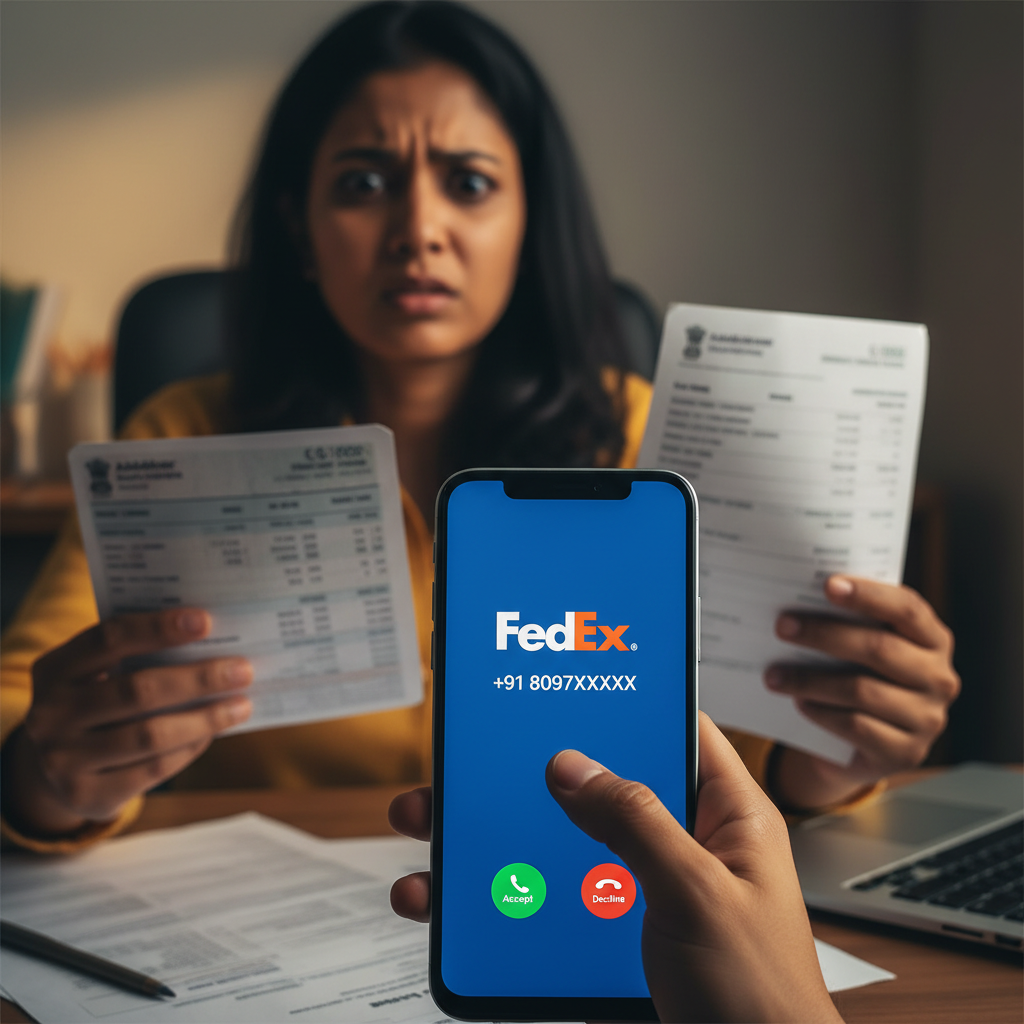


Comments
Be the first to comment.