
Facebook Deepfake Minister Investment Scam — Is it Real? How to Check?
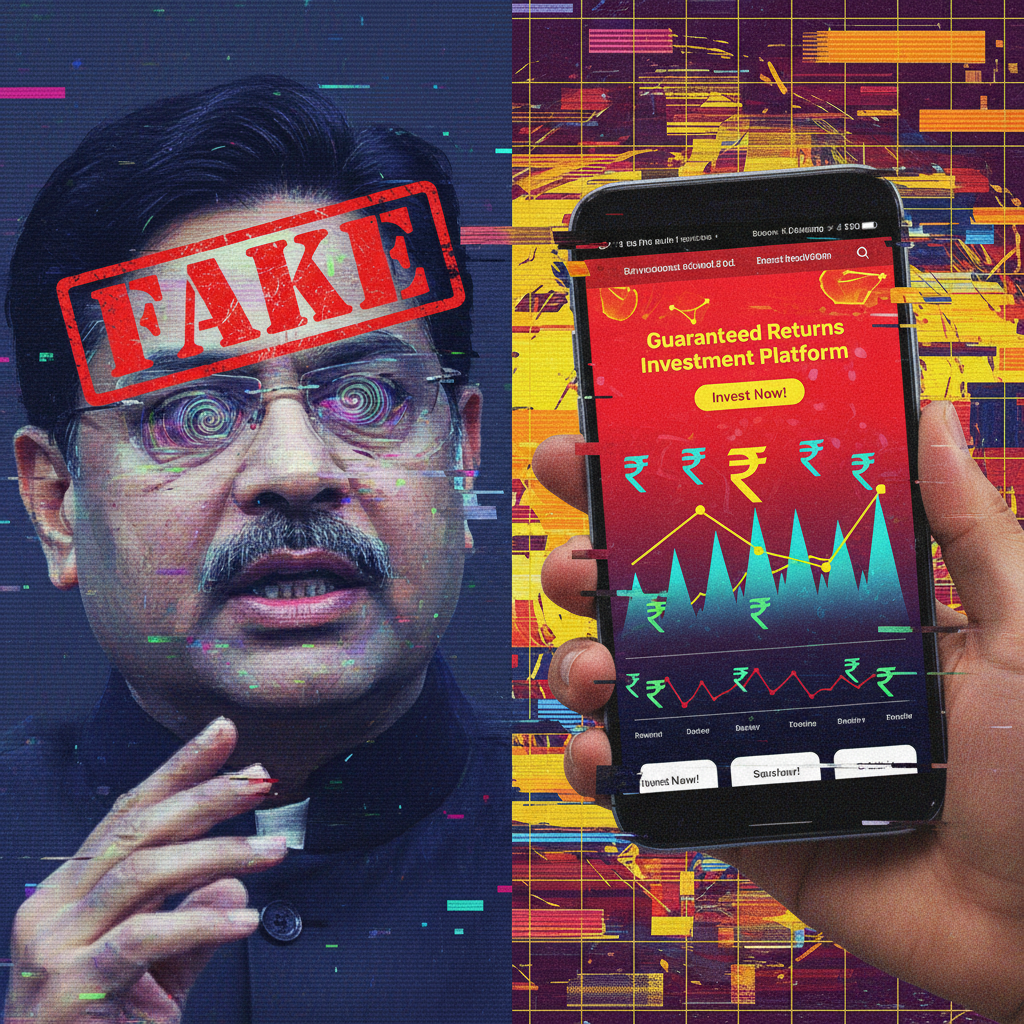
Beware of AI-generated videos on social media, especially Facebook and YouTube Shorts, showing prominent Indian ministers or industrialists promoting "guaranteed return" investment schemes. These sophisticated deepfake scams are designed to steal your hard-earned money by appearing incredibly authentic.
How This Scam Works
In an increasingly digital world, scammers are leveraging advanced technology to create highly convincing deceptions. This particular scam preys on trust and the desire for financial growth, especially amongst those looking for secure investment opportunities. Scammers produce sophisticated deepfake videos, often using Artificial Intelligence (AI) and machine learning, to create incredibly realistic but entirely fake footage. These videos typically feature well-known Indian figures – be it a respected government minister, a celebrated industrialist, or a prominent financial expert. The AI technology is so advanced that it can accurately mimic their facial expressions, voice patterns, and even their unique mannerisms, making the video almost indistinguishable from a genuine broadcast or endorsement. The content of these deepfake videos is always consistent: they promote a fraudulent investment platform or scheme, promising "guaranteed returns," "risk-free profits," or "daily payouts" – often citing impossibly high interest rates that no legitimate investment can offer. These deceptive videos are then widely distributed across popular social media platforms, primarily Facebook and YouTube Shorts, where they can quickly reach a vast audience. Scammers often use paid advertisements to boost their reach, targeting specific demographics who might be more susceptible to such schemes. The ads are designed to look like legitimate news segments, financial advice, or even direct endorsements from the featured personality. Once a potential victim watches the video and is convinced by the seemingly authoritative endorsement, they are directed to click on a link. This link invariably leads to a fake website, a malicious app, or a WhatsApp group. These platforms are meticulously designed to mimic legitimate investment firms, complete with professional-looking interfaces, fake testimonials, and often, even fake regulatory certifications. Victims are then coaxed into registering, providing their personal details (like Aadhaar, PAN, bank account information), and, most critically, investing an initial sum of money. To further ensnare victims, scammers often employ a tactic known as "pig butchering," where they build rapport over time, providing fake "proof" of initial returns to encourage larger investments. They might even assign a "personal investment advisor" who is, in reality, another scammer. Once a significant amount has been invested, or when the victim attempts to withdraw their "profits," the scammers vanish, blocking communication, taking down the fake platforms, and leaving the victim with no recourse and their money gone. The high perceived authority of the deepfaked individual lends immense credibility to an otherwise fantastical investment claim, making this scam particularly dangerous and effective.
Red Flags
- Too Good to Be True Returns:** Any investment promising "guaranteed daily profits," "risk-free high returns" (e.g., 20-30% monthly), or instant doubling of money is a definite scam. Legitimate investments always carry risk.
- Deepfake Visuals/Audio:** Pay extremely close attention to the video. Look for subtle inconsistencies in facial movements, lip-syncing that doesn't quite match the audio, unusual voice modulation, or changes in lighting/background that seem off. Even minor glitches can reveal a deepfake.
- Unsolicited Investment Advice:** You should be highly suspicious of any investment opportunities promoted through unsolicited social media posts or ads, especially those featuring famous personalities. Genuine investment advice comes from regulated financial institutions, not viral social media clips.
- Pressure to Act Quickly:** Scammers often create a sense of urgency, urging you to "invest now" to avail limited-time offers or "exclusive opportunities." This is designed to prevent you from doing your due diligence.
- Demands for Personal Information & Upfront Fees:** Be wary if the platform asks for sensitive personal details like Aadhaar number, PAN, or banking OTPs without clear regulatory verification, or demands "processing fees" or "tax payments" before you can withdraw "profits."
- Unverifiable Platform/Company:** Always check if the investment platform or company is registered with SEBI (Securities and Exchange Board of India) or other relevant financial regulators. Scammers' websites often lack proper contact information or have generic addresses.
How to Stay Safe
- Verify Information Independently:** Never trust a video or social media post at face value, especially when it involves money. Cross-reference any investment claims with official sources or trusted financial news outlets. Search for the minister/industrialist's official statements.
- Skepticism is Your Best Friend:** Approach all online investment offers with extreme skepticism. If an opportunity seems too good to be true, it almost certainly is. Remember the adage: "If you don't understand it, don't invest in it."
- Consult a Registered Financial Advisor:** Before making any investment decisions, particularly those promising high returns, consult with a SEBI-registered financial advisor or a trusted bank representative. They can provide legitimate guidance and help you identify scams.
- Check Official Websites:** Always check the official social media accounts and websites of the public figure involved to see if they have indeed endorsed such a scheme. Most likely, they would have issued warnings about such deepfake usage.
- Secure Your Accounts:** Enable two-factor authentication (2FA) on all your social media, email, and banking accounts. Use strong, unique passwords to protect your personal information from being compromised.
- Report Suspicious Content:** If you encounter such deepfake videos, report them immediately to the platform (Facebook, YouTube) and alert the cybercrime authorities. Your action can prevent others from falling victim.
If You Are Targeted
- Do Not Engage or Invest:** If you come across such a deepfake video or are contacted by someone promoting these schemes, do not click on any links, do not reply, and absolutely do not invest any money.
- Collect Evidence:** Take screenshots of the video, the ad, the profile, and any associated links or conversations. This evidence will be crucial for reporting the scam.
- Report to Cybercrime India:** File an official complaint immediately at the National Cybercrime Reporting Portal: cybercrime.gov.in. Provide all the evidence you have collected.
- Inform Your Bank:** If you have already transferred money, contact your bank immediately to report the fraudulent transaction. They may be able to help you reverse or stop the payment, especially if it was a recent UPI or bank transfer.
- Alert the Social Media Platform:** Report the deepfake video and the associated accounts directly to Facebook or YouTube Shorts. They can take action to remove the content and suspend the scammer's profile.
- Educate Others:** Share your experience with friends and family to raise awareness about this evolving scam tactic, helping them to recognize and avoid similar traps.
ScamGuard24 Insight
The rise of deepfake technology presents a significant challenge to digital trust, making it harder for individuals to distinguish between reality and sophisticated deception. In India, where public figures command immense respect, scammers exploit this trust to lend undue credibility to their fraudulent schemes. It's imperative for users to develop a critical eye towards online content and rely on verified sources, rather than falling prey to compelling but fake endorsements.
Suspect a scam right now?
Open ScamGuard24 ScannerRecommended protection tools
AffiliateWe may earn a small commission if you sign up — it never changes our editorial picks.
India's most trusted antivirus. Blocks malicious APKs, UPI phishing and fake banking apps.
Get Quick HealAll-in-one mobile security + VPN. Stops phishing links shared on WhatsApp and SMS.
Try Norton 360Stop reusing passwords. Auto-fills only on the real bank site, never on phishing pages.
Get NordPassRelated alerts
 HIGH RISK
Fake Minister Investment Video on Facebook/YouTube - What to Do?
 HIGH RISK
AI deepfake minister investment Facebook/YouTube - is it real? What to do
 HIGH RISK
Comments
Be the first to comment.