AI deepfake minister investment Facebook/YouTube - is it real? What to do
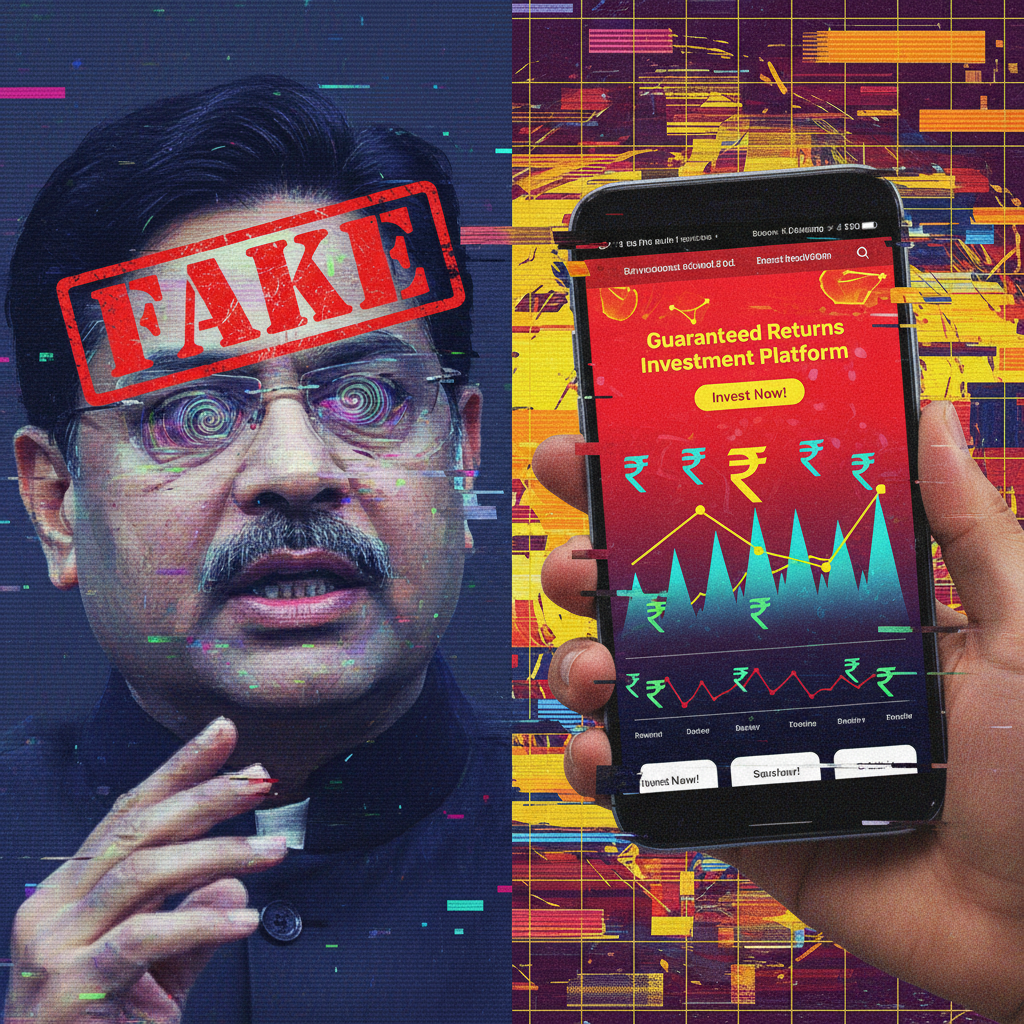
A dangerous new Deepfake Minister Investment Scam is rapidly spreading across Facebook and YouTube Shorts. Scammers are using advanced AI to create highly convincing fake videos of prominent Indian ministers or industrialists, endorsing fraudulent "guaranteed return" trading platforms. These deepfake videos are designed to trick unsuspecting investors into parting with their hard-earned money.
How This Scam Works
The Deepfake Minister Investment Scam leverages the trust and respect that many Indians have for public figures and business leaders. Scammers meticulously craft AI-generated videos, often using sophisticated deepfake technology, to impersonate well-known ministers, industrialists, or even celebrities. These videos are then widely circulated on popular social media platforms like Facebook and YouTube Shorts, capitalizing on the viral nature of short-form content. The deepfake videos typically feature the impersonated individual passionately endorsing a seemingly lucrative investment opportunity, often a "guaranteed return" trading platform or a "high-yield" scheme. The language used is often aspirational, promising quick wealth and financial freedom, directly appealing to common aspirations. To lend an air of legitimacy, these videos might display fake logos of reputable financial institutions or news channels, or even include fabricated testimonials. Once a victim watches the video and expresses interest, they are usually directed to a fraudulent website or a chat group on platforms like Telegram or WhatsApp. Here, sophisticated scam agents, often posing as "investment advisors" or "portfolio managers," take over. They will pressure victims to invest increasing amounts of money, sometimes starting with small "trial investments" to build trust. The scammers might provide fake dashboards showing impressive, but entirely fictitious, returns. They will encourage victims to invite friends and family, turning them into unwitting recruiters, a classic pyramid scheme tactic. When victims try to withdraw their supposed profits, they are met with various excuses – "processing fees," "tax obligations," or "KYC verification requirements" – all designed to extract more money. Eventually, the scammers will vanish, deleting their accounts and shutting down their websites, leaving victims with significant financial losses and no recourse. The use of deepfakes makes these scams incredibly difficult to discern, as the visual and auditory cues are highly realistic.
Red Flags
- Deepfake Visuals/Audio:** Be extremely wary if a video of a known public figure features unusual facial expressions, lip-syncing that doesn't quite match the audio, slightly off-natural voice tones, or pixelation/artifacts that are distinct from standard video compression. Compare it with their authentic interviews or speeches.
- Guranteed High Returns & Zero Risk:** Any investment promising "guaranteed returns" that are significantly higher than market averages, especially with "zero risk," is an immediate red flag. Legitimate investments always carry a degree of risk.
- Pressure to Invest Quickly:** Scammers often create a sense of urgency, pressuring victims to invest immediately, claiming limited-time offers or exclusive opportunities. They want to prevent you from doing your due diligence.
- Requests for Personal Information & Money Transfers:** Be cautious if you are asked to share sensitive personal details (Aadhaar, PAN, bank account OTPs) or to transfer funds to personal accounts, cryptocurrency wallets, or through obscure payment gateways, rather than official bank channels of regulated financial institutions.
- Platform Discrepancies:** Investment platforms promoted in these videos often have generic names, unprofessional websites, poor grammar or spelling, and lack official regulatory registration details (like SEBI registration for investment advisories in India).
- Unsolicited Messages/Invites:** If you receive unsolicited messages or group invitations on WhatsApp/Telegram promoting these "investment opportunities," especially from unknown numbers, it's highly likely to be a scam.
- No Official Announcement:** A legitimate investment endorsed by a minister or industrialist would be announced through official government channels, reputable news outlets, and their official social media handles, not just in viral short videos from unverified sources.
How to Stay Safe
- Verify Information from Official Sources:** Always cross-reference any investment opportunity with official government websites, major financial news outlets, and the official social media handles of the alleged endorser. Never rely solely on a social media video.
- Be Skeptical of AI-Generated Content:** Assume that any highly convincing video of a public figure promoting an investment online could be a deepfake. AI technology is advancing rapidly, making these fakes harder to spot.
- Research Thoroughly Before Investing:** Before committing any funds, research the investment platform, its credentials, regulatory status (e.g., SEBI registration), and reviews from independent sources. Look for red flags like a lack of transparency or a history of complaints.
- Consult a Registered Financial Advisor:** If an investment opportunity seems too good to be true, discuss it with a SEBI-registered financial advisor. They can provide unbiased guidance and help you avoid scams.
- Never Share OTPs or PINs:** Under no circumstances should you share one-time passwords (OTPs), PINs, or confidential banking details with anyone, even if they claim to be from a financial institution or investment platform.
- Use Strong, Unique Passwords:** Ensure you use strong, unique passwords for all your online accounts and enable two-factor authentication (2FA) wherever possible.
- Report Suspicious Content:** If you encounter such deepfake videos, report them immediately to the platform (Facebook, YouTube), the relevant authorities, and organizations like ScamGuard.
- Educate Yourself and Others:** Stay informed about the latest scam tactics and spread awareness among your friends and family, especially senior citizens who may be more vulnerable.
If You Are Targeted
- Stop All Communication Immediately:** If you realize you've engaged with scammers, cease all contact with them immediately. Block their numbers and social media accounts.
- Do Not Make Further Payments:** Do not under any circumstances send any more money, even if they threaten you or promise to return your initial investment if you pay "fees." This is a common tactic to extract more funds.
- Gather All Evidence:** Collect all available evidence, including screenshots of the deepfake videos, website URLs, chat logs (WhatsApp, Telegram), transaction details, bank statements, and any other communication.
- Report to Cybercrime (National Helpline 1930 & Portal cybercrime.gov.in):** Immediately report the incident to the Indian Cybercrime Helpline 1930 and file a detailed complaint on the National Cybercrime Reporting Portal (cybercrime.gov.in). The quicker you report, the higher the chance of freezing fraudulent transactions.
- Inform Your Bank:** Contact your bank immediately to report any unauthorized transactions or suspicious activity. They might be able to help reverse some transactions, especialy if reported quickly.
- Warn Your Social Circle:** If you invited friends or family into the scam, inform them immediately so they can also take protective measures.
- Do Not Be Ashamed:** Scammers are sophisticated and prey on trust. There is no shame in being targeted. Focus on taking swift action to mitigate damages.
ScamGuard24 Insight
The weaponization of AI for deepfakes represents a significant escalation in online fraud, making identity verification critical. These scams exploit both advanced technology and human psychological biases, demanding a proactive, multi-layered defense strategy from individuals.
Suspect a scam right now?
Open ScamGuard24 ScannerRecommended protection tools
AffiliateWe may earn a small commission if you sign up — it never changes our editorial picks.
India's most trusted antivirus. Blocks malicious APKs, UPI phishing and fake banking apps.
Get Quick HealAll-in-one mobile security + VPN. Stops phishing links shared on WhatsApp and SMS.
Try Norton 360Stop reusing passwords. Auto-fills only on the real bank site, never on phishing pages.
Get NordPassRelated alerts
 HIGH RISK
Facebook Deepfake Minister Investment Scam — Is it Real? How to Check?
 HIGH RISK
Fake Minister Investment Video on Facebook/YouTube - What to Do?
 HIGH RISK
Comments
Be the first to comment.