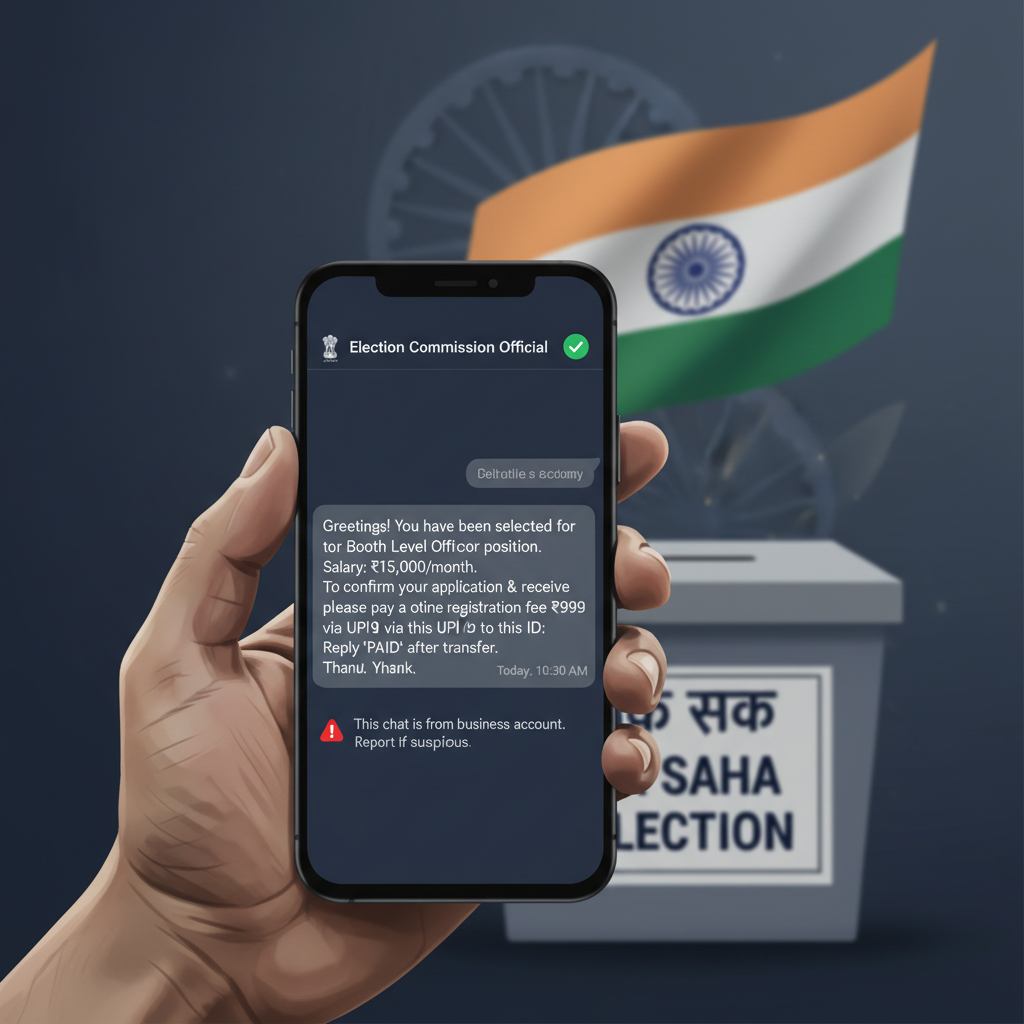
Election Commission job scam call/SMS ₹500 UPI - is it real?
Be aware of a prevalent scam targeting individuals with promises of temporary jobs as Booth Level Officers (BLOs) or data entry operators for upcoming elections. Scammers impersonate Election Commission (EC) officials and demand a 'registration fee' or 'security deposit' via UPI, tricking victims into paying for non-existent positions.
How This Scam Works
The allure of government jobs, especially during election seasons, makes this scam particularly effective. Scammers cast a wide net, reaching potential victims through SMS, WhatsApp messages, phone calls, and sometimes even Telegram. The initial contact often presents itself as an official communication from the "Election Commission of India" or a "District Election Office." The core of the scam revolves around offering seemingly legitimate, albeit temporary, positions like Booth Level Officers (BLOs) or data entry operators. These roles are crucial during elections, making the offer appear credible. Scammers leverage this credibility by providing a convincing narrative – mentioning upcoming elections, the urgency of recruitment, and the importance of civic participation. They might even cite specific election phases or districts to sound more authentic. Once a victim expresses interest, the scammer moves to the next phase: demanding money. They will claim that a 'registration fee,' 'security deposit,' 'training fee,' or 'document verification charge' is mandatory to "secure" the position. This amount typically ranges from ₹500 to ₹2000, designed to be small enough not to raise immediate alarms but large enough to generate significant profits when collected from many victims. The payment method insisted upon is almost always UPI (Unified Payments Interface), given its prevalence and ease of use in India. Scammers might create fake official-looking documents or websites to bolster their claims. They could send a fabricated "appointment letter" or a "job offer letter" via WhatsApp or email, complete with official-looking logos and stamps, all designed to convince the victim of the offer's legitimacy. They may even conduct a mock "interview" over the phone to further solidify the illusion. Victims are often pressured to make the payment quickly, with warnings that the "limited slots" will be filled soon. After the payment is made, the scammers either disappear, block the victim's number, or continue to demand more money under new pretexts, such as "uniform charges," "ID card fees," or "background check fees," until the victim realises they have been duped. This entire operation exploits the desperation for employment and trust in government institutions.
Red Flags
- Unsolicited Job Offers:** Any job offer, especially from a government body, that you didn't apply for and that comes via SMS, WhatsApp, or unsolicited call should be treated with extreme caution. Government recruitments follow specific, transparent procedures.
- Upfront Fees for Government Jobs:** Legitimate government jobs, especially temporary election roles, do NOT require an upfront "registration fee," "security deposit," "training fee," or any payment via UPI or other digital methods to secure the position. This is the biggest red flag.
- Pressure and Urgency:** Scammers often create a sense of urgency, insisting that you must pay immediately to "secure your slot" or risk losing the opportunity. This is a tactic to prevent you from thinking critically or verifying the offer.
- Unusual Contact Methods:** Official communications from the Election Commission or any government body will typically come through official websites, registered mail, or public advertisements, not personal WhatsApp messages, random SMS, or informal calls.
- Requests for Personal Financial Information:** Be wary if they ask for your UPI PIN, bank account details (beyond what's needed for salary deposit after official joining), or promise to send you an OTP to "verify" something (which is often a trap to gain access to your accounts).
- Poor Language/Grammar:** While not always present, sometimes scam messages or calls may contain grammatical errors, awkward phrasing, or a lack of professionalism that legitimate government communications would avoid.
How to Stay Safe
- Verify Directly with Official Sources:** If you receive such an offer, do not respond directly to the sender. Instead, visit the official website of the Election Commission of India (eci.gov.in) or your State Election Commission to verify any recruitment drives. Look for official public notices.
- Never Pay for a Job:** Remember the golden rule: legitimate jobs, especially government ones, do not ask for money for application, registration, security deposit, or training. Any such demand is a scam.
- Guard Your Personal Information:** Never share your UPI PIN, ATM PIN, CVV, OTP, bank account details, Aadhaar number, or other sensitive personal or financial information with unknown individuals over phone, SMS, or WhatsApp.
- Block and Report:** Immediately block the number or sender from whom you received the suspicious message or call. Report the scam to your local police or through the government's cybercrime portal.
- Inform Others:** Share this information with your family and friends, especially those who might be actively looking for jobs or who are less tech-savvy. Awareness is your best defense.
If You Are Targeted
- Do Not Engage Further:** If you suspect a scam, immediately cease all communication with the scammer. Do not respond to their messages, answer their calls, or click on any links they send.
- Do Not Make Any Payments:** Under no circumstances should you transfer any money, whether via UPI, bank transfer, or any other method. Any payment made will likely be irrecoverable.
- Gather Evidence:** Take screenshots of messages, record call details (number, time), and save any documents or links they sent. This evidence will be crucial if you decide to report the scam.
- Report to Cybercrime Authorities:** File a complaint immediately on the National Cybercrime Reporting Portal (cybercrime.gov.in) or call their helpline at 1930. Provide all collected evidence. The sooner you report, the higher the chance of any action being taken.
- Inform Your Bank/UPI Provider:** If you have already made a payment, contact your bank and your UPI service provider (e.g., Google Pay, PhonePe, Paytm) immediately. Report the fraudulent transaction to see if they can help freeze or reverse the payment, although success is not guaranteed.
ScamGuard24 Insight
This scam capitalizes on trust in government institutions and the widespread aspiration for stable employment. The low monetary demand combined with the perceived legitimacy of election-related work makes it a highly effective social engineering tactic. Always verify offers independently and never succumb to pressure tactics involving upfront payments for jobs.
Suspect a scam right now?
Open ScamGuard24 ScannerRecommended protection tools
AffiliateWe may earn a small commission if you sign up — it never changes our editorial picks.
India's most trusted antivirus. Blocks malicious APKs, UPI phishing and fake banking apps.
Get Quick HealAll-in-one mobile security + VPN. Stops phishing links shared on WhatsApp and SMS.
Try Norton 360Stop reusing passwords. Auto-fills only on the real bank site, never on phishing pages.
Get NordPassRelated alerts
 HIGH RISK
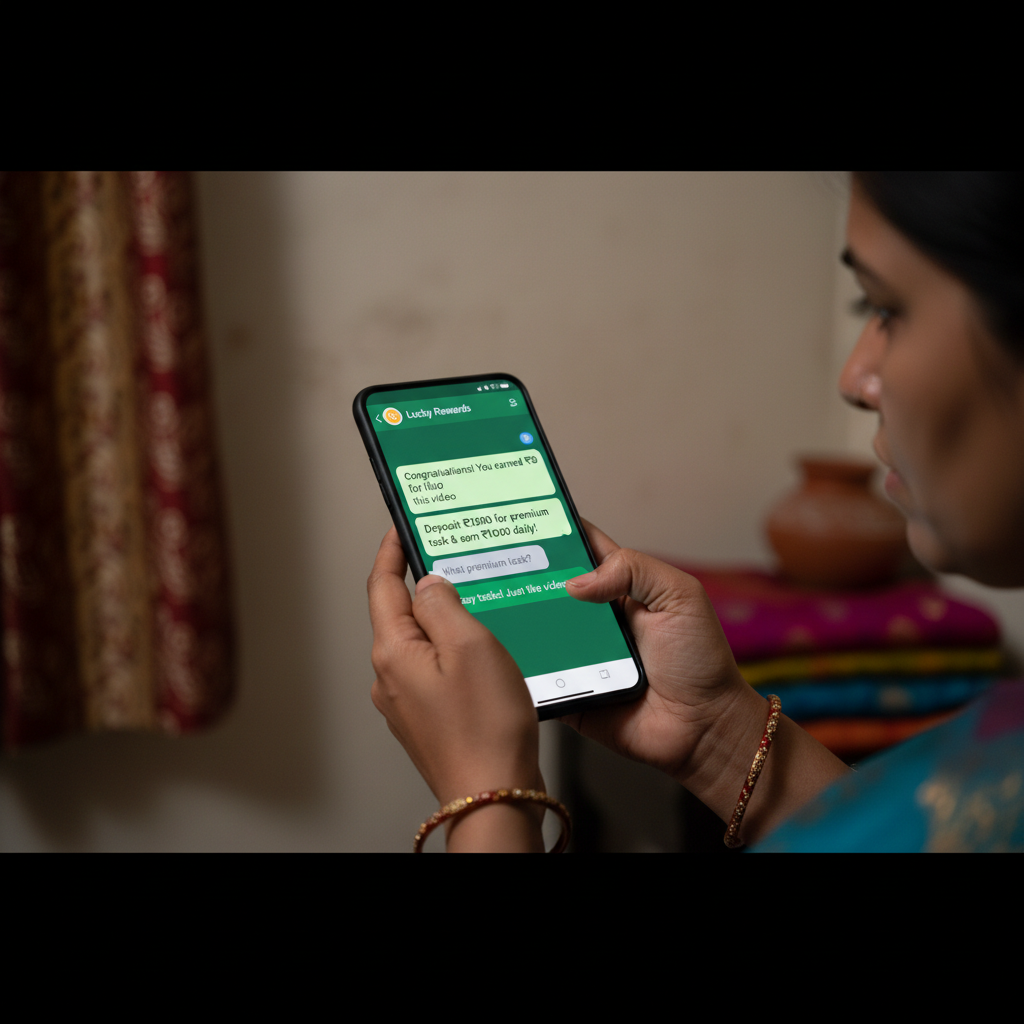
Instagram/WhatsApp task scam, invest money daily return, is it real?
 HIGH RISK
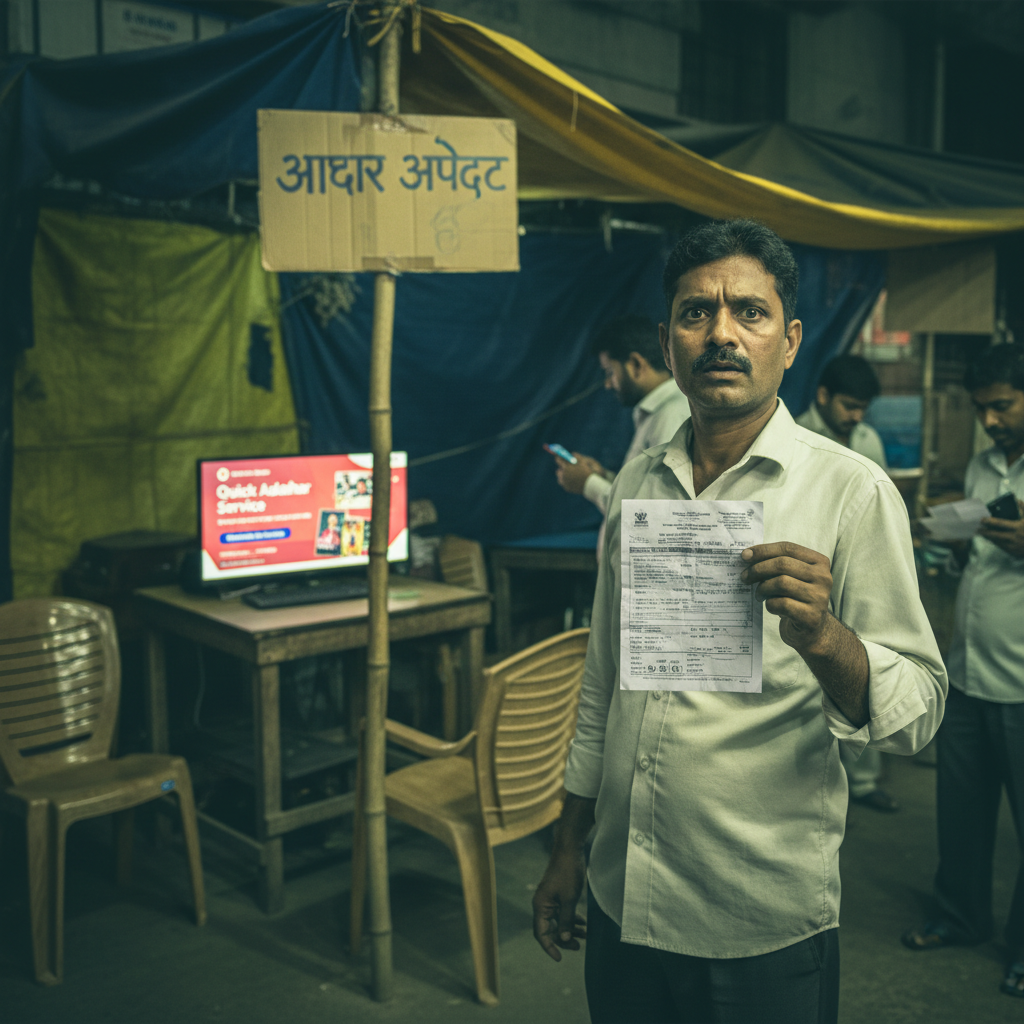
Fake Aadhaar Update Centre near me — is it real? How to check?
 HIGH RISK
Comments
Be the first to comment.