
SMS/WhatsApp bank KYC update link received – is it real? What to do if account blocked?
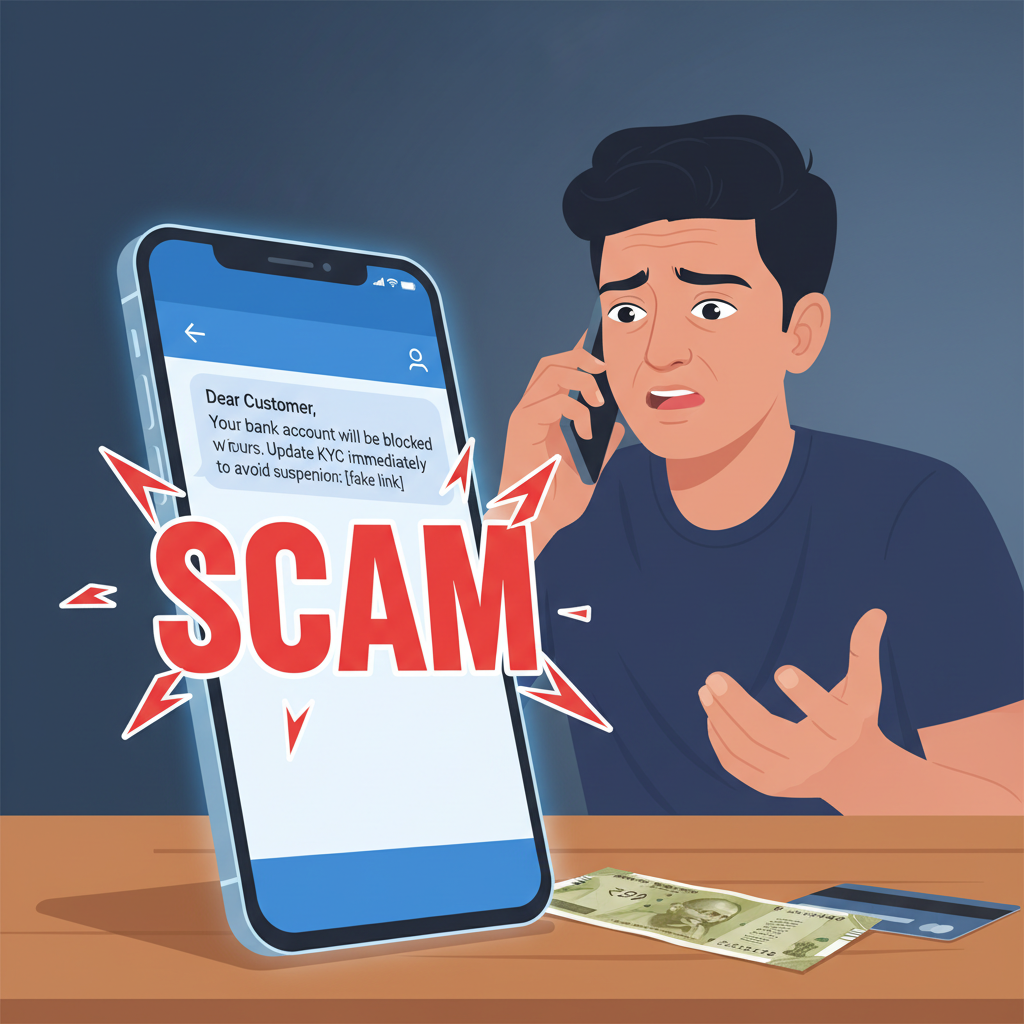
Scammers are sending deceptive SMS and WhatsApp messages pretending to be your bank, claiming your account will be blocked if you don't update your KYC immediately. These messages contain malicious links designed to steal your banking credentials and personal information. This high-risk scam can lead to significant financial loss.
How This Scam Works
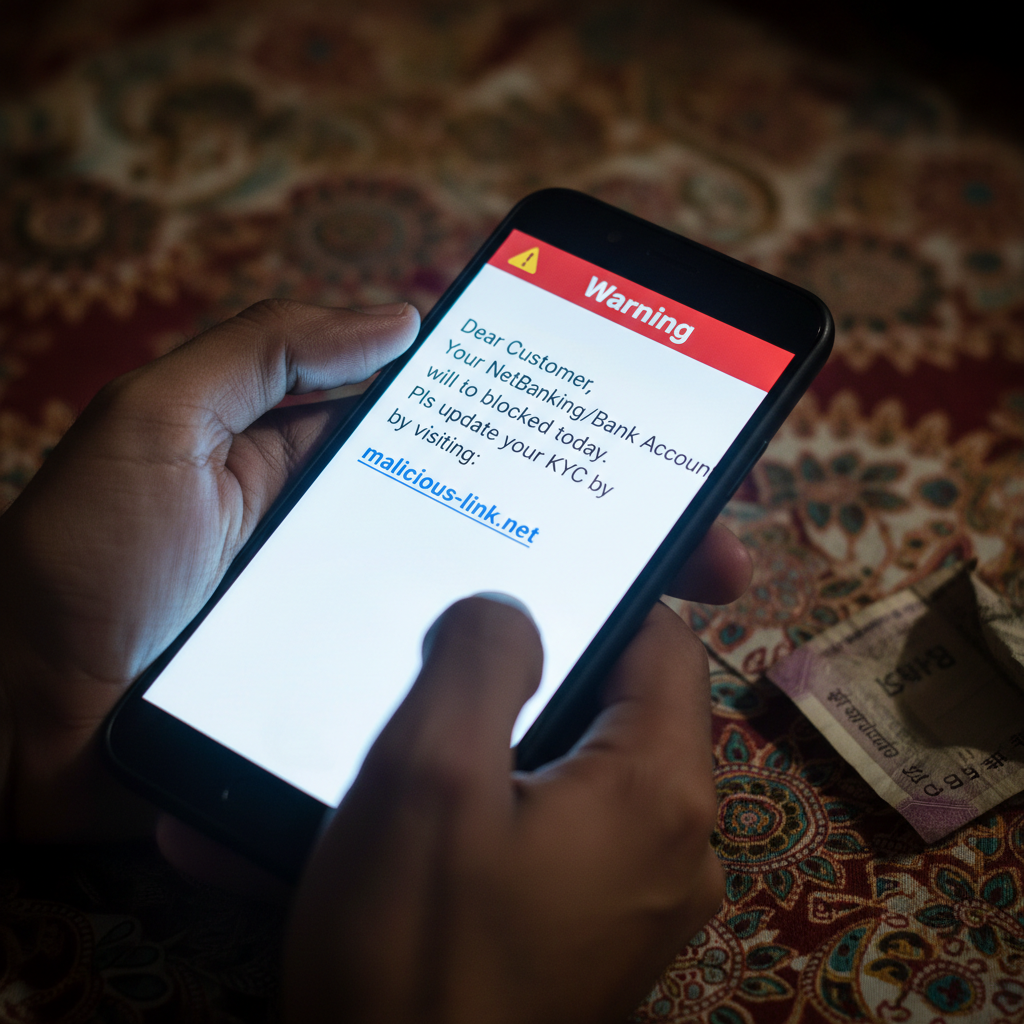
Imagine you're mid-day, perhaps enjoying a cup of chai, when your phone buzzes. You glance down and see a message that sends a jolt of anxiety through you: "Dear customer, your bank account will be blocked/frozen within 24 hours if you do not update your KYC. Click here immediately to avoid inconvenience: [malicious_link]". This message, often laden with urgent language and threats, is the bait in a "Fake KYC Update" scam, a pervasive threat in India. The scam operates on a simple, yet highly effective, principle: fear and urgency. The scammer knows that the thought of a blocked bank account is a major concern for anyone, especially in a country where digital transactions and online banking are becoming the norm. They leverage this fear to bypass your critical thinking. Here's a breakdown of the typical steps: 1. **The Deceptive Message:** You receive an SMS or WhatsApp message, often from an unknown number, but sometimes spoofed to appear from a trusted entity. The message mimics the tone and language banks might use, complete with common Indian banking terms like "KYC" (Know Your Customer) and threats of account blocking. It insists on immediate action. 2. **The Malicious Link:** The core of the scam is the embedded link. This link is NOT to your bank's official website. Instead, it directs you to a cleverly designed *phishing website*. This website is a near-perfect replica of your bank's legitimate online banking portal or a fake KYC update form. It will ask for sensitive information like: * Your bank account number * Your debit/credit card number, expiry date, and CVV * Your internet banking ID and password * Your UPI PIN * Your Aadhaar number * One-Time Passwords (OTPs) 3. **Information Theft:** When you enter these details on the fake website, you are not updating your KYC. Instead, you are directly handing over your sensitive financial information to the scammer. They immediately capture this data. 4. **The OTP Trick:** Often, after you submit your details, the fake website will prompt you for an OTP. This OTP is usually generated by the scammer initiating a transaction (like a fund transfer or an online purchase) using the credentials you just provided. By entering the OTP on the phishing site, you are effectively authorizing their fraudulent transaction. 5. **Financial Loss:** Once the scammer has your credentials and the crucial OTP, they can quickly drain your bank account, make unauthorized purchases, or even apply for loans in your name. By the time you realize what has happened, your money may be gone, often transferred to mule accounts or converted to untraceable assets. 6. **The "Confirmation" Message:** Sometimes, after you submit your details and the OTP, the fake website might display a "KYC updated successfully" message to make the scam seem more convincing. This is to delay your realization and give the scammer more time. The scam preys on the fact that KYC updates are a genuine regulatory requirement in India. However, legitimate banks will never ask you to update your KYC via an unsolicited link in an SMS or WhatsApp message. They will always direct you to their official app, website, or branch.
Red Flags
- Unsolicited Messages with Urgent Threats:** Any SMS or WhatsApp message demanding immediate KYC update to avoid account blockage is highly suspicious.
- Generic Greetings:** Messages that start with "Dear Customer" instead of your name are a huge red flag. Banks typically personalize their communication.
- Suspicious Links:** The link in the message does not match your bank's official website domain (e.g., it's "bank-update.xyz" instead of "icicibank.com" or "sbi.co.in"). Hover over the link if possible before clicking, or long-press on mobile to preview the URL.
- Poor Grammar/Spelling:** While not always present, grammatical errors or awkward phrasing can indicate a scam.
- Requests for Sensitive Information:** A legitimate KYC update process will never ask for your internet banking password, debit card CVV, or UPI PIN via an online form from an unsolicited link.
- Pressure to Act Immediately:** Any message that creates extreme urgency and doesn't allow you time to verify is a classic scam tactic.
- Unexpected OTP Requests:** If you haven't initiated a transaction, never share an OTP, especially if prompted by an unsolicited link or call.
How to Stay Safe
- Never Click on Suspicious Links:** This is the golden rule. If you receive an SMS or WhatsApp with a link claiming to be from your bank, *do not click it.*
- Verify Directly with Your Bank:** If you are genuinely concerned about your KYC status, contact your bank directly using the official customer care number found on their official website, bank passbook, or debit card. Never use a number provided in a suspicious message.
- Use Official Channels Only:** For any banking transactions or updates, always use your bank's official mobile app or visit their legitimate website by typing the URL directly into your browser.
- Be Skeptical of Urgency:** Legitimate organizations provide ample time for updates. Threats of immediate account blockage are designed to panic you into making mistakes.
- Guard Your OTPs and PINs:** Treat OTPs like cash. Never share them with anyone, under any circumstances, even if they claim to be from your bank or RBI. Your bank will never ask for your PIN or full password over the phone or email.
- Report Suspicious Messages:** Block the sender and report the message as spam on SMS or WhatsApp.
If You Are Targeted
- Do NOT Click the Link:** If you haven't clicked, simply delete the message and block the sender.
- If You Have Clicked and Entered Details:**
- Immediately Change Your Bank Passwords:** Access your bank's *official* website or app on a secure device and change your internet banking password, transaction PINs, and UPI PINs.
- Contact Your Bank's Customer Care:** Report the incident to your bank's fraud department immediately. They can help monitor your account for suspicious activity and block compromised accounts/cards.
- Block Your Debit/Credit Card:** If you entered card details, block your debit/credit card immediately through your bank's app, internet banking, or customer care.
- Report to Cybercrime.gov.in:** File a complaint with the National Cybercrime Reporting Portal (cybercrime.gov.in) or call their helpline at 1930. Provide all details of the scam message and any transactions.
- Inform Family and Friends:** Spread awareness about the scam to prevent others from falling victim.
ScamGuard24 Insight
The Fake KYC Update scam is particularly dangerous because it leverages genuine regulatory requirements in India to create a sense of urgency and legitimacy. Its high effectiveness relies on social engineering, preying on the fear of financial disruption and the public's general awareness of KYC norms. Always remember, your bank will never ask for sensitive details via unsolicited links.
Suspect a scam right now?
Open ScamGuard24 ScannerRecommended protection tools
AffiliateWe may earn a small commission if you sign up — it never changes our editorial picks.
India's most trusted antivirus. Blocks malicious APKs, UPI phishing and fake banking apps.
Get Quick HealAll-in-one mobile security + VPN. Stops phishing links shared on WhatsApp and SMS.
Try Norton 360Stop reusing passwords. Auto-fills only on the real bank site, never on phishing pages.
Get NordPass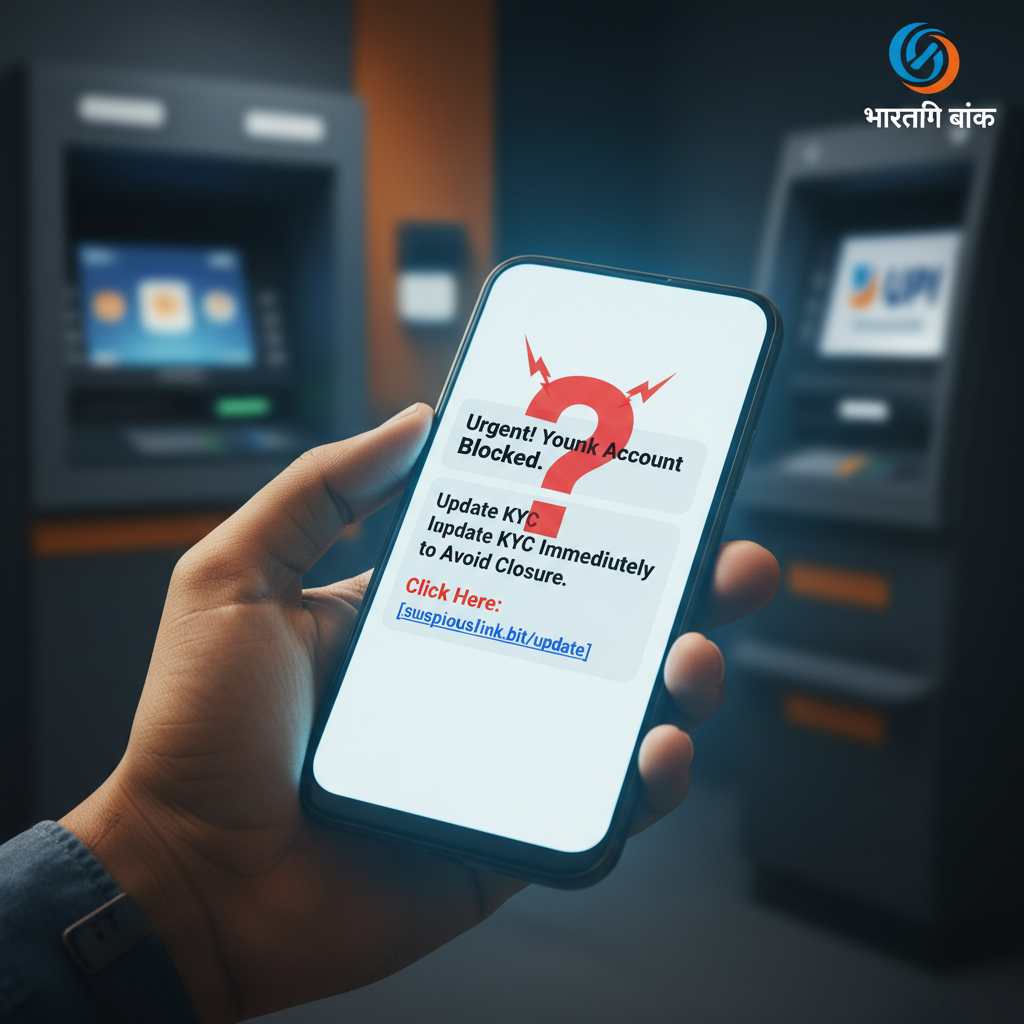
Comments
Be the first to comment.