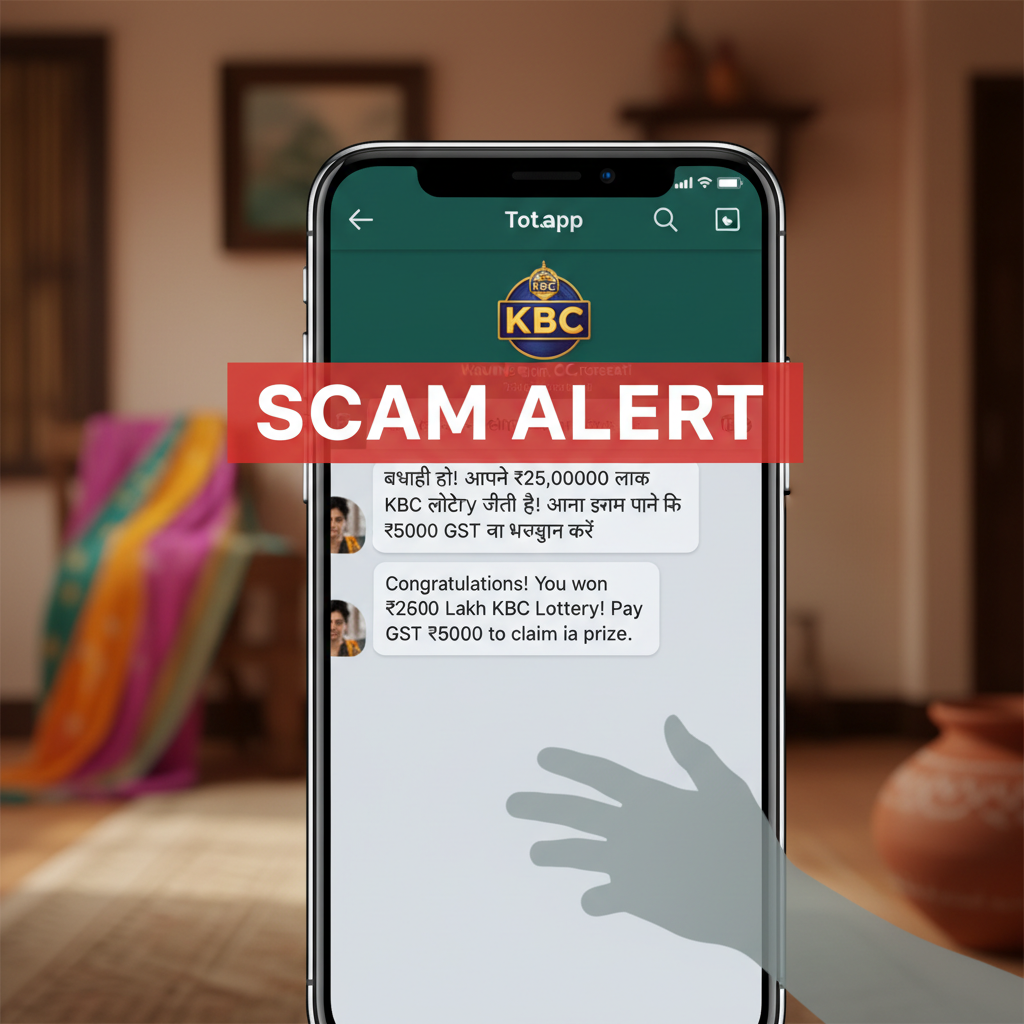
"KBC Lottery WhatsApp win ₹25 lakh message — is it fake? What to do?"
Beware of a sophisticated WhatsApp lottery scam where fraudsters claim you've won a large sum, like ₹25 lakh from KBC, and demand a "GST" payment to release your fictitious winnings. This is a high-risk scam designed to trick you into transferring money, exploiting your excitement and trust in well-known brands.
How This Scam Works
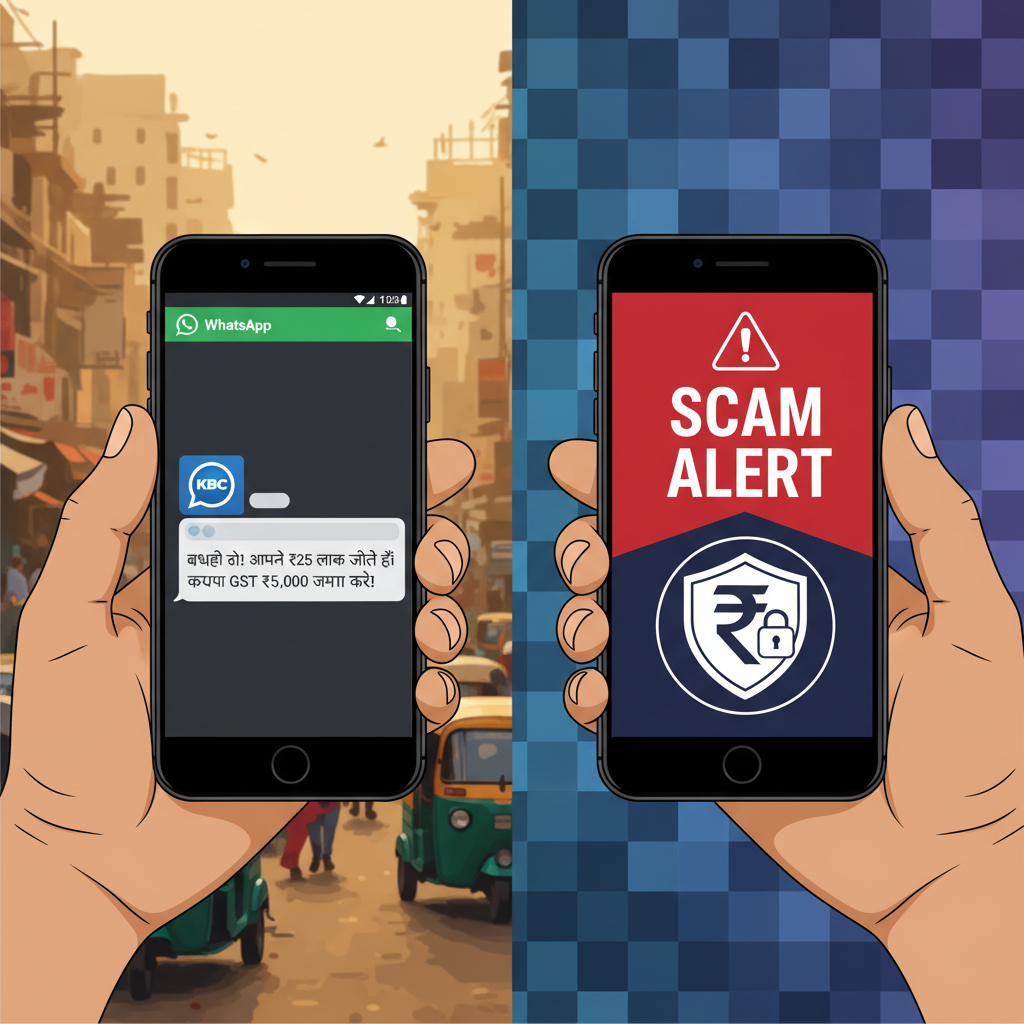
Imagine you receive a WhatsApp message, often with a KBC (Kaun Banega Crorepati) logo or a well-known company's branding. The message jubilantly informs you that you have won a substantial sum – in this common scenario, ₹25 lakh – in a lottery or prize draw you never even entered. The excitement is palpable, but there's a catch. To claim your 'winnings', you're instructed to pay a small "processing fee," "government tax," or most commonly, "GST" (Goods and Services Tax) of ₹5,000. The scammer will typically provide a mobile number or bank account details for this payment. They might even send you a fake "KBC certificate" or a similarly fabricated document to lend an air of legitimacy to their claims. They often use high-pressure tactics, urging you to pay quickly to avoid losing your prize. They might call you, impersonating KBC officials or bank representatives, speaking authoritatively to convince you further. Crucially, they exploit the victim's hope and lack of familiarity with how legitimate lotteries operate. Once you make the initial payment, they may invent further charges – more taxes, transfer fees, legal charges – perpetually delaying the non-existent prize while extracting more money from you. They might even ask for your bank details, Aadhaar number, or other personal information under the guise of "KYC verification" to further their criminal activities, potentially leading to identity theft or direct bank fraud. The communication primarily via WhatsApp adds a layer of anonymity for the scammer and makes it harder for victims to verify the claims.
Red Flags
- Unsolicited Win Notifications:** You're informed you've won a lottery or prize from a contest you never entered or participated in. Real lotteries require you to buy a ticket or enter officially.
- Request for Upfront Payment for Winnings:** Any legitimate lottery or prize will deduct taxes or fees directly from your winnings, not ask you to pay them beforehand. The demand for a "GST" payment to claim a prize is a classic scam tactic.
- Use of WhatsApp for Official Communication:** Major financial institutions or lottery organisers rarely, if ever, use WhatsApp as the primary or sole channel for communicating significant prize winnings and financial transactions. Official communications would typically be via registered mail, secure email, or direct bank communication.
- Pressure Tactics and Urgency:** Scammers often try to rush you into making a decision, warning that the offer is time-limited or your prize will be forfeited if you don't act immediately. This prevents you from doing due diligence.
- Poor Language/Grammar/Spelling in Messages:** While not always present, many scam messages, despite appearing somewhat professional, contain subtle grammatical errors, awkward phrasing, or unusual spellings that are uncharacteristic of official communications from reputable organisations.
- Requests for Personal Financial Information:** Beyond the initial payment, scammers might ask for your bank account passwords, UPI PINs, Aadhaar details, or OTPs. No legitimate entity will ever ask for these sensitive details.
How to Stay Safe
- Verify Everything Independently:** If you receive such a message, do not respond to the sender. Instead, independently verify the claim by visiting the official website of the presumed lottery or company (like KBC). Look for contact information there and call them directly using official numbers only.
- Never Pay to Receive Winnings:** This is the golden rule. Any legitimate prize will either be paid directly to you, or processing fees/taxes will be deducted from the prize money itself. No legitimate lottery will ask for an upfront payment.
- Block and Report:** Immediately block the number on WhatsApp and report the message as spam. This helps WhatsApp identify and combat such fraudulent activities.
- Be Skeptical of "Too Good to Be True" Offers:** ₹25 lakh is a significant sum. If something seems incredibly lucrative with little effort on your part, it's almost always a scam.
- Protect Your Personal Information:** Never share your Aadhaar number, PAN card details, bank account numbers, UPI PIN, credit/debit card details, or any OTPs with unknown individuals or through unverified links/messages.
- Educate Yourself and Your Family:** Share this information with friends and family, especially elderly members who might be more susceptible to such emotionally manipulative scams.
If You Are Targeted
- Do NOT Engage:** Do not reply to the message, do not click on any links, and do not call the numbers provided by the scammer. Any interaction confirms your number is active and encourages further attempts.
- Do NOT Pay Any Money:** Even a small payment of ₹5,000 can be the beginning of a larger financial loss as scammers will continue to demand more.
- Gather Evidence:** Take screenshots of the WhatsApp messages, including the sender's number. This evidence will be crucial if you decide to report it to the authorities.
- Report to Cybercrime India:** File a complaint immediately on the National Cyber Crime Reporting Portal at `cybercrime.gov.in` or call helpline number 1930. Provide all collected evidence.
- Inform Your Bank (if any payment was made):** If you unfortunately made a payment, contact your bank immediately to see if the transaction can be reversed, although this is often difficult with scam payments.
ScamGuard24 Insight
This lottery scam leverages a powerful psychological trigger: the dream of sudden wealth. By using the trusted brand "KBC" and the appeal of a large, seemingly accessible prize, scammers bypass rational thought. The small "GST" fee acts as a low-risk entry point for victims, masking the true intent of financial exploitation through a series of escalating demands.
Suspect a scam right now?
Open ScamGuard24 ScannerRecommended protection tools
AffiliateWe may earn a small commission if you sign up — it never changes our editorial picks.
India's most trusted antivirus. Blocks malicious APKs, UPI phishing and fake banking apps.
Get Quick HealAll-in-one mobile security + VPN. Stops phishing links shared on WhatsApp and SMS.
Try Norton 360Stop reusing passwords. Auto-fills only on the real bank site, never on phishing pages.
Get NordPass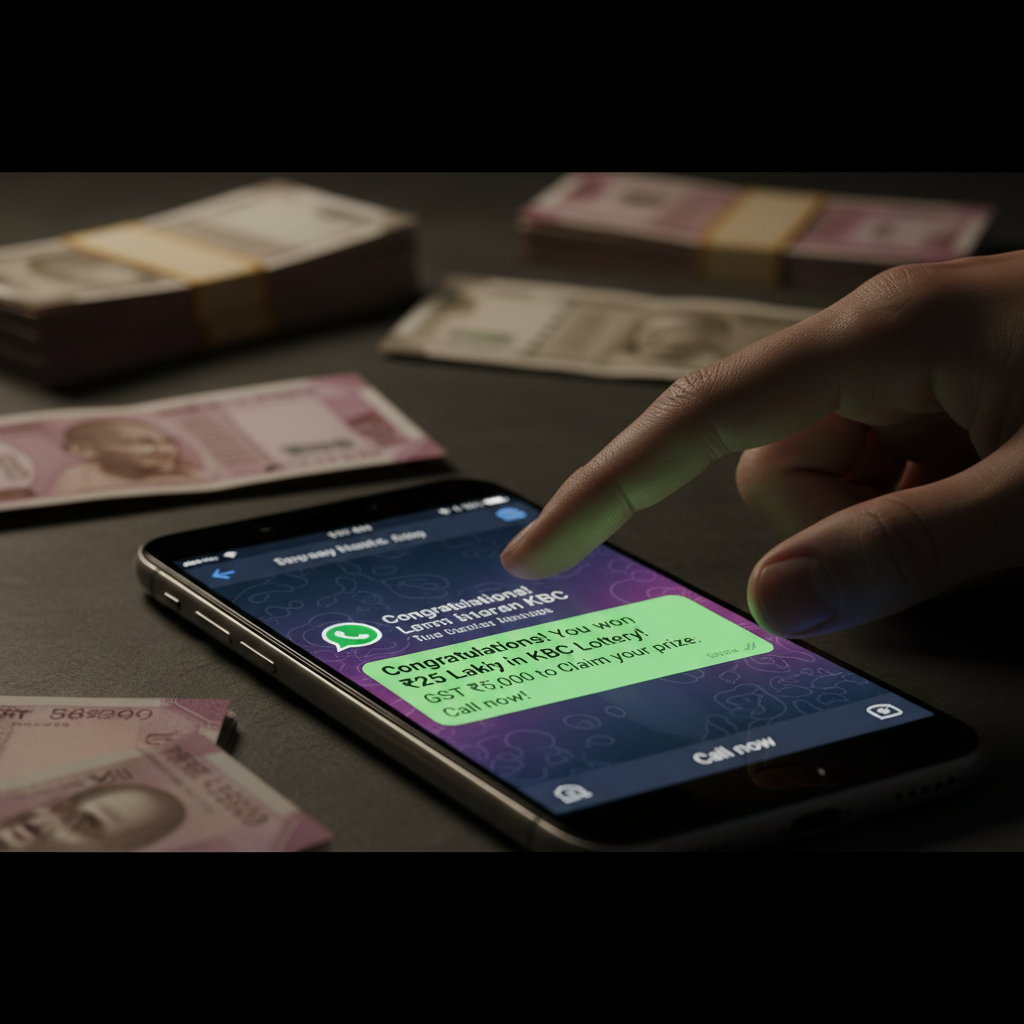
Comments
Be the first to comment.