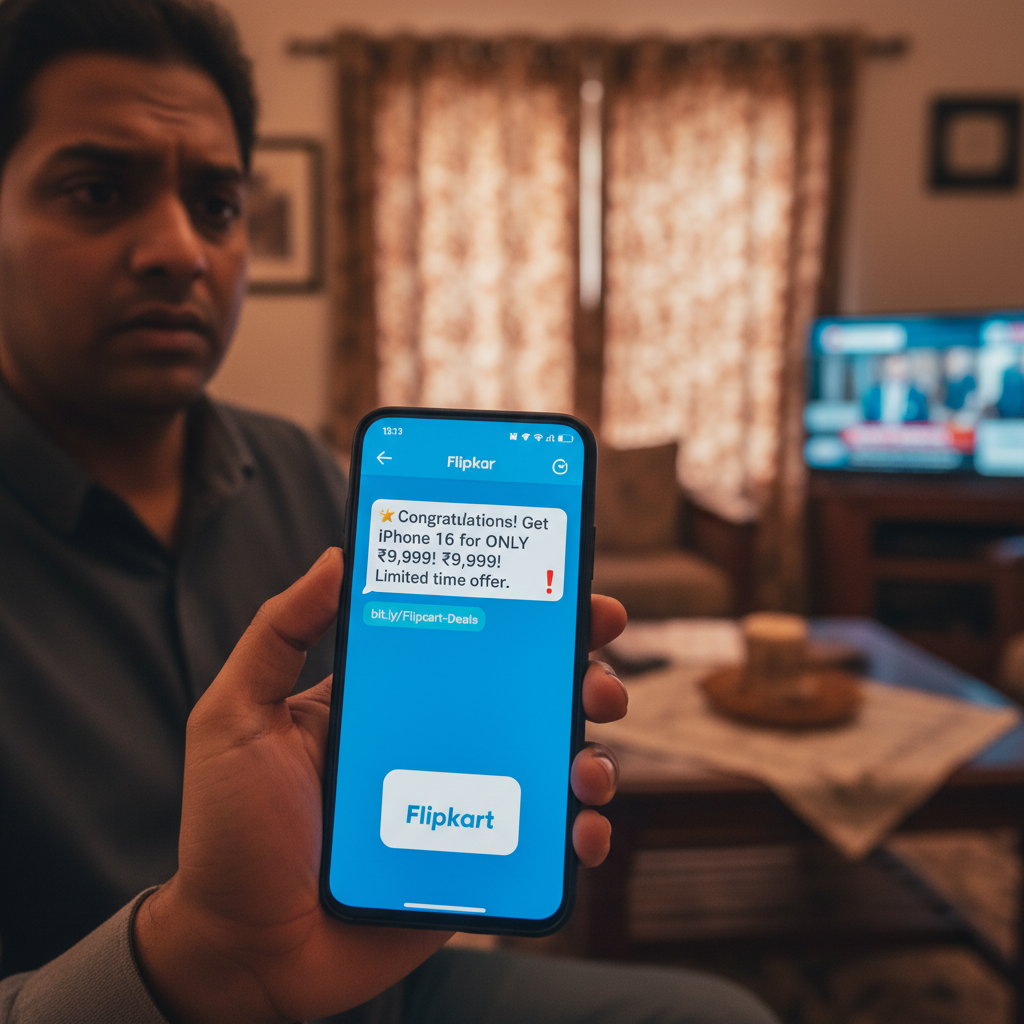
Flipkart WhatsApp message iPhone 16 ₹45,000 link — is it a scam? What to do today?
Be extremely wary of unbelievable discounts on high-value electronics like the iPhone 16 advertised via WhatsApp, SMS, or social media, especially when they ask for upfront payments. This scam uses fake e-commerce websites impersonating reputable brands to trick you into making an advance payment for non-existent products. The lure of a heavily discounted, popular item is a classic bait-and-switch tactic designed to steal your money.
How This Scam Works
This insidious scam preys on our desire for a great deal, especially on coveted items like the latest iPhone. It typically begins with an unsolicited message arriving on platforms like WhatsApp, SMS, or even Telegram, or it might pop up on your social media feed as a sponsored ad. The message usually presents an irresistible offer – in this case, an iPhone 16 for an unbelievably low price of ₹45,000, significantly below its market value. The message will contain a link, which, upon clicking, directs you to a website that meticulously mimics a well-known e-commerce giant, such as Flipkart. Scammers are now incredibly sophisticated in replicating the look and feel of legitimate sites, often copying logos, design elements, and even product descriptions to appear authentic. You might even find other products listed on the site to further enhance its credibility. Once on this fake platform, you’ll be prompted to "purchase" the discounted item. The critical step, and the core of the scam, happens at the payment gateway. Instead of offering secure, standard payment methods, you will be directed to make an "advance payment" or "booking amount" through less traceable methods like UPI direct payments to a personal ID, or a direct bank transfer to an individual's account. They might even ask you to share your UPI ID or bank account details directly. They might also claim that this is a "limited-time offer" or "flash sale" to create a sense of urgency, pressuring you to act fast before you have a chance to think critically or verify. Once you make the payment, the scam unfolds. You will either receive nothing at all, or in some rare cases, a cheap, fake replica of the product, or even an empty box. The scam website will soon disappear, or you will be blocked from contacting anyone. The money you transferred will be gone, and since it went to an individual account or through methods without buyer protection, recovering it becomes extremely difficult, if not impossible. The scammers rely on the belief that a well-known brand implies trustworthiness, making it easier for victims to overlook the glaring red flags.
How to Stay Safe
- Verify Directly:** If you see an unbelievable offer from a known brand, always go directly to their *official* website (type the URL yourself, do not click links) or app to verify its existence.
- Inspect URLs Carefully:** Before clicking any link, hover over it (on a desktop) or long-press it (on mobile) to see the full URL. Always ensure it's the exact, official domain of the brand you intend to visit.
- Use Official Payment Gateways Only:** Stick to recognized, secure payment methods on official websites. Never make direct UPI payments to personal IDs or bank transfers to individuals for online purchases from e-commerce platforms. Legitimate sites never ask for such payment methods.
- Be Skeptical of Unsolicited Offers:** Treat any unsolicited message, email, or social media ad offering incredible discounts with extreme caution, especially if it pressures you to act quickly.
- Enable Two-Factor Authentication (2FA):** While not directly preventing this payment scam, 2FA on your social media and email accounts can prevent scammers from impersonating you or gaining access to your personal information.
- Report Suspicious Messages/Websites:** If you encounter such a message or fake website, report it to the platform (WhatsApp, Telegram, social media) and consider reporting the site to Google Safe Browsing or your bank.
If You Are Targeted
- Do NOT Pay:** The most important step is to absolutely refrain from making any payment or sharing any financial details.
- Block and Report:** Immediately block the number or sender of the suspicious message. Report the message to the platform (WhatsApp, Telegram, etc.) as spam or a scam.
- Gather Evidence:** Take screenshots of the message, the fake website, and any transaction details if you somehow interacted without completing the payment. This evidence can be crucial if you need to file a complaint.
- Inform Your Bank/Payment Provider (if you paid):** If you unfortunately made a payment via UPI or bank transfer, contact your bank or UPI service provider (e.g., Google Pay, PhonePe, Paytm) *immediately*. Explain that you've been scammed and request a transaction reversal. The sooner you act, the higher the chance, though often slim, of recovery.
- File a Cybercrime Complaint:** File a complaint on the National Cybercrime Reporting Portal ([www.cybercrime.gov.in](http://www.cybercrime.gov.in/)) or call their helpline at 1930. Provide all the evidence you've gathered.
ScamGuard24 Insight
This scam effectively combines the allure of a high-value product with the trust in a major brand, making it particularly dangerous in India where UPI is ubiquitous. The sophistication of fake websites continues to evolve, making visual inspection alone insufficient; always cross-verify URLs and payment methods rigorously.
Suspect a scam right now?
Open ScamGuard24 ScannerRecommended protection tools
AffiliateWe may earn a small commission if you sign up — it never changes our editorial picks.
India's most trusted antivirus. Blocks malicious APKs, UPI phishing and fake banking apps.
Get Quick HealAll-in-one mobile security + VPN. Stops phishing links shared on WhatsApp and SMS.
Try Norton 360Stop reusing passwords. Auto-fills only on the real bank site, never on phishing pages.
Get NordPassRelated alerts
 HIGH RISK
FXTM/CoinW app fake crypto investment — how to check if it's a scam in India
 HIGH RISK
WhatsApp politician donation request UPI scam India - what to do?
 HIGH RISK
Comments
Be the first to comment.