
Telegram crypto investment 30% monthly returns India scam – is it real?
A dangerous Telegram crypto investment scam is luring Indians with promises of exorbitant, guaranteed returns like 30% monthly. These schemes are designed to steal your money, not multiply it, often by impersonating legitimate crypto platforms or financial advisors. Be extremely cautious of any investment offer on social media promising unrealistic profits.
How This Scam Works
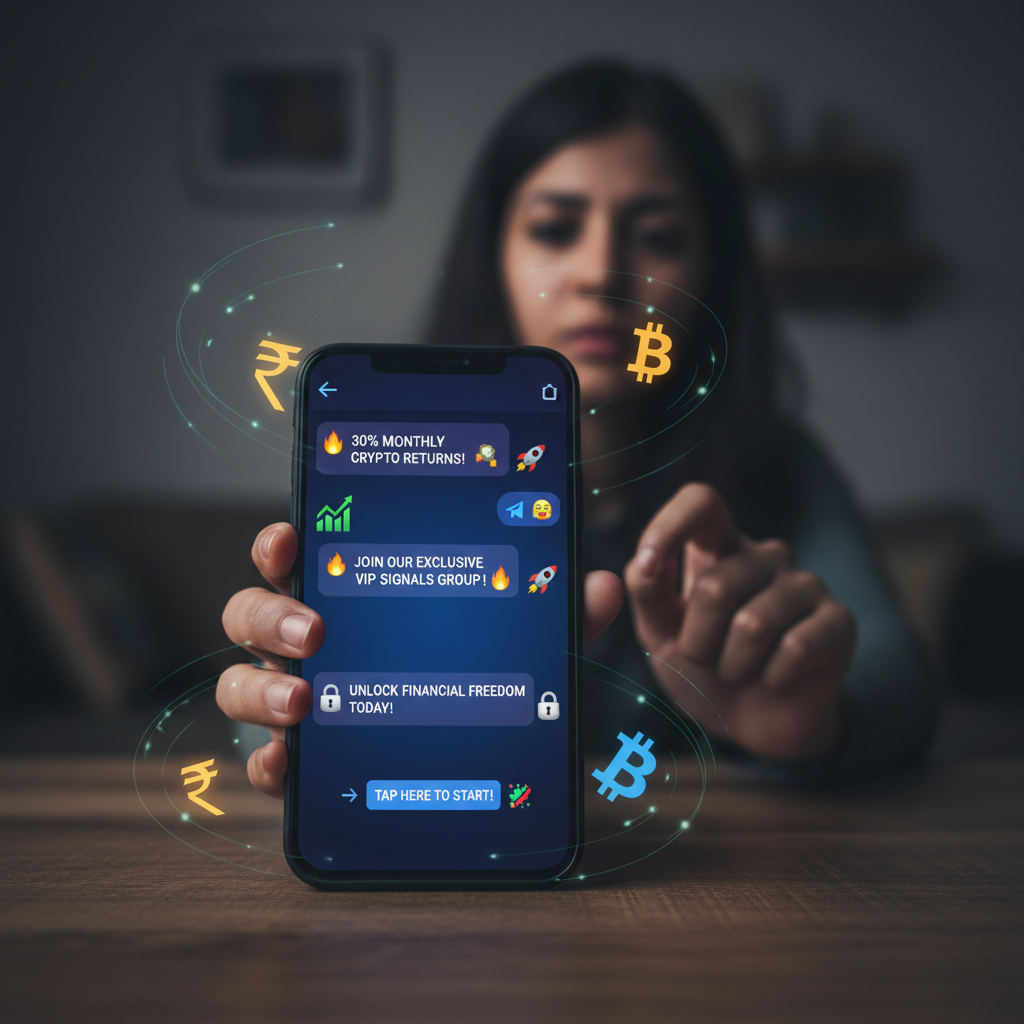
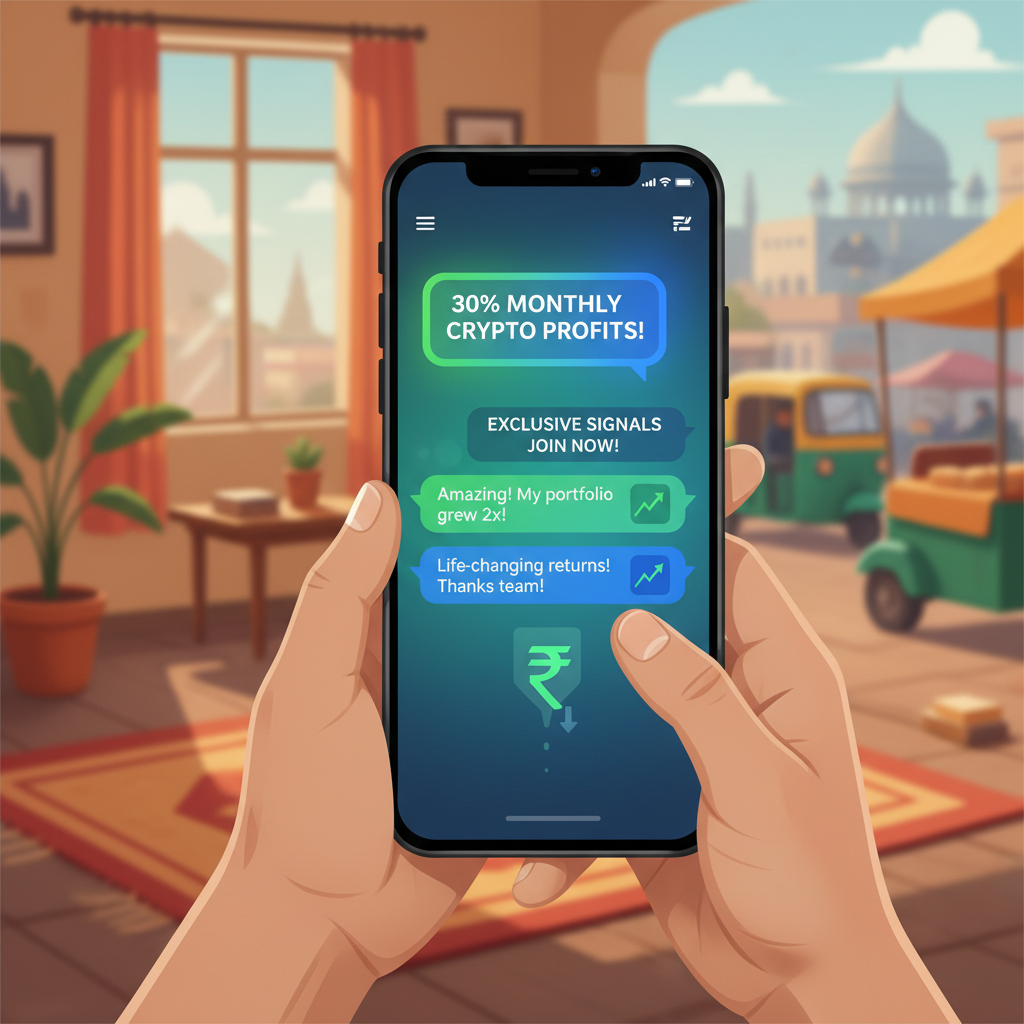
This sophisticated crypto investment scam primarily unfolds on Telegram, leveraging the platform's group and channel features to create an illusion of community and legitimacy. Scammers typically initiate contact through unsolicited messages, often appearing to be from a "friend" whose account has been compromised, or through ads on other social media platforms. They then invite you to a private Telegram group or channel where the real deception begins. Inside these groups, you'll find what appears to be a thriving community of "successful investors" sharing screenshots of their massive profits and testimonials. These are all fake, orchestrated by the scammers using multiple dummy accounts to build trust and create a Fear Of Missing Out (FOMO). The group admin, posing as a seasoned crypto trader or financial expert, will then present an "exclusive" investment opportunity, often involving complex-sounding trading strategies like "quantitative trading" or "arbitrage bots" that supposedly guarantee returns of 20-30% *per month*. Victims are instructed to transfer funds, usually in cryptocurrency (like USDT or Bitcoin) to a specific wallet address provided by the scammers. Initially, small "profits" might even be shown on a fake trading platform or dashboard, encouraging victims to invest more, and even refer friends and family. This initial "return" often comes from earlier victims' deposits, a classic Ponzi scheme characteristic. When victims try to withdraw their substantial "earnings," they are met with excuses: "tax fees," "withdrawal processing charges," "KYC verification issues," or even demands for more "security deposits." These are all tactics to extract more money before the scammers eventually disappear, blocking the victim and shutting down the group, leaving them with no way to recover their invested capital. They prey on the dreams of quick wealth, especially among those new to the complexities of crypto markets.
Red Flags
- Unrealistic Guaranteed Returns:** Promises of 20%, 30% or more monthly returns are a classic hallmark of a Ponzi scheme. Legitimate investments, especially in volatile assets like crypto, cannot guarantee such high and consistent returns. If it sounds too good to be true, it almost certainly is.
- Telegram-Only Communication:** Scammers prefer platforms like Telegram because they offer anonymity and are less regulated than traditional financial institutions. If the "investment firm" only communicates via Telegram groups or private chats and lacks a professional website, verifiable contact details, or proper legal registration, it's a huge red flag.
- High-Pressure Tactics & Urgency:** Scammers create a sense of urgency, often claiming "limited slots" or "special introductory offers" to pressure you into making quick decisions without proper due diligence. They discourage questions and encourage immediate investment.
- Requests for Crypto Transfers to Personal Wallets:** Legitimate investment platforms require you to deposit funds into your own account on their regulated platform, not directly into an individual's crypto wallet. Sending crypto to a private address is like handing cash to a stranger.
- Fake Testimonials and Group Activity:** Be suspicious of groups where everyone is sharing identical, overly enthusiastic success stories, often with screenshots of impressive "profits." These are typically fake accounts run by the scammers to create a false sense of trust and social proof.
- Demands for More Money for Withdrawals:** If you're asked to pay "withdrawal fees," "tax fees," "KYC charges," or "security deposits" to access your supposed profits, this is a definite scam. Legitimate platforms deduct fees from your earnings, not demand upfront payments.
How to Stay Safe
- Research Thoroughly:** Before investing in *anything*, especially in the crypto space, conduct extensive research. Check company registration with regulatory bodies (like SEBI or RBI in India for traditional finance, though crypto regulation is still evolving). Look for independent reviews and news articles, not just what's presented by the "firm" itself.
- Verify Identity & Credentials:** Insist on knowing who you are dealing with. A legitimate financial advisor or investment firm will have verifiable credentials, a clear physical address, and be registered with relevant authorities. Be wary of anonymous profiles or those using stock photos.
- Be Skeptical of Unsolicited Offers:** Never trust investment opportunities presented out of the blue, whether via SMS, WhatsApp, Telegram, or email. Legitimate investment firms do not cold-call or message individuals with guaranteed high-return schemes.
- Understand the Risks:** Educate yourself about how cryptocurrencies work and the inherent risks involved. There are no "guaranteed" profits in crypto. Only invest what you can afford to lose. If you don't understand an investment, don't invest in it.
- Never Share Personal Information or OTPs:** Be extremely cautious with your personal details, Aadhaar number, PAN, bank account information, or UPI PINs. Scammers might ask for these under the guise of "KYC verification." Never share OTPs except for transactions you initiated yourself.
- Consult a Financial Advisor:** If you're considering a significant investment, speak to a SEBI-registered financial advisor. They can provide unbiased guidance and help you identify legitimate opportunities versus scams.
- Report Suspicious Activity:** If you encounter such a scam, report the Telegram group/channel, block the users, and report it to cybercrime authorities in India. Your report can help protect others.
If You Are Targeted
- Stop All Communication Immediately:** As soon as you suspect a scam, cease all interaction with the scammers. Do not respond to their messages, calls, or attempts to draw you back in.
- Do Not Invest More Money:** No matter what "fees" or "charges" they demand for withdrawal, do not send them another rupee. Any money you send will be lost.
- Gather All Evidence:** Take screenshots of chats, group messages, transaction details (wallet addresses, transaction IDs), and any fake website/platform links. This evidence will be crucial for reporting.
- Report to Cybercrime India:** File a complaint immediately on the National Cybercrime Reporting Portal (cybercrime.gov.in) or call their helpline (1930). Provide all the evidence you've collected.
- Inform Your Bank/Crypto Exchange:** If you transferred funds from your bank account or through a crypto exchange, notify them of the fraudulent transaction. They may be able to provide some assistance or block further outgoing transfers.
- Warn Friends and Family:** Share your experience with your close contacts to prevent them from falling victim to similar scams.
ScamGuard24 Insight
These Telegram crypto investment scams exploit a critical blend of trust and aspiration, preying on the desire for financial growth within India's burgeoning digital economy. The use of fake community engagement and sophisticated social engineering makes them particularly insidious, highlighting the urgent need for widespread digital literacy and investment skepticism. Remember, genuine wealth creation takes time and involves calculated risks, not instant, guaranteed riches from anonymous online groups.
Suspect a scam right now?
Open ScamGuard24 ScannerRecommended protection tools
AffiliateWe may earn a small commission if you sign up — it never changes our editorial picks.
India's most trusted antivirus. Blocks malicious APKs, UPI phishing and fake banking apps.
Get Quick HealAll-in-one mobile security + VPN. Stops phishing links shared on WhatsApp and SMS.
Try Norton 360Stop reusing passwords. Auto-fills only on the real bank site, never on phishing pages.
Get NordPassRelated alerts
 HIGH RISK
Telegram crypto 30% monthly returns India - is it a scam? What to do?
 HIGH RISK
Telegram crypto group promising 30% monthly returns India – is it a scam what to do?
 HIGH RISK
Comments
Be the first to comment.